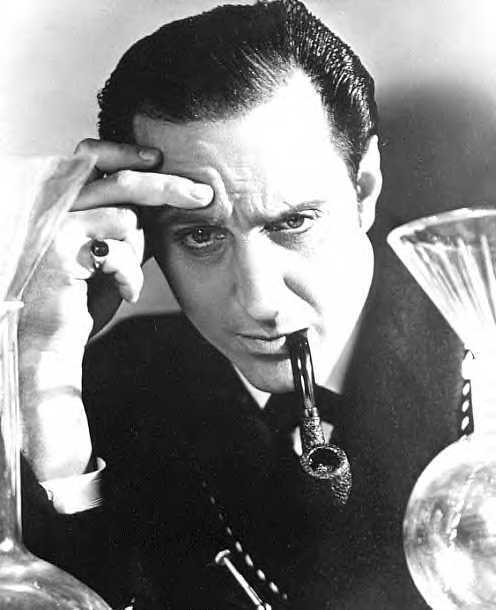
Warren Mitchell, who may be best known for playing the bigoted Alf Garnett in the British sitcom Till Death Us Do Part, died on November 14 2015 at the age of 89.
Warren Mitchell was born Warren Misell on January 14 1926 in Stoke Newington, London. His father's family were English Jews who could trace their family back to the Restoration. His mother's family had immigrated from Russia and operated a chip shop in Stoke, Newington, London. His father was a glass and china merchant. Warren Mitchell took an interest in acting while still very young. He attended the Academy of Dramatic Arts in Walthamstow, London, as well as Southgate County School. He studied physical chemistry at University College, Oxford while a member and was a member of the University Air Squadron. In 1944 he joined the Royal Air Force where he served as a navigator.
It was while Warren Mitchell was at Oxford that he met Richard Burton, who inspired him to go into the acting profession. He studied at RADA for two years, while spending his evenings performing at the Unity Theatre in London. He made his professional debut in at Finsbury Park Open Air Theatre in 1950.
Warren Mitchell made his film debut in an uncredited role in Five Days (1954). He made his television debut in an episode of The Children of the New Forest in 1955. In the Fifties he had recurring roles in the TV shows Drake's Progress, Three Tough Guys, Big Guns, and Hancock's Half-Hour. He also appeared on the TV shows Dick and the Duchess, The Larkins, Glencannon, BBC Sunday-Night Theatre, William Tell, Interpol Calling, The Four Just Men, Man from Interpol, and Danger Man. He appeared in the films Manuela (1957), Barnacle Bill (1957), The Trollenberg Terror (1958), Girls at Sea (1958), Tommy the Toreador (1959), The Pure Hell of St. Trinian's (1960), The Boy Who Stole a Million (1960), and Surprise Package (1960).
It was in 1966 that Warren Mitchell was cast in the lead role of racist bigot Alf Garnett on the sitcom Till Death Us Do Part. The series proved to be wildly successful, sometimes drawing as many as 20 million viewers. The show was adapted in the United States as the equally successful All in the Family. Till Death Us Do Part lasted until 1975. Warren Mitchell reprised the role on the subsequent shows Till Death..., In Sickness and in Health, and The Thoughts of Chairman Alf, as well as the feature films Till Death Us Do Part (1969) and The Alf Garnett Saga (1972).
In the Sixties Warren Mitchell also appeared on such TV shows as ITV Playhouse, Colonel Trumper's Private War, Maigret, Z Cars, The Edgar Wallace Mystery Theatre, Ghost Squad, The Saint, Love Story, Gaslight Theatre, Danger Man, The Avengers, and Armchair Theatre. He appeared in such feature films as The Curse of the Werewolf (1961), The Roman Spring of Mrs. Stone (1961), We Joined the Navy (1962), Unearthly Stranger (1963), Carry on Cleo (1964), The Intelligence Men (1965), Help! (1965), The Spy Who Came in from the Cold (1965), The Sandwich Man (1966), Drop Dead Darling (1966), The Joker (1967), Diamonds for Breakfast (1968), The Assassination Bureau (1969), Moon Zero Two (1969), and All the Way Up (1970).
In the Seventies Warren Mitchell continued to appear on Till Death Us Do Part. He starred in the TV show Men of Affairs. He appeared on the TV shows Black and Blue, It's Lulu, The Sweeney, The Ernie Sigley Show, and Bruce Forsyth and the Generation Game. He appeared in the films Innocent Bystanders (1972), What Changed Charley Farthing? (1976), Jabberwocky (1977), Stand Up, Virgin Soldiers (1977), and Meetings with Remarkable Men (1979).
In the Eighties Warren Mitchell reprised his role as Alf Garnett in the TV shows Till Death... and In Sickness and in Health. He appeared on the TV show The Main Attraction, Waterfront, and Ticket for the Titanic, Acropolis Now, He appeared in the films Norman Loves Rose (1982), The Chain (1984), Foreign Body (1986), Knights & Emeralds (1986), and Kokoda Crescent (1989).
In the Nineties Warren Mitchell continued to appear on In Sickness and in Health and reprised his role as Alf Garnett again in The Thoughts of Chairman Alf. He appeared on the programmes So You Think You've Got Troubles, Lovejoy, Kavanagh QC, Ain't Misbehavin', Gormenghast, and Monsignor Renard. He appeared in the film Crackers (1998).
In the Naughts Warren Mitchell appeared on the shows Last of the Summer Wine, Waking the Dead, and The Shark Net. He appeared in the film The 10th Man (2006).
There can be little doubt that Warren Mitchell will be best remembered as the bigoted cockney Alf Garnett. He not only played the character in his most successful show (Till Death Us Do Part), but throughout four decades (The Thoughts of Chairman Alf aired in 1998). Despite this, it would be a mistake to think he was only capable of playing Alf Garnett. On Men of Affairs he played the womanising government minister Sir William Mainwaring-Brown, a role about as far from Alf as one could get. In Gormenghast he played Barquentine, the cantankerous but powerful Master of Ritual of the castle Gormenghast. In three episodes of The Saint he played Italian taxi cab driver Marco de Cesari. Warren Mitchell played many roles through his career, quite a few of which were far removed from Alf Garnett. He was a versatile and talented actor.
Tuesday, November 17, 2015
Monday, November 16, 2015
The Beatles' "All You Need is Love"
With the violence in the world of late, I thought that this song would be the most fitting response. The Beatles' song "All You Need is Love" made its debut on Our World, the first live, world-wide, satellite television programme. Our World featured segments from nineteen different countries. The Beatles were chosen to represent the United Kingdom. Also appearing on the programme were soprano Maria Callas, painter Pablo Picasso, and Italian horseman Colonel Piero d'Inzeo.
The Beatles were asked to contribute a song whose message could be easily understood by all nationalities. That having been said, today it is unclear whether "All You Need is Love" was composed for Our World or whether it had existed in some form prior to the request to appear on the programme was made to The Beatles. In the documentary The Beatles Anthology Sir Paul McCartney and George Harrison were not sure that the song was written for Our World; however, both Ringo Starr and producer George Martin insist that it was. Regardless, there is no argument that the song did not fit the occasion. "All You Need is Love" is a rather sophisticated song. Not only does it start off with "La Marseillaise", but it also contains snatches of Wayne Shanklin's hit "Chanson D'Amour" (the horn section in the chorus), Glenn Miller's "In the Mood" (in the closing), "Greensleeves" (in the closing), Johann Sebastian Bach's "Invention No. 8 in F major" (in the closing), and The Beatles' own "She Loves You" (in the closing).
It was "All You Need is Love" that closed Our World. Here I must point out that the programme, including the "All You Need is Love" segment, was broadcast and filmed in black and white. This footage was later colourised for the documentary The Beatles Anthology.
the beatles "all you need is love" by miklo
The Beatles were asked to contribute a song whose message could be easily understood by all nationalities. That having been said, today it is unclear whether "All You Need is Love" was composed for Our World or whether it had existed in some form prior to the request to appear on the programme was made to The Beatles. In the documentary The Beatles Anthology Sir Paul McCartney and George Harrison were not sure that the song was written for Our World; however, both Ringo Starr and producer George Martin insist that it was. Regardless, there is no argument that the song did not fit the occasion. "All You Need is Love" is a rather sophisticated song. Not only does it start off with "La Marseillaise", but it also contains snatches of Wayne Shanklin's hit "Chanson D'Amour" (the horn section in the chorus), Glenn Miller's "In the Mood" (in the closing), "Greensleeves" (in the closing), Johann Sebastian Bach's "Invention No. 8 in F major" (in the closing), and The Beatles' own "She Loves You" (in the closing).
It was "All You Need is Love" that closed Our World. Here I must point out that the programme, including the "All You Need is Love" segment, was broadcast and filmed in black and white. This footage was later colourised for the documentary The Beatles Anthology.
the beatles "all you need is love" by miklo
Sunday, November 15, 2015
The 70th Anniversary of The Wicked Lady (1945)
It was in 1943 that Gainsborough Pictures saw great success with The Man in Grey, the first of what would come to be known as the Gainsborough Melodramas. A bodice ripper set largely during the Regency, The Man in Grey starred Margaret Lockwood, James Mason, Phyllis Calvert, and Stewart Granger. The film proved to be an enormous success. While Margaret Lockwood was already a star, The Man in Grey propelled her to even greater heights of stardom. As to James Mason, Phyllis Calvert, and Stewart Granger, they suddenly found themselves to be bona fide film stars. As would be expected Gainsborough Pictures sought to emulate the success of The Man in Grey with similar melodramas. In short order The Man in Grey was followed by Fanny by Gaslight (1944), Madonna of the Seven Moons (1945), and They Were Sisters (1945). Given the success of The Man in Grey and the other Gainsborough Melodramas, it should come as no surprise that Gainsborough Pictures decided to adapt the best selling 1944 novel The Life and Death of the Wicked Lady Skelton by Magdalen King-Hall for the big screen.
The Life and Death of the Wicked Lady Skelton was inspired by legends surrounding the real-life Lady Katherine Ferrers, who allegedly became a highwayman who preyed on travellers in Hertfordshire. Gainsborough shortened the title of the film simply to The Wicked Lady, but like the novel the film centred on the beautiful Lady Barbara Skelton (née Worth), who finds excitement in engaging in highway robbery. The Wicked Lady reunited two cast members from The Man in Grey, with Margaret Lockwood playing Lady Barbara Skelton and James Mason playing notorious highwayman Captain Jerry Jackson. In the role of Barbara's romantic rival and the film's "good girl", Caroline, was cast Patricia Roc, who had already played opposite Margaret Lockwood in Love Story (1944). Jean Kent, who would soon be a major star herself, had a minor role as Captain Jackson's doxy. The role was to have originally been played by Valerie White, who had to bow out of the production due to appendicitis.
Margaret Lockwood threw herself into the role of Lady Barbara Skelton, For the role she had to learn to ride side saddle. Miss Lockwood had never ridden before, but took lessons in horsemanship every day. By the end of one week she had ridden so much she could barely walk. For the most part the cast enjoyed making The Wicked Lady. Patricia Roc said, "I loved making The Wicked Lady. We had such fun. It was just gorgeous." Miss Roc enjoyed working with Margaret Lockwood, saying of her co-star, "...it was a joy working with Maggie. I adored her." Perhaps the only member of the cast who did not enjoy making The Wicked Lady was James Mason, who at the time had pretensions of becoming a "serious actor". He considered the film to be beneath him, and it was a regular occurrence for him to walk angrily off the set muttering curses under his breath. Fortunately Mr. Mason's fits of pique did not disrupt the filming of The Wicked Lady.
Gainsborough Pictures promoted The Wicked Lady heavily. It should come as no surprise, then, that the film's premiere would be a gala event. Its premiere was held at the Gaumont on Haymarket in London. The proceeds for the premiere would go to the British Hospital for Mothers and Babies in Woolwich, Greater London. What is more, Queen Mary would be in attendance. Unfortunately the press was insistent on turning The Wicked Lady into a controversy. Critics decried the film as being "immoral," "disgraceful," "bawdy," and "salacious." Some even took insult that Queen Mary had been invited to view such a film.
The press's attacks on The Wicked Lady led to some concern as to whether the film was suitable viewing for Queen Mary. In fact, only hours before the premiere an advance screening of the film was arranged for an equerry to determine if The Wicked Lady was fit for the Queen Mother to watch. Fortunately The Wicked Lady received the equerry's approval and Queen Mary attended the premiere. Quite naturally Gainsborough was nervous as to whether Queen Mary would like the film. Ultimately they need not have worried. Queen Mary told Margaret Lockwood as she left the theatre, "That was very good. I enjoyed it very much."
While Queen Mary liked The Wicked Lady, critics most certainly did not. The Manchester Guardian referred to it as, "...an odd mixture of hot passion and cold suet pudding." In the Daily Express Leonard Mosley wrote, "I cannot believe in Miss Margaret Lockwood as a femme fatale." In Woman magazine Freda Bruce Lockhart wrote that Margaret Lockwood "...doesn't even look naughty." As mentioned above, many in the press were intent on labelling the film as "immoral," "disgraceful," "bawdy," and "salacious." Regardless of what the critics said, British audiences loved The Wicked Lady. It was the highest grossing film in the United Kingdom in 1946. Within three years of its release it had been seen by more than 30 million people in the United Kingdom and had grossed £23,000,000.
While the British press had tried to turn The Wicked Lady into a cause célèbre, The Wicked Lady would find itself at the centre of a very real controversy in the United States. In fact, it would be one that would change the English language forever. In February 1946 a copy of the script of The Wicked Lady was sent to the Motion Picture Association of America's Production Code Administration (PCA). Joseph Breen, the head of the PCA, commented on the script, "This basic story is unacceptable because of its extremely low moral tone." He went on to mention that it contained "...several incidents of adultery, illicit sex, murder, rape, unacceptably intimate details of a bridal night, many offensive lines referring to mistresses, etc., and an unacceptable dance sequence." Needless to say, when the PCA actually screened The Wicked Lady they would find even more objectionable material.
While Joseph Breen actually liked The Wicked Lady ((he thought it would be a "...great money-maker"), the PCA suggested several changes to the film after they screened it. Among other things, they recommended that several sexually suggestive lines be cut from the film, as well as scenes involving beds. They expressed a great deal of concern over the historically accurate, but very low-cut gowns worn by Margaret Lockwood and Patricia Roc. It was in discussing these low-cut gowns that the PCA gave new meaning to a then somewhat rarely used word in English language. Previously when discussing the hollow between a woman's breasts as exposed by a low cut garment, the word décolletage would have been used. For whatever strange reason the PCA chose to use the word cleavage, a word that literally means "the act of cleaving" or "the state of having been cleft". Prior to 1946 the word cleavage was used in various sciences, for instance, geologists referring to the way various minerals can break or biologists describing the division of cells in embryos. After 1946 cleavage would bring to mind something else entirely. The word cleavage, meaning "the hollow between a woman's breasts as exposed by a low cut garment," entered common usage because of the controversy over The Wicked Lady. For example, Time magazine referred to the term in its article on the controversy, "Cleavage & the Code", in its August 5 1946 issue.
Ultimately the PCA, American distributor Universal, and the Rank Organisation agreed upon reshooting those scenes in The Wicked Lady that had an amount of cleavage that would be "unacceptable" in the United States. It was then in August 1946 that Margaret Lockwood and Patricia Roc returned to Gainsborough Studios to reshoot specific scenes. The reshooting was painstaking. Sets and props had to be reassembled. Costumes had to be modified to show, well, less of Margaret Lockwood and Patricia Roc. In order to maintain the film's continuity, the actresses had to precisely duplicate any facial expressions or gestures from the scenes as originally shot. Beyond the reshooting of specific scenes, The Wicked Lady would also have five minutes worth of footage cut from the film for American audiences.
While the reshooting of entire scenes in The Wicked Lady would be inconvenient for Gainsborough, it ultimately proved worth it. The controversy over The Wicked Lady actually generated a good deal of press coverage for the film in the United States that it might not have otherwise gotten. Publicity materials for The Wicked Lady even capitalised on the controversy, giving people the idea that the film was filled with sex and sin. Posters referenced "...violent love and love of violence" and proclaimed "She couldn't resist anything that belonged to someone else!" Posters also prominently featured an image of stars Margaret Lockwood and James Mason in a passionate embrace. The controversy insured that The Wicked Lady would be a hit in the United States.
The Wicked Lady would continue to be a success in both the United Kingdom and the United States well after its initial release. Unfortunately such success insured that there would eventually be a remake. Director Michael Winner had seen the original film as a boy and had long wanted to remake the film. Faye Dunaway played the role of Lady Barbara Skelton, while Alan Bates played Captain Jackson. Like the original the remake generated its share of controversy. The British Board of Film Classification wanted to cut a scene in which two women fight with whips and Michael Winner refused. The fight over the scene (which ultimately remained in the film) delayed the release of the movie. As it was, the controversy would not help the remake. Released on April 21 1983 in the United Kingdom, the remake of The Wicked Lady not only met with scorn from critics, but with indifference from audiences. The film bombed at the box office. While The Wicked Lady (1945) is today regarded as a classic, The Wicked Lady (1983) sometimes numbers on lists of the worst films ever made.
The initial success of The Wicked Lady is not hard to explain. Released not long after the end of World War II, there can be no doubt that audiences were looking for escapist entertainment that was filled with thrills and excitement. Often pushing the boundaries of what was acceptable at the time, The Wicked Lady certainly did not disappoint. It must also be pointed out that The Wicked Lady also had a little bit of everything for everyone. British women still constrained largely in traditional roles could live vicariously through Lady Barbara Skelton, who led a daring double life as a highwayman. For British men there were two beautiful women to look at (Margaret Lockwood and Patricia Roc), not to mention more action and excitement than seen in many American swashbucklers. While the film was made for adults, even children could appreciate The Wicked Lady. Little girls could live vicariously through the wicked Lady Barbara, while little boys could thrill to the many fights throughout the film.
It is perhaps because The Wicked Lady has something for everyone that the film continues to be popular to this day. The film boasts gorgeous costumes and set design that is only matched by Warner Brothers' swashbucklers and the Hammer Horrors. It also boasts one of the best casts of any British-made film, with Margaret Lockwood, James Mason, and Patricia Roc in the lead roles. As to Leslie Arliss's script, it is filled with thrills, spills, excitement, and enough sex to satisfy anyone. In fact, the original, British cut of the film contained more sex than most American films would until the late Fifties. Ultimately, The Wicked Lady seems like a much more modern film than many of the American movies produced in the same period. And in the end that will probably insure its popularity for decades to come.
Thursday, November 12, 2015
Grace Kelly in Rear Window (1954)
(This blog post is part of The Wonderful Grace Kelly Blogathon hosted by The Wonderful World of Cinema)
Of course, Grace Kelly had previously worked with Alfred Hitchcock on the movie Dial M for Murder (1954). Grace Kelly came to Alfred Hitchcock's attention through a screen test she had made in 1952 for the movie Taxi (1953). In the screen test she played opposite actor Robert Alda. Ultimately neither would be cast in the film, with Dan Dailey and Constance Smith ultimately playing the lead roles. Regardless, Alfred Hitchcock liked Miss Kelly's screen test and, as a result, cast her in Dial M for Murder. While making Dial M for Murder Alfred Hitchcock talked to Grace Kelly about Rear Window, even though he did not mention casting her in the film at the time. Miss Kelly was so eager to play Lisa in Rear Window that she even turned down the chance to star opposite Marlon Brando in On the Waterfront (1954). That role eventually went to Eva Marie Saint.
Rear Window was based on the short story "It Had to Be Murder" by Cornell Woolrich. The screenplay was written by John Michael Hayes. The original short story had no primary female character, so Alfred Hitchcock asked Mr. Hayes to spend a week or two with Grace Kelly to get to know her. In the end the character of Lisa was based on a combination of Grace Kelly and his wife, the former Mildred Louise Hicks, who had modelled under the name Mel Lawrence.
Jimmy Stewart was cast in the lead role of L. B. "Jeff" Jefferies, a photographer confined to his wheelchair after breaking his leg. With nothing better to do all day, Jeff develops a habit of watching his neighbours in the apartment building across a courtyard from his own. Ultimately he becomes convinced that he has witnessed a murder. Jimmy Stewart was very happy about the casting of Grace Kelly. He said of her, "She was kind to everybody, so considerate, just great, and so beautiful." He also praised her talent, saying that she had "...complete understanding of the way motion picture acting is carried out."
The costumes for Rear Window were designed by the legendary Edith Head, whom Hitchcock employed on all of the films he made for Paramount. As was typical of the director, Alfred Hitchcock worked closely with Miss Head in creating the look of Grace Kelly's character. Despite this there was one instance where Edith Head and Grace Kelly got around what Alfred Hitchcock wanted. For a scene in which Grace Kelly was required to wear a negligee he suggested that falsies be used to give Miss Kelly a more busty look. Edith Head and Grace Kelly did not go along with the idea, and instead Miss Head made subtle changes to the costume while Miss Kelly changed her posture. Alfred Hitchcock never knew the difference.
Amazingly enough given the fact that film is set in two apartment buildings separated by a courtyard, Rear Window was shot entirely on one set. The basement of the Paramount soundstage was actually excavated so that the buildings could be multiple storeys. The courtyard was actually the basement floor of the soundstage and Jeff's upper storey apartment was actually at street level. What is more, all of the apartments in the building that Jeff watches all day had running water and electricity. Georgine Darcy, who played "Miss Torso", very nearly lived in her apartment during the shooting of Rear Window, spending the entire day there.
A world premiere for Rear Window was held on August 4 1954 to benefit the American-Korean Foundation, a charity founded shortly after the end of the Korean War. Rear Window went into wide release on September 1 1954. The film received overwhelmingly good reviews. After The 39 Steps Time magazine considered it "just possibly the second most entertaining picture ever made by Alfred Hitchcock." It did very well at the box office, grossing $27,559,601 at the American box office. In the end it was the third highest grossing film of 1954. Rear Window was nominated for four Oscars, including Best Director; Best Story and Screenplay; Best Cinematography, Colour; and Best Sound Recording,
For many years Rear Window would be unavailable, along with Alfred Hitchcock's films Rope (1948), The Trouble with Harry (1955), The Man Who Knew Too Much (1956), and Vertigo (1958). The rights to all five were owned by Alfred Hitchcock. Except for Rope, the films had bee made at Paramount, with whom Hitchcock's contract stipulated that ownership of the films would revert to him after eight years. For whatever reason Alfred Hitchcock removed the films from circulation in the Sixties, although he did will the rights to the films to his daughter Patricia. Fortunately in the Eighties the films re-emerged in circulation. Rear Window was shown legally for the first time in nearly two decades. Upon its re-release Rear Window was still counted as one of Hitchcock's masterpieces.
As to Grace Kelly, the role of Lisa in Rear Window was a pivotal one. Miss Kelly received good notices for her performance in the film, with both New York Times critic Bosley Crowther and the critic at Variety taking note of her. In many respects Rear Window marked a change from the sort of roles Grace Kelly usually played. She was not simply window dressing. She was not merely the passive wife or girlfriend of the lead character. Lisa was a woman who made her own living at her own career. What is more, as Jeff is wheelchair bound throughout the movie, it is Lisa who must engage in much of the film's action.
Today Rear Window is considered one of Hitchcock's greatest films. It is one of the very, very few films that holds a 100% Fresh rating at the website Rotten Tomatoes. There can be little doubt that much of the reason for the film's lasting success is Grace Kelly. In Rear Window she did not simply play a beautiful woman, but she also played a woman who was independent and self-sufficient as well. In the end it made her one of the most iconic of the Hitchcock Blondes.
Wednesday, November 11, 2015
Three Movie Star Veterans
Today in 1918, at the eleventh hour on the eleventh day of the eleventh month, the armistice was signed between the Allies and Germany at Compiègne, France, thus ending World War I. Since then the day has been observed in honour of those who have served in the armed forces, as Veteran's Day in the United States and Remembrance Day in the United Kingdom and Commonwealth countries. In honour of veterans today, then, I am taking a brief at three movie stars who served in the British and United States Armed Services during the World Wars.
Before Basil Rathbone played Sherlock Holmes or the villain in many a swashbuckler movie, he served in the British Army during World War I. It was in late 1915 that Basil Rathbone joined the British Army. Initially a private with the London Scottish Regiment, in 1916 he was commissioned as a Second Lieutenant in the 2/10th Battalion of the King's Liverpool Regiment. In the Liverpool Scottish he served as an intelligence officer, often going behind enemy lines to scout the enemy's position. Such reconnaissance was generally conduced at night when it was thought to be safer, but Basil Rathbone convinced his superiors to allow him to scout enemy positions by day. Basil Rathbone proved very effective as an intelligence office and not only rose to the rank of Captain, but in September 1918 was also awarded the Military Cross for "conspicuous daring and resource on patrol.
With the outbreak of World War II Christopher Lee joined the Royal Air Force. Unfortunately his eyesight proved to be too poor for him to become a pilot. Shortly thereafter he applied to join RAF Intelligence. During World War II Sir Christopher Lee was attached to the Special Operations Executive (informally known as "the Ministry of Ungentlemanly Warfare"), but always declined to discuss his involvement. Following the war he worked with the Central Registry of War Crimes. Sir Christopher Lee was demobilised when he was 24
Basil Rathbone
Before Basil Rathbone played Sherlock Holmes or the villain in many a swashbuckler movie, he served in the British Army during World War I. It was in late 1915 that Basil Rathbone joined the British Army. Initially a private with the London Scottish Regiment, in 1916 he was commissioned as a Second Lieutenant in the 2/10th Battalion of the King's Liverpool Regiment. In the Liverpool Scottish he served as an intelligence officer, often going behind enemy lines to scout the enemy's position. Such reconnaissance was generally conduced at night when it was thought to be safer, but Basil Rathbone convinced his superiors to allow him to scout enemy positions by day. Basil Rathbone proved very effective as an intelligence office and not only rose to the rank of Captain, but in September 1918 was also awarded the Military Cross for "conspicuous daring and resource on patrol.
Lee Marvin
It was in 1942, during World War II, that Lee Marvin enlisted in the United States Marine Corps. He served in the 4th Marine Division, seeing action in the Pacific Theatre. He was injured in the Battle of Saipan when his unit assaulted Mount Tapochau in the Northern Mariana Islands. While most of his unit was killed, Priavate Marvin's sciatic nerve was severed from machine gun fire. He was given a medical discharge in 1945 at the rank of Private First Class. He received the the Purple Heart, the Presidential Unit Citation, the Asiatic-Pacific Campaign Medal, and the World War II Victory Medal.
Sir Christopher Lee
Tuesday, November 10, 2015
Support Honouring Hedy Lamarr With a Memorial
Hedy Lamarr is a true legend in more ways than one. During her lifetime she was proclaimed "the Most Beautiful Woman in the World" and she is still considered one of the all time great beauties. She was a talented actress who starred in a number of successful films. More importantly, she was a brilliant inventor. With composer George Antheil, she developed frequency hopping technology without which such things as mobile phones, Wi-Fi, GPS, and many other modern technologies would not be possible. Hedy Lamarr made a difference. In fact, without her the world of the 21st Century would not be the same.
Hedy Lamarr died in 2000. A portion of her ashes were scattered in the Vienna Woods. The rest were placed in an honorary grave in the Vienna Central Cemetery in 2014. Sadly, the grave of this most remarkable woman is unmarked. There is not so much as a gravestone. Fortunately Viennese designer Christian Thomas has designed a stainless steel grave marker for her final resting place. Unfortunately her son, Anthony Loder, as many of you may already know, has been battling cancer for years and cannot afford to pay for the memorial. He has then turned to crowdfunding in order to finance the grave marker for his mother, a woman to whom we all owe an enormous debt.
If you would be interested in helping finance a memorial for Hedy Lamarr, you can do so here.
Hedy Lamarr died in 2000. A portion of her ashes were scattered in the Vienna Woods. The rest were placed in an honorary grave in the Vienna Central Cemetery in 2014. Sadly, the grave of this most remarkable woman is unmarked. There is not so much as a gravestone. Fortunately Viennese designer Christian Thomas has designed a stainless steel grave marker for her final resting place. Unfortunately her son, Anthony Loder, as many of you may already know, has been battling cancer for years and cannot afford to pay for the memorial. He has then turned to crowdfunding in order to finance the grave marker for his mother, a woman to whom we all owe an enormous debt.
If you would be interested in helping finance a memorial for Hedy Lamarr, you can do so here.
Monday, November 9, 2015
The 60th Anniversary of The Everly Brothers' First Recordings
It was today in 1955 at the Tulane Hotel studios that The Everly Brothers made their first recordings. In a space of 22 minutes they cut four tracks. By early 1956 family friend Chet Atkins was able to get the Everly Brothers signed to Columbia Records. Unfortunately their time with Columbia would be brief. Their only single on the label, "Keep A-Lovin' Me", failed to chart and Columbia soon dropped The Everly Brothers. Fortunately the duo would be signed to Cadence Records later in the year. Their first single with Cadence, "Bye Bye Love", proved to be a smash hit. It went to no. 2 on the Billboard singles chart, no. 2 on the Canadian singles chart, and no. 2 on the UK singles chart.
"Bye Bye Love" was the beginning of a successful career for The Everly Brothers that lasted into the Sixties. The two would also prove very influential. Their particular blend of close harmony would prove a huge influence on British bands such as The Beatles, who combined the Everlys' close harmony with the style of Buddy Holly and the pure electric guitar sound of Chuck Berry. Of course, the sound created by The Beatles and such British bands as The Who and The Kinks would evolve into the rock music subgenre known as power pop.
This is not one of the songs they recorded on that historic day in 1955, but it is quite possibly their biggest hit. "All I Have to Do is Dream" went to no. 1 on the Billboard Hot 100, as well as the Canadian and British charts. Indeed, it was the only single that ever topped all of Billboard's charts at the same time (it happened on June 2 1958). It was certified Gold in the United States.
"Bye Bye Love" was the beginning of a successful career for The Everly Brothers that lasted into the Sixties. The two would also prove very influential. Their particular blend of close harmony would prove a huge influence on British bands such as The Beatles, who combined the Everlys' close harmony with the style of Buddy Holly and the pure electric guitar sound of Chuck Berry. Of course, the sound created by The Beatles and such British bands as The Who and The Kinks would evolve into the rock music subgenre known as power pop.
This is not one of the songs they recorded on that historic day in 1955, but it is quite possibly their biggest hit. "All I Have to Do is Dream" went to no. 1 on the Billboard Hot 100, as well as the Canadian and British charts. Indeed, it was the only single that ever topped all of Billboard's charts at the same time (it happened on June 2 1958). It was certified Gold in the United States.
Subscribe to:
Posts (Atom)