Tuesday, September 25, 2012

The Great Gatsby on Film--They're Always Miscasting Daisy

The Great Gatsby by F. Scott Fitzgerald is one of my favourite novels. Indeed, I think it could well be the greatest novel of the 20th Century. Unfortunately, it has yet to be translated well to motion pictures (at least any movies that survive--more on that later). The movies based upon the book have always fallen short of the novel. For me, at least, much of that reason is the fact that the part of Daisy Buchanan, the object of Jay Gatsby's obsession, has consistently been miscast. The actresses cast as Daisy not only don't look like the character from the book, but sadly they do not behave like her either. In fact, Daisy has been so badly cast in the movies based on The Great Gatsby that I have to wonder if the producers even bothered reading the book at all.

Of course, part of the problem in casting Daisy Buchanan (née Fay)  is that she is in some respects a rather mercurial character. We know that she is from a wealthy family from Louisville, Kentucky. We know from her long time friend, Jordan Baker, that Daisy was "...by far the most popular of all the young girls in Louisville" and that "...excited young officers from Camp Taylor demanded the privilege of monopolising her..." on a particular night. More men than simply Jay Gatsby were then fascinated by her. Even Nick Carraway, the novel's narrator and Daisy's second cousin once removed, seems a bit taken by Daisy's charms.  Daisy appears to be educated (as one might expect someone from an upper class, Louisville family to be), intelligent, and outgoing. Unfortunately, Daisy also appears to be rather shallow. She tends to be a flirt, apparently thriving on the attention of men. She also has a need to make an impression on others. While Daisy is an intelligent and charming woman, she is also shallow, irresponsible, fickle, selfish, and materialistic. What Daisy wants most out of life is a life of ease filled with money and luxuries. To play Daisy, then, an actress would not only have to appear intelligent and charming, but also superficial, self centred, changeable, and irresponsible, something of a balancing act that presumably would not be easy to do.

Beyond the complexities of Daisy's personality, there is also the fact that F. Scott Fitzgerald gives us no detailed descriptions of his characters in The Great Gatsby. We know little more of Jay Gatsby's appearance than he has a great smile and his tastes run to expensive shirts. Of Jordan Baker we only know that she has what today we would call an "athletic build" and her hair is the colour of "an autumn leaf (by which I take it to mean she was either a honey blonde, strawberry blonde, or a redhead of some sort)." Fortunately, F. Scott Fitzgerald lets us know a little more about Daisy Buchanan's appearance. From the descriptions of other characters, Daisy appears to have been beautiful. At one point Jordan says of Daisy that she was  "..."as lovely as the June night in her flowered dress." In a description of a meeting between Gatsby and Daisy, it is said, "Her porch was bright with the bought luxury of star shine; the wicker of the settee squeaked fashionably as she turned toward him and he kissed her curious and lovely mouth." When describing the first meeting between Jay Gatsby (then a young officer at Camp Taylor) and Daisy, Jordan Baker says, ""The officer looked at Daisy while she was speaking, in a way that every young girl wants to be looked at sometime, and because it seemed romantic to me I have remembered the incident ever since." Apparently Gatsby did not even notice Jordan, who was apparently not unattractive herself.

That F. Scott Fitzgerald meant for Daisy Buchanan to be beautiful may also be reckoned from the fact that two real life women who provided at least part of the basis for the character were both beautiful. The best known of the two women on whom Daisy was based was none other than Zelda Fitzgerald. It is easy to see how the legendary Mrs. Fitzgerald could provide some of the basis for the character of Daisy Buchanan. She was the daughter of an upper crust, Southern family (in her case, Montgomery, Alabama), who as a young woman craved attention and refused to conform to the delicate stereotype of Southern belles. What is more, Zelda Fitzgerald was also very intelligent and very talented. She had a lot in common with Daisy Buchanan.

The other real life woman to provide a basis for Daisy Buchanan was débutante and socialite Ginevra King. Miss King was the daughter of a wealthy Chicago businessman and one of the "Big Four" in that city (four débutantes who were considered the most attractive and marriageable in Chicago).  F. Scott Fitzgerald was totally taken with Ginevra King, and she would provide the inspiration not only for Daisy Buchanan, but Judy Jones in "Winter Dreams" and Isabelle Borge in This Side of Paradise. Like Daisy, Ginevra King was both beautiful and intelligent. And just as Daisy broke Gatsby's heart by marrying someone else, so too did Ginerva King break F. Scott Fitzgerald's heart by marrying William Mitchell.

Not only do we know that Daisy is beautiful, but she is also one of the few characters whose hair colour we know. In Chapter Five there is the line, " A damp streak of hair lay like a dash of blue paint across her cheek and her hand was wet with glistening drops as I took it to help her from the car" For Daisy's hair to have a blue sheen to it, it would seem likely that she was a brunette. That Daisy is dark haired is confirmed by the fact in Chapter Eight, which contains the line, "Now and then she moved and he changed his arm a little, and once he kissed her dark shining hair." Daisy's hair colour would seem to be inspired by that of Ginevra King, who was dark haired, rather than Zelda Fitzgerald, who was blonde.

While F. Scott Fitzgerald tells us only a little of how Daisy looks, we know a bit more about her voice. In Chapter One, Nick writes, "...she laughed, an absurd, charming little laugh" and writes of  "...her low, thrilling voice," adding "It was the kind of voice that the ear follows up and down, as if each speech is an arrangement of notes that will never be played again." Of Daisy, Gatsby said, "Her voice is full of money." In his narration Nick agrees and elaborates on Daisy's voice, "That was it. I’d never understood before. It was full of money—that was the inexhaustible charm that rose and fell in it, the jingle of it, the cymbals’ song of it.... high in a white palace the king’s daughter, the golden girl...." Much of Daisy's charm, then, lies not only in her intelligence and beauty, but in what must be a remarkably mellifluous voice.

Given the descriptions of Daisy Buchanan in The Great Gatsby and the two women upon whom she was based, it would seem that the ideal actress to play Daisy would be dark haired, possessed of a beautiful voice, and capable of playing a character who is both intelligent and charming, but also shallow, fickle, and selfish as well. Sadly, it seems as if Hollywood has fallen short in casting actresses who fit the character well, let alone exactly. Unfortunately, it is impossible to know if Lois Wilson was miscast as Daisy Buchanan in the first screen adaptation of The Great Gatsby from 1926. The film has been lost and all that remains of footage from the film is a one minute long trailer.

On the surface it would appear Lois Wilson would have made a good Daisy Buchanan. She was beautiful. She was also a brunette. And, given her talent, it is quite possible that Lois Wilson played Daisy perfectly. That having been said, it is also possible that she might not have. Although she never married,  Lois Wilson's screen image was described as "the soft, marrying kind of woman." When she was selected to represent Paramount at the British Empire Exposition in 1924, she was described as "a typical example of the American girl in character, culture and beauty.'' While Daisy was undoubtedly beautiful, she was hardly "the soft, marrying kind of woman," nor was she "typical" by any stretch of the imagination. The question is then whether Lois Wilson had the talent to overcome her screen image to play a character who is ultimately self centred, changeable, and materialistic. I certainly think it is possible, but given The Great Gatsby (1926) is lost, we might never know.

While Lois Wilson may have made an ideal Daisy Buchanan, the same can hardly be said to be true of the actress cast in the role in the 1949 version. Initially Tyrone Power was set to play Jay Gatsby and he would only do the film on the condition that Gene Tierney (with whom he had already co-starred in several films) was cast as Daisy. Gene Tierney would have made the perfect Daisy Buchanan. Not only was she dark haired, but she was also one of the all time great beauties of the silver screen. Gene Tierney was also an exceedingly talented, versatile actress, who would have had no problem with the subtle nuances necessary for playing Daisy. She possessed an incredibly lovely voice, as Daisy is said to have had as well. Unfortunately, the producers decided that Gene Tierney was "too beautiful" to play Daisy. To me this shows that they either did not bother to read the book or they seriously misinterpreted the character of Daisy Buchanan! If they had read the book or read it carefully, they would have realised that it is impossible for an actress to be "too beautiful" to play Daisy. Needless to say, when Gene Tierney was not cast as Daisy, Tyrone Power did not accept the role of Jay Gatsby, which went to Alan Ladd instead (who did do quite well in the part).

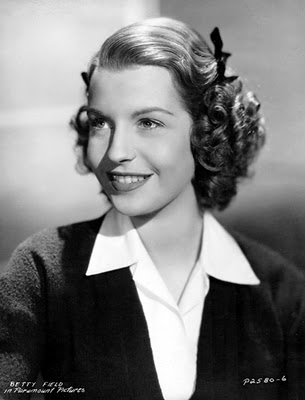
Sadly, the role of Daisy Buchanan would go instead to Betty Field. Betty Field hardly looks like the Daisy Buchanan of the novel. For one thing, Betty Field was a blonde, hardly the dark haired seductress described by F. Scott Fitzgerald. For another, while Betty Field was pretty, she was not the incredible beauty that Daisy presumably was. Of course, the difference in Betty Field's appearance from the Daisy Buchanan of the novel could have easily been overcome had she given a good performance in the role, which she sadly did not. While Betty Field was an immensely talented actress, her performance as Daisy Buchanan seems far off the mark. Even though Daisy was supposed to come from an upper class, Louisville family, Betty Field's Daisy seems at times as if she should belong to a lower social class. And while Daisy Buchanan was from Louisville, Kentucky, to this Southerner's ear it sounded as if there were times Miss Field slipped into her native, Massachusetts accent--at the very least she did not sound like a Kentuckian!

Worst of all, Betty Field gave Daisy Buchanan no real depth. The charm and intelligence that Daisy displays in the novel are entirely lacking in her performance. It is perhaps for this reason that Alan Ladd and Betty Field have no chemistry whatsoever--the viewer is left wondering what Gatsby sees in Daisy! To be fair, given Betty Field's talent, I suspect that much of the blame for her poor performance may rest with the producers (who in not considering Gene Tierney perfect for the role apparently had not read the book) or director Elliott Nugent, who may have misdirected Miss Field in her performance of the role. Regardless, it would seem Betty Filed was miscast as Daisy.

Strangely enough, the actress cast as Jordan Baker in the 1949 version of The Great Gatsby was probably better suited to the role of Daisy Buchanan than Betty Field was. Dark haired Ruth Hussey was cast as Jordan Baker, the woman with hair the colour of an "autumn leaf" in the novel. Ruth Hussey was also beautiful. While not a beauty on the level of Gene Tierney (let's face it, few actresses in the history of film were), in my humble opinion she was much prettier than Betty Field. And I have little doubt that Ruth Hussey could have done a better job of playing Daisy Buchanan than Betty Field did. Ruth Hussey's particular niche in film was playing worldly, sophisticated, intelligent women. She could have then given Daisy the intelligence and depth necessary to the character, as well as the fickleness and selfishness.  Miss Hussey would have actually been a better Daisy than she was a Jordan!

As miscast as Betty Field was in the 1949 version of The Great Gatsby, it was nowhere nearly as bad as the miscasting that occurred in the 1974 adaptation of the novel. The 1974 version of The Great Gatsby originated when then head of Paramount Robert Evans bought the rights to the novel for his wife Ali McGraw, intending for her to play Daisy Buchanan. At least physically Ali McGraw could pass as the novel's version of Daisy. She was dark haired and, while not necessarily one of the great screen beauties of all time, she was quite attractive. Ali McGraw may have also had the talent to pull off the role. She received very good critical notices for Goodbye, Columbus (1969) and The Getaway (1972). Unfortunately, Miss McGraw fell in love with Steve McQueen during the shooting of The Geatway and left Robert Evans for him. This put an end to her being considered for the role of Daisy Buchanan.

With Ali McGraw out of the running for the role, it was offered to Tuesday Weld. As a blonde Miss Weld definitely did not have the same hair colour as Daisy did in the book, but otherwise she would seem to have been perfect for the role. Miss Weld was one of the most beautiful actresses of her time (perhaps of all time) and one who was very talented as well. She could have captured the complexities of Daisy Buchanan. Unfortunately, Miss Weld would turn the role down. Natalie Wood was offered the role of Daisy Buchanan. Not only was she incredibly beautiful like Tuesday Weld, but she was also a brunette like the Daisy of the novel. An experienced actress who had been in the business since childhood, Miss Wood also had the talent to play a complex character like Daisy Buchanan. Unfortunately, she had not acted in five years and so the producers asked her to take a  screen test. Natalie Wood took umbrage to this and so she did not get the part. In the end the search for Daisy Buchanan was narrowed down to five actresses:  Mia Farrow, Faye Dunaway, Candice Bergen, Katharine Ross and Lois Chiles.

Of these actresses Katherine Ross and Lois Chiles perhaps most resembled Daisy Buchanan in the book. Katherine Ross was dark haired and possessed a natural, sedated sort of beauty. Unfortunately, I am not sure she could have pulled off the role. In many of her roles, and particularly in her best known roles (The Graduate and Butch Cassidy & the Sundance Kid), she seemed to be little more than window dressing. It could be that Miss Ross had the talent to play Daisy and she just never  received any particularly challenging roles early in her career, so she perhaps she would have made a good Daisy. As she wasn't cast in the role we will never know. At least as far as appearance goes, Lois Chiles may have been better suited to the role of Daisy than Katherine Ross. Lois Chiles was dark haired and incredibly beautiful like Daisy was in the novel. She also possessed an absolutely beautiful voice, one with the musical qualities attributed to Daisy's voice in the book. While Lois Chiles may have looked the most like Daisy of the actresses considered for the 1974 version, it is questionable whether she had the talent at the time to pull the role off. Curiously, she was ultimately cast as Jordan Baker (who was decidedly not a brunette in the book) and she was one of the few actors in the film to deliver a fairly solid performance, so it is possible she could have played Daisy quite well. Unfortunately, we will never know because she was not cast as Daisy Buchanan.

In the end the role of Daisy Buchanan in the 1974 version of The Great Gatsby would go to the actress perhaps least suited to the role of those considered: Mia Farrow. Like Betty Field, before her, Mia Farow was a blonde rather than a brunette. Unlike Betty Field before her, in my humble opinion Mia Farrow would not even qualify as pretty, let alone beautiful--she was passably cute at best. Of course, the fact that Mia Farrow did not look like Daisy Buchanan in the book at all need not have been a detriment had she given the role the sort of intelligence and charm that would make it convincing that men would desire her. Sadly, she did not. Indeed, Mia Farrow's interpretation of Daisy seems wholly lacking in intelligence, wit, or charm. Instead she simply seems flighty, flaky, and none too bright. What is more, Miss Farrow seems to have no chemistry whatsoever with Robert Redford (who was miscast as Jay Gatsby as well).

Even Mia Farrow's voice ruins the idea of Daisy as any man's "dream girl." While in the book Daisy has the sort of mellifluous voice that makes people pay attention, Mia Farrow's voice in the film is weak and even whiny to the point that it grates upon the ear. As to her accent, if Mia Farrow was trying to do a Southern accent, one would not know it. In the end one leaves the 1974 version of The Great Gatsby wondering what on Earth Gatsby ever saw in Daisy. Mia Farrow's Daisy comes off as annoying rather than seductive, and she does not possess the great beauty that would necessarily lead a somewhat shallow man such as Jay Gatsby to ignore her grating personality and irritating voice. While most of the cast in The Great Gatsby (1974) was miscast, Mia Farrow is the one that stands out the most. Indeed, the casting of Mia Farrow as Daisy Buchanan in The Great Gatsby may be one of the worst cases of miscasting in the history of film.

This coming May yet another version of The Great Gatsby is set to be released, this one directed by  Baz Luhrmann of Moulin Rouge (2001) fame. And, unfortunately, it seems as if Daisy Buchanan may have been miscast again. Carey Mulligan, who has appeared in An Education (2009) and Drive (2011) has been cast as Daisy. Here it must be noted that Miss Mulligan is blonde. It would seem that once more Daisy's hair colour as described in the book has been ignored.  And while I would say Carey Mulligan is definitely pretty (particularly when her hair is longer), she is not quite the drop dead gorgeous woman I picture when reading The Great Gatsby. That having been said, Carey Mulligan may deliver a performance that overcomes the fact that she does not particularly look like Daisy Buchanan. From the trailers she seems to do well enough. In fact, unlike Betty Field and especially unlike Mia Farrow, her voice is convincingly pleasing enough to belong to the Daisy of the book. While I still think Carey Mulligan is miscast (I think Natalie Portman or Anna Kendrick would have been better choices), she could surprise me by being convincing in the part. At any rate, I am praying that we will not see a repeat of the 1949 version and especially not the 1974 version of The Great Gatsby, in which one wonders why Gatsby pursued Daisy at all (and in the 1974 version why he didn't pursue Jordan instead).

Of course, the question for me and I suspect for many fans of the book is why the role of Daisy Buchanan was miscast in both the 1949 and 1974 versions, and possibly the 2013 version as well. I must confess that I have long been puzzled as to why in all but the 1926 version a blonde has been cast in the role when Daisy in the book is obviously a brunette. Indeed, whenever I have read the book the picture in my mind I have of Daisy is not Betty Field and definitely not Mia Farrow, but raven haired silent actress and classic beauty Louise Brooks. I have to wonder if the various producers of the adaptations of The Great Gatsby over the years have not seized upon the fact that Zelda Fitzgerald, who provided part of the basis for Daisy Buchanan, was blonde and so they have cast the role accordingly. Of course, this ignores the fact that in the book Daisy is described as dark haired and, for that matter, that Ginevra King, who also provided inspiration for the character, was a brunette.

While I am puzzled as to why blondes have been cast in the last three movies, I am also puzzled by the casting of women who are not necessarily great beauties in the role of Daisy. Indeed, Gene Tierney was passed over for the role by the producers of the 1949 version because they thought she was too beautiful. It seems clear to me in the novel The Great Gatsby that Daisy was not only beautiful, but the most beautiful female character in the entire book. She was the belle of Louisville who had it all--looks, intelligence, charm, and money. Given this fact, it seems impossible that an actress could be "too beautiful" to play Daisy Buchanan. It would be like saying a woman is "too beautiful" to play Cleopatra or Helen of Troy!

The sad fact is, that in my opinion, in both the 1949 version and especially the 1974 version, Jordan Brewster is actually more physically attractive than Daisy Buchanan. The fact that the women who have played Daisy in the movies have not possessed the legendary beauty necessary to the role has me more puzzled even than the fact that blondes have been cast in the part. That leaves me with two theories. The first is the fact that beauty is in the eye of the beholder and while I might not think Betty Field or Mia Farrow are great beauties, the producers may have (although I still fail to see how anyone could think Mia Farrow was prettier than Lois Chiles...).  It could then be that I am at fault here and I am judging the casting of Daisy too much by my own tastes. The second is tied to the thought on the part of the producers of the 1949 version that Gene Tierney was "too beautiful" to play Daisy. Quite simply, maybe the producers of the various versions of The Great Gatsby do not think Daisy was particularly beautiful. If this is the case, then, I have to wonder if they have ever read the novel or simply chose to ignore the novel. Not only Jay Gatsby, but Jordan Baker also describes Daisy in terms that would lead us to believe that she is quite beautiful.

Of course, here I must point out that men are drawn to women for more than their appearance. An intelligent woman with a good deal of charm can draw more men than a classic beauty who possesses no charm or intelligence whatsoever. In this case, Daisy would not have to be a great beauty to fascinate the officers of Camp Taylor. She simply needed to be intelligent, witty, and charming. The problem is that the actresses cast as Daisy Buchanan have failed to capture Daisy as a woman intelligent and charming enough to entice men. Betty Field shows a little bit of Daisy's intelligence, but not nearly enough, and she shows none of Daisy's charm. Indeed, Betty Field's Daisy seems a bit low class for a woman who was the belle of the ball in upper crust, Louisville society. Mia Farrow was even worse as Daisy Buchanan. Not only does she lack intelligence and charm, but she seems to exude the exact opposite of both. Mia Farrow's Daisy Buchanan seems so annoying and so silly that she would drive men away rather than lure them to her. Jay Gatsby would not have fallen for her, but probably would have run the other way! While I am puzzled by blondes being cast in the role and producers not considering great beauties for the role (Gene Tierney and Lois Chiles both would have seemed perfect), I am even more puzzled by the performances of Betty Field and Mia Farrow in the role. It is as if both actresses focused only on Daisy's fickleness, superficiality, and selfishness, entirely missing her intelligence and charm. Of course, in doing they gave us no reason to believe that Jay Gatsby was in love with her, let alone obsessed with her.

Whatever the reasons Daisy Buchanan has been miscast over the years, it seems to me that she most definitely has been. Indeed, I am worried at the performance Carey Mulligan will deliver in the latest version of The Great Gatsby. She might well surprise me and play Daisy precisely as she is written in the book. So far I must confess she seems convincing in the trailers I have seen (although I still don't think she looks like Daisy). If Carey Mulligan does not deliver a great performance as Daisy Buchanan, I suppose it will simply stand as one more case of the role being miscast. Sadly, in that case, fans of the novel will have to wait another 20 or 30 years for a film adaptation in which Daisy is presented as true to the novel as possible.

Monday, September 24, 2012

The 64th Annual Emmy Awards

The past many years I have not watched the Emmy Awards. The simple fact is that they are scheduled in a bad time, on Sunday night when the cable channels schedule their best shows. Given the choice between sitting through the awards ceremony and watching Hell on Wheels and Copper, I chose the latter. That having been said, I always read about the awards the next day. This time I must admit that I was a bit surprised.

Quite simply, the long winning steak of Mad Men has been broken. Now I must confess that I did not expect Mad Men to win the award for Outstanding Drama Series this year. I thought this past season was not quite as good as previous seasons and it seemed to me that other shows actually had better runs this year. That having been said, I did not expect the Outstanding Drama Series Emmy to go to Homeland. Of course, I must confess I have never seen Homeland (we do not get Showtime), so I have no idea of how good or how bad a show it may be. While I have never seen even one episode of Homeland, however, its win came as a surprise because I have heard very little about the show. I know a few people who watch it and they say it is very good, but they do not rave about the show in the way that many of my friends have past seasons of Mad Men or the current runs of Boardwalk Empire, Breaking Bad, Downton Abbey, or Game of Thrones. Yet other people I to whom I talked today had never even heard of Homeland! Indeed, if I had placed a bet on who would win the award for Outstanding Drama Series, it would have been Breaking Bad or Boardwalk Empire.

Of course, given the fact that I was totally taken off guard by Homeland winning Outstanding Drama Series, I was also taken off guard by its other wins. I did not expect Damian Lewis to win the Outstanding Lead Actor in a Drama Series award. I honestly thought that it might go to Jon Hamm for Mad Men or perhaps Bryan Cranston for Breaking Bad. For Outstanding Lead Actress in a Drama Series I thought Elizabeth Moss would win for Mad Men (indeed, while this season of Mad Men was not as good as the rest, Miss Moss's performance as Peggy Olson was as impressive as ever). I did not expect Claire Daines to take the award for Homeland. I do have to say that the awards in the supporting categories went as I thought they would. While I hoped Brendan Coyle would the Outstanding Supporting Actor in a Drama Series award for Downton Abbey, I thought Aaron Paul might win for Breaking Bad. I thought Dame Maggie Smith would win the Outstanding Supporting Actress award for Downton Abbey, for which I was very happy (Violet is my favourite character on the show).

Over all I can't say I was necessarily unhappy with the drama Emmys, although I am certainly confused. This is not the case with the Emmys in the comedy category where I am unhappy. Oh, I have no real objections to Modern Family winning the Outstanding Comedy Series award. My problem is that what are in my opinion the best comedies on television were not even nominated! Does the Academy of Television Arts & Sciences honestly believe that a run of the mill sitcom like The Big Bang Theory or incredibly unfunny sitcoms like Curb Your Enthusiasm and Girls are better than Community and Parks and Recreation? I hope not! It's for the same reason that I was not happy that Jon Cryer of Two and a Half Men was even nominated for the Outstanding Lead Actor in a Comedy Series award, let alone won it. Two and a Half Men is a run of the mill sitcom and one that isn't even as funny as it once was. Why wasn't Nick Offerman nominated for Parks and Recreation? Of course, Community and Parks and Recreation were snubbed in the other acting categories for comedy series as well, although at least those awards went to cast members of Modern Family.

While I was disappointed in the awards in the comedy category, I must confess I am utterly puzzled by the Miniseries or a Movie categories. Since when are Sherlock, Luther, and American Horror Story miniseries? By definition a mini-series is a television programme with a limited number of episodes. Miniseries by their very definition, then, do not have successive seasons (or in British television jargon, series). Given both Sherlock and Luther are on their second seasons and there is going to be a third season of both, I would say that they definitely are not mini-series. For that reason I am not going to complain about Game Change (a true miniseries) winning, even though I adore Sherlock and really like Luther.

Over all, then, I have to say this year's Emmys were a mixed bag for me. I was not really unhappy with the awards in the drama category, although I am a bit puzzled that Homeland won. As usual I am fairly unhappy with the comedy category--I fully expect next year that Parks and Recreation and Community still won't be nominated, but Up All Night  and Whitney will be.... I also think the Academy of Television Arts & Sciences need to change their definition of "miniseries" to the same as everyone else has. If a series has a second season, then it is not a miniseries!

Saturday, September 22, 2012

What a Character: Eddie Anderson

It is a sad fact of life that the Golden Age of Hollywood was not a Golden Age for African Americans. Particularly in the Thirties, African American characters were often outright stereotypes. It was the era of Stepin Fetchit and Willie Best, actors whose speciality was playing characters who were stereotypically lazy, dim witted, and illiterate. Even in an era when offensive stereotypes permeated everything from big budget feature films to Warner Brothers cartoons, however, there were African American actors whose work would change the image of blacks on film for the positive. Among these actors was comedian Eddie Anderson, best known for playing Jack Benny's valet Rochester on the long running Jack Benny Programme.

Possessing an immediately recognisable, gravelly voice that was something like a foghorn, there can be no denying that Eddie "Rochester" Anderson was one of the most popular radio and television stars of the 20th Century regardless of race. In the course of his career he became the highest paid African American actor for a time and one of the highest paid stars in radio. And while Eddie Anderson is best known as Rochester, he also had a highly successful career as a character actor in motion pictures. Indeed, Paramount considered Eddie Anderson such a box office draw that they once wanted him for one of their Bob Hope movies. Jack Benny, who had Mr. Anderson under contract, turned Paramount down with the words, ""It's bad enough having him steal my pictures." Jack Benny may have had little success in motion pictures, but his comedy partner Eddie Anderson was a bona fide movie star, one who could have easily stolen a Bob Hope movie out from under Mr. Hope's nose.

Eddie "Rochester" Anderson was born on 18 September 1905 in Oakland, California. Both of his parents had been in the entertainment industry. His father, "Big Ed" Anderson, had been a minstrel performer and was later part of the comedy team of Anderson and Goines, which played the vaudeville circuit. His mother, Ella Mae, had been a circus tightrope walker, her career cut short when she suffered a fall. Eddie Anderson developed his trademark voice while he was still young, straining his vocal chords while selling newspapers in San Francisco. As might be expected of the son of two performers, Eddie Anderson would enter show business while still young. He and his brother Lloyd formed a song and dance act, performing for military men at San Francisco's Presidio. Young Eddie Anderson later joined the chorus of Struttin' Along.  Later still Mr. Anderson, his brother Cornelius Anderson, and a friend would form a song and dance trio, The Three Black Aces. The Three Black Aces would prove rather successful. Starting on the vaudeville circuit, they eventually performed at such venues as the Apollo Theatre and the Roxy.  It was after The Three Black Aces spent two and a half years performing at the Cotton Club in Los Angeles that Eddie Anderson decided to make the move to Hollywood and seek work in film.

Eddie Anderson made his first appearances on his film, with an uncredited role in What Price Hollywood? (1932). Over the next several years Eddie Anderson appeared in such films as Hat Check Girl (1932), False Faces (1932), Billion Dollar Scandal (1933), I Love That Man (1933), Behold My Wife (1934), and His Night Out (1935) , generally playing uncredited roles as chauffeurs, porters, and the like. It was in 1936 that Eddie Anderson received his biggest part yet, playing Noah in The Green Pastures. The same year he appeared in Three Men on a Horse, playing the elevator operator Moses. In 1937 Eddie Anderson would appear in such films as Melody for Two (1937) and One Mile from Heaven (1937).

While Eddie Anderson's career in films was on the rise in the mid to late Thirties, it would not be films that would make him a star, but radio instead.  It was in 1937 that an episode of The Jack Benny Programme featured a Coleman porter who would have an encounter with penny pinching Jack Benny. Eddie Anderson proved to be a hit in the role, so that a month later he was brought back to play the part of a waiter named Pierre. Once again Eddie Anderson proved popular with the audience. Many weeks later, Eddie Anderson was brought back on the show again, this time playing a character in a dispute with Jack Benny over a watch. Notably, Mr. Anderson's character came out on top in the exchange, something that probably would not have happened  between a black character and a white character on another radio show or in a motion picture. Eddie Anderson once more proved to be a hit on the show. It was then not long before Eddie Anderson was made a regular member of the cast of The Jack Benny Programme, playing Jack Benny's valet and chauffeur Rochester (who would eventually be given the surname "Van Jones").

In the early days the character of Rochester owed a good deal to commonly held racial stereotypes. He loved to drink, particularly gin.  Rochester loved gambling and chasing women. His tastes in food ran to fried chicken and watermelon. Even in the early days while Rochester may have resembled many of the common black stereotypes, at the same time he differed a good deal from them as well. Rochester was decidedly not dim witted the way that Stepin Fetchit and Willie Best's characters were, and while he was a servant he was not exactly servile either. Like the white characters on The Jack Benny Programme Rochester mocked and belittled Jack. And like every other character on the show Rochester always got the better of Jack as well. Ultimately Rochester would confront and even ridicule Jack in ways that no other black character in any other radio show or any motion picture would have been permitted to do to a white man at the time.

It would be during World War II, when the horrors of the Holocaust became public knowledge, that Jack Benny and his writers made the decision to remove all traces of ethnic stereotyping from Rochester's character. Gone were the jokes about Rochester drinking gin, gambling, chasing women, eating fried chicken, and eating watermelon. Already intelligent and somewhat mocking towards Jack Benny, Rochester became the American equivalent of Jeeves, a sly, assertive manservant who more or less has his employer's life under his control. It is Rochester to whom Jack Benny goes when he needs to know how to spell words like "superfluous" and "discrepancies." And it is often Rochester who gets Jack out of trouble. While Rochester was still Jack Benny's valet and chauffeur, he was very much treated as Jack's equal.

In the end Jack Benny and Eddie Anderson became a comedy team, much in the same way that Bob Hope and Bing Crosby or George Burns and Gracie Allen were. What made them a success as a team was not simply that they were two very talented men, but that they were also very close friends who were quite comfortable with each other. When Eddie Anderson had a heart attack in 1958, Jack Benny was visibly worried about him. When Jack Benny died in 1974, Eddie Anderson not only teared up during interviews about his former employer and comedy partner, but he openly wept at Jack Benny's funeral.

Of course, here it must be pointed out that not only did Jack Benny change the character of Rochester from a near stereotype to a much more positive and affirmative character, but in his own way he also stood up against segregation on behalf of Eddie Anderson. Once Eddie Anderson was denied a room in a hotel in St. Joseph, Missouri at which Jack Benny's cast and crew had planned to stay, Jack Benny told them, "If he doesn't stay, neither then do I." The hotel relented and gave Eddie Anderson a room. The South was not the only place where racism against Eddie Anderson took place. Once in New York, a couple at a hotel at which the cast and crew were staying complained about being in the same  hotel as Eddie Anderson. The hotel manager tried to convince Eddie Anderson to move to another hotel. The show's producer and Mary Livngstone's brother, Hilliard Marks, told the manager that Eddie Anderson would be happy to move to another hotel. The following day the entire cast and crew, 44 people in all, checked out of the hotel.

Eddie Anderson would also appear with Jack Benny in many of Mr. Benny's movies. He appeared in the films  Man About Town (1939), Buck Benny Rides Again (1940), Love Thy Neighbour (1940), and The Meanest Man in the World (1943) (surprisingly he did not appear in The Horn Blows at Midnight, Jack Benny's movie that he joked about for years). In all but The Meanest Man in the World he played Rochester. In the book From Sambo to Superspade: the Black Experience in Motion Pictures author Daniel J. Leab noted that Paramount "...recognized how much Rochester bolstered the weak box- office draw of Benny, who was not at his best in the movies." Indeed, in Jack Benny's films, Eddie Anderson's role as Rochester is nearly as large as that of Mr. Benny. What is more, the Rochester of Jack Benny's movies is nearly recognisable as the Rochester of the later radio show and the television series. In the films he regularly outwits his boss and in Man About Town it is ultimately Rochester who saves his boss's hide.

Eddie Anderson  would continue to appear as Rochester on The Jack Benny Programme through its transition to television until its end in 1965. Along with the rest of the cast of The Jack Benny Programme he provided his voice in the classic Warner Brothers short "The Mouse That Jack Built (1959)." After The Jack Benny Programme went off the air, Eddie Anderson appeared with Jack Benny in two television specials.

Even while Eddie Anderson played Rochester on The Jack Benny Programme, he continued to have a successful movie career. Of course, even in some of the films he made without Jack Benny, Eddie Anderson played the ever popular character of Rochester.  He also appeared as Rochester in Star Spangled Rhythm (1942) and got to display his skill as a song and dance man with the "Sharp as a Tack" number (easily one of the highlights of the film). Finally, he appeared as Rochester in What's Buzzin', Cousin? (1943), receiving an unheard of second billing to Ann Miller.

Of  course, as popular as the character of Rochester was, it seems likely that Eddie Anderson would have had a film career had he never played the character. After all, his film career was already on the rise when he first appeared on The Jack Benny Programme. His film career would continue to grow even in his first years on The Jack Benny Programme. He appeared as Gros Bat in Jezebel (1938), the big budget Southern given to Bette Davis as compensation for losing the role of Scarlett O'Hara in Gone With the Wind (1939). Eddie Anderson also appeared in Gone With the Wind, playing Scarlett's coachman Uncle Peter. Aside from Hattie McDaniel and Butterfly McQueen, he was the top credited African American in the cast. Eddie Anderson also appeared in Frank Capra's You Can't Take It With You (1938), playing the maid Rheba's boyfriend and handyman to the Sycamore family, Donald. He appeared in the W. C. Fields feature You Can't Cheat an Honest Man (1939), alongside fellow radio stars Edgar Bergen and Charlie McCarthy. In the film he played a character very much like Rochester named "Cheerful." Like Rochester, Cheerful is intelligent and independent. And like Rochester he outwitted his boss.

Eddie Anderson's film career would continue unabated in the Forties, as he appeared in several films aside from those he made with Jack Benny or appeared as Rochester without Jack Benny. He had a fairly high profile role as the nameless chauffeur in Topper Returns (1941), although sadly the character had more in common with Mantan Moreland's Birmingham Brown from Monogram's "Charlie Chan" series than Rochester. In Birth of the Blues (1941) he played Louey, the manservant (not unlike Rochester) to Bing Crosby's character Jeff Lambert. Sadly, Eddie Anderson's next film, Tales of Manhattan (1942), would see him playing a somewhat stereotypical black preacher in the last segment of that film. Indeed, the film was offensive enough that Paul Robeson turned his back on Hollywood afterwards.

Throughout his career Eddie Anderson generally played supporting roles. Even the second billing he received in  What's Buzzin', Cousin? was a rarity. With Cabin in the Sky (1943) Eddie Anderson was the male lead. In the film Eddie Anderson played Little Joe Jackson, a man who is murdered after accumulating a good deal of gambling debts and is given six months more to live in which he must redeem himself to enter Heaven or else be condemned to Hell. To this end Lucifer Jr. (played by Rex Ingram) tries everything in his power to corrupt Little Joe, including the temptress Georgia Brown (Lena Horne). In the film we get to see Eddie Anderson sing once more, and in duets with both Ethel Waters and Lena Horne at that. While Cabin in the Sky is a much more positive portrayal of African American than many other films of its era, sadly the film still contains some stereotypes. Eddie Anderson's Little Joe is a gambling addict. Ethel Waters' Petunia, Little Joe's wife, is perhaps overly religious. While much more affirmative than many films of its time, then, Cabin in the Sky can still prove jarring to modern day audiences.

Aside from Little Joe Jackson in Cabin in the Sky, Eddie Anderson's most notable movie role in the Forties may have been that of Jackson the butler in Brewster's Millions (1945), the fifth adaptation of George Barr McCutcheon's novel of the same name. In this version of Brewster's Millions it is Dennis O'Keefe who plays Monty Brewster, a newly demobilised soldier who must spend a million dollars in two months if he is to inherit eight million dollars form his late uncle. As one of Monty Brewster's chief allies, the character of Jackson plays a central role in the film. What is more, he is also cut very much from the same cloth as Rochester--a black butler who is not afraid to speak his mind, even to white people. Lloyd T. Binford, chairman of Memphis, Tennessee's Board of Censors, felt that Jackson "...has much too familiar a way about him, and the picture presents too much social equality and racial mixture." As a result he barred the film from Memphis, an action which resulted in nationwide condemnation of Binford and his actions.

Eddie Anderson would only make a few more films following Brewster's Millions. He appeared in such films as I Love a Bandleader (1945), The Sailor Takes a Wife (1945), and The Show-Off (1946). The Fifties would see him make no feature films at all, although he did continue to appear on television as Rochester on The Jack Benny Programme. He also reprised his role as Noah in The Green Pastures for The Hallmark Hall of Fame during the decade. In the Sixties he would guest star as Rochester on the TV show Bachelor Father (in the episode Bentley Gregg, played by John Forsythe, subcontracted Rochester from Jack Benny). He also guest starred in episodes of It Takes a Thief and Love, American Style. It was in the Sixties that Eddie Anderson would make his final appearances in feature films. He appeared as a cabbie in the epic, all star comedy It's a Mad Mad Mad Mad World (1963) and he had a cameo in the Godfrey Cambridge comedy Watermelon Man (1970).

Sadly, it was in 1977 that Eddie Anderson died at the age of 71 from heart failure. Not surprisingly, the headlines announcing his death referred to him as "Rochester" nearly as often as they did "Eddie Anderson."

The Thirties and Forties were not a particularly good time for African American actors. The vast majority of parts available to them tended to be either stereotypes or servants, often both in the same role. Eddie Anderson would play more than his fair share of stereotypes and servants. Indeed, it must be noted that as independent as Rochester was, in the end he was ultimately Jack Benny's valet. Ultimately, however, Eddie Anderson played roles that transcended the stereotypes of the day. Rochester on The Jack Benny Programme, Cheerful in You Can't Cheat an Honest Man, and Jackson in Brewster's Millions were all roles in which Eddie Anderson played intelligent, resourceful men who were much brighter than their employers. At a time when many African American characters in film and on radio were dim witted, lazy, or servile, Eddie Anderson was playing characters who were intelligent, resourceful, and independent.

What is perhaps more remarkable than the fact that Eddie Anderson was given the chance to play such characters is the fact that he proved enormously successful doing it. Eddie Anderson became the first African American actor to have a regular part in a radio show. He also became the highest paid African American radio star. For a time in the Forties he was the highest paid African American actor in film. With but few exceptions (such as a certain board of censors in Memphis), audiences obviously had no objections to Eddie Anderson's characters who were often brighter than their bosses and treated as intelligent individuals rather than mere servants. Eddie Anderson's success in film playing witty characters would pave the way for actors such as Sidney Poitier, Louis Gossett Jr., Paul Winfield, and many others. His success as a comedian would pave the way for such comics as Dick Gregory, Godfrey Cambridge, Bill Cosby, and many others.  At a time when most black actors were playing outright stereotypes, servants, or both, Eddie Anderson was paving the way for black characters who were both intelligent and independent.


Friday, September 21, 2012

Chuck Jones' 100th Birthday

When it comes to the animators of the animated short subjects from the Golden Age of Hollywood, there are perhaps only three who are household names today, three whose names are known to the average person and not simply to classic movie buffs or animation fans. Two of them are the team of William Hanna and Joseph Barbera. But while Messrs. Hanna and Barbera animated many of the classic shorts at MGM (especially the "Tom and Jerry shorts"), their primary claim to fame may be the studio they founded after their tenure at MGM to animate cartoons for television. When it comes to animators who greatest claim to fame are shorts made during the Golden Age of Hollywood, then, there may be only one who is a household name. That is Chuck Jones, who was born 100 years ago today, on 21 September 1912.

Curiously, while Chuck Jones remains the best known animator to work for Warner Brothers, he actually only created a few of their best known characters. Chuck Jones created Wile E. Coyote, The Road Runner, Pepe le Pew, Marvin the Martian, and Michigan J. Frog. He co-created Elmer Fudd with Tex Avery. The biggest names among the classic Warner Brothers characters (Bugs Bunny, Daffy Duck, Porky Pig, Sylvester, and Tweety) were all created by others. While Chuck Jones may not have created the biggest names to emerge out of Termite Terrace, arguably it was Chuck Jones who directed the very best animated shorts featuring Warner Brothers Cartoons' biggest stars. The "Hunting Trilogy" of Rabbit Fire, Rabbit Seasoning, and Duck! Rabbit, Duck! (starring Bugs Bunny and Daffy Duck), "What's Opera, Doc (starring Bugs Bunny and Elmer Fudd), and "Duck Dodgers in the 24½th Century (starring Daffy Duck)" were all directed by Chuck Jones.

Not only did Chuck Jones create only a few of the classic Warner Brothers cartoon characters, but what comes to the mind of the average person when they think of a "Chuck Jones cartoon" really isn't Chuck Jones' style at all. When many think of Chuck Jones, they think of manic, high speed cartoons that defy the laws of physics. In truth this was the style of legendary animator Tex Avery, who more or less invented what we now know as the Warner Brothers style of animation. While Chuck Jones, like nearly every Warner Brothers animator (except possibly Bob Clampett) was influenced by Tex Avery, his style was in truth quite different from that of Tex Avery, although even viewers not overly acquainted with the animated shorts of the Golden Age would recognise them as "Warner Brothers Cartoons."

Indeed, not only did Chuck Jones have a style all his own, quite distinct from the other animators at Warner Brother Cartoons, but his style would evolve over the years. In fact, initially Chuck Jones emulated the hyper-realistic, cute style of the Disney cartoons.This can particularly be seen in his early "Sniffles" cartoons, a cute mouse who looked as if he could have walked out of one of Disney's "Silly Symphonies." The "Sniffles" cartoons and Chuck Jones' other early works display the excellent craftsmanship that would be a hallmark of his work for the entirety of his career. Even then Chuck Jones' characters were fully realised, displaying their personalities not only through their dialogue, but through their movements as well. And even at the time Chuck Jones was a master of backgrounds. Throughout his career, the backgrounds in Mr. Jones' animated shorts would have a character all their own, each background crafted specifically to the short in which it appeared. The backgrounds in Chuck Jones' shorts ranged from lush to downright sparse, but they were always highly stylised.

While Chuck Jones' early cartoons were lavish affairs, many modern viewers might find them somewhat lacking in humour. This was certainly true of Chuck Jones' colleagues at Leon Schlesinger Productions (the independent studio that created Warner Brothers' cartoons and would later become Warner Brothers Cartoons Inc.). Fortunately, Chuck Jones would gradually abandon his early, Disneyesque style in favour of the Warner Brothers style. In the end Chuck Jones developed a style that was recognisably "Warner Brothers," but was more controlled and more sedate that the crazy, high energy work of Tex Avery or the outrageous surrealism of Bob Clampett, but incorporated features of both. To this mixture Chuck Jones added what had always been his strongest points: characterisation, strong backgrounds, and stylisation.

That creating memorable characters was one of Chuck Jones' strong suits can be seen in that some of his best known character actually did not appear in that many cartoons during the Golden Age. One of his most famous and most popular  creations, Marvin the Martian, only appeared in five cartoons during the Golden Age of  Animation. In fact, he would not even be given the name "Marvin" until the Seventies (in "Hasty Hare" from 1952 he was called "the Commander of Flying Saucer X-2). The fact that Chuck Jones could create a fully realised character through movement and appearance made Marvin the Martian more memorable than many cartoon characters who appeared in several animated shorts over the years.

Another example of Chuck Jones' mastery of character animation is Michigan J. Frog. While Michigan J. Frog is not a household name the way that Marvin is, nearly everyone recognises him as a Warner Brothers character. Despite this, Michigan J. Frog would appear in only one cartoon during the Golden Age--"One Froggy Evening." Like Marvin the Martian, he would not even have a name until the late Seventies. And while Michigan J. Frog had only appeared in one classic Warner Brothers cartoon, he was recognisable enough that he became the mascot of the television network The WB in 1995.

While Chuck Jones did not create some of Warner Brothers biggest stars (Bugs Bunny was created by Ben Hardway, Tex Avery and Bob Clampett, while Daffy Duck was created by Tex Avery and Bob Clampett), then, he would have such a lasting impact on them that he might as well have co-created them as we known them today. It was Chuck Jones who was responsible for making Bugs Bunny a much more sympathetic character. Bugs was an extremely clever and extremely aggressive character who outsmarted nearly every character who opposed him. As a result the staff at Warner Brothers Cartoons became concerned that audiences might actually start sympathising with his opponents (most notably Elmer Fudd). It was for this reason that new, more aggressive characters, such as Yosemite Sam (created by Friz Freleng), were introduced. Chuck Jones' solution to making Bugs Bunny a more sympathetic character was to put him into situations where he was threatened, bullied, cheated by, or otherwise wronged by his opponents prior to taking action against them.

It would also be Chuck Jones who would transform Daffy Duck into the character we know today. As originally conceived Daffy Duck was a totally insane and unrestrained character primarily used for comic relief. The two things he had in common with his modern incarnation were a certain level of aggressiveness and combativeness that was high even for most cartoon characters. It was Chuck Jones and writer Michael Maltese who transformed Daffy Duck from the already somewhat tamer, wacky character into a self absorbed, vain, greedy, cowardly, cartoon diva who was determined to be Warner Brothers' top animated star. This new incarnation of Daffy Duck would make his debut in the classic "Rabbit Fire," which was not only the first cartoon in Chuck Jones' "Hunting Trilogy," but the first cartoon in which Bugs Bunny and Daffy Duck co-starred together. The new personalty Chuck Jones and Michael Maltese gave Daffy has remained ever since.

As mentioned above, in addition to being character driven, Chuck Jones' animated shorts have also been characterised by strong backgrounds and stylisation. In fact, the backgrounds in Chuck Jones' cartoons are often as much of a personality in the films as the characters themselves. This can even be seen in much of his earlier work. In "The Aristo-Cat" from 1943 the wallpaper of the palatial mansion in which the short is set constantly changes to reflect the mental state of the title character. In "Duck Dodgers in the 24th 1/2 Century" Chuck Jones gave us highly stylised backgrounds that evoke the Googie architecture of the time (the retro-futuristic look of many fast food restaurants and gas stations in the Fifties). Another example of Chuck Jones' stylised backgrounds, made to fit the cartoon at the time, are the many Wile E. Coyote and Road Runner shorts. The shorts unfold against a seemingly unending dessert filled with winding roads and high cliffs.

While Chuck Jones' cartoons are marked by strong character animation and stylised backgrounds, they are also marked by meta-referential qualities. Characters breaking the fourth wall was a feature of Warner Brothers cartoons since the Thirties and appears in shorts directed by most of the Warner Brothers animators. For the most part, however, this was largely limited to the characters making asides to the audience. It would be Chuck Jones would take breaking the fourth wall to a  whole new level. In fact, in many (perhaps most) of cartoons it is very clear that the characters realise they are in a cartoon or, at the very least, consider themselves actors in a cartoon. "The Scarlet Pumpernickel" begins with Daffy Duck reading a prospective script to Warner Brothers executive J.L. (a thinly disguised Jack Warner). In "What's Opera, Doc" both Bugs Bunny and Elmer Fudd are all too aware that they are actors in a parody of Wagner's Der Ring des Nibelungen. While meta-reference plays a role in many, perhaps most, of Chuck Jones' cartoons, it is at the very centre of 1953's "Duck Amuck." The short is essentially a struggle between Daffy Duck, who wants to perform in something of a normal cartoon vignette, and an animator who constantly and sadistically changes his voice, appearance, and shape, as well as the backgrounds.  Not only is Daffy aware that he is in a cartoon, but "Duck Amuck" makes it all too clear that it is a cartoon.

While Chuck Jones is synonymous with Warner Brothers Cartoons in most people's minds, he did do work outside of the studio. He started out in the business washing cels for Ub Iwerks. He also worked for Walter Lantz for a time. During World War II he and Theodore Giesel (better known as Dr. Seuss) created Private Snafu for a series of educational cartoons for the U. S. Army.  For a brief time during which Warner Brothers' animation department was closed, Chuck Jones did uncredited work on Disney's feature film Sleeping Beauty (1959).

Following the closure of Warner Brothers' animation unit in the early Sixties, Chuck Jones would found Sib Tower 12 Productions with business partner Les Goldman. It was during this period that Chuck Jones did some of his best known work that was not for Warner Brothers. Through Sib Tower 12, he animated a new series of Tom and Jerry cartoons for MGM. Chuck Jones' "Tom and Jerry" cartoons were notable for having a surreal quality, as well as the fact that he redesigned Jerry to be cuter and made Tom into a feline equivalent of Wile E. Coyote. Mr. Jones went onto produce the classic holiday special How the Grinch Stole Christmas and several other specials based on the works of his friend Dr. Seuss. He also produced and directed The Phantom Tollbooth (1970), a feature film that mixed animation and live action.

In 1970 Chuck Jones founded Chuck Jones Productions. He went onto produce the Saturday morning educational series The Curiosity Shop, as well as such animated TV specials as Rikki-Tikki-Tavi and The White Seal. He would also create new animation for Warner Brothers for The Bugs Bunny/Road Runner Movie and various Warner Brothers Cartoon TV specials.

While Chuck Jones only created a few of Warner Brothers' best known characters and while he did not create the manic style associated with the cartoons, he was the animator who contributed a lion's share of what we think of the Warner Brothers Cartoon style today. It was Chuck Jones who made the Warner Brothers cartoons even more character driven than they had been before, even changing the personalities of some its most important characters. It was Chuck Jones who made Warner Brothers cartoons even more stylised than they had been before, often utilising backgrounds to reflect the mental states of the characters. It was also Chuck Jones who made the Warner Brothers cartoons increasingly self referential, taking what had been merely breaking the Fourth Wall in asides and taking it to a whole new level of meta-reference. If Chuck Jones is the only Warner Brothers animator who is a household name today, it is perhaps that except for possibly Tex Avery and Friz Freleng, it was he who did more to shape Warner Brothers Cartoons as we know them today than anyone else.

Thursday, September 20, 2012

The 10th Anniversary of Firefly

On 20 September 2002 the television series Firefly debuted on Fox. Created by Joss Whedon, Firefly was decidedly different from space operas that had aired on American television in the past. For one thing, the show was quite accurately described as a "space Western." The vast majority of the action of the series took place on planets where much of the technology was not much more advanced than the 19th Century. For another, the planets on which much of the action of the series took place had a level of lawlessness and a lack of government that roughly corresponded to the American West in the late 19th Century. Unfortunately, Firefly would not prove to be a success in its initial run. The Fox network cancelled Firefly after only eleven of its fourteen episodes had aired. Despite this the show has maintained a cult following to this day. Indeed, it is possible that Firefly could be the most popular television space opera besides Star Trek, at least if activity on the Web related to the show is any indication.

Firefly was set in the year 2517 at a time when humanity had expanded into space due to overpopulation on Earth. The show centred on the crew and passengers of the Firefly class ship Serenity, commanded by Mal Reynolds (Nathan Fillion) and his second in command  Zoe Alleyne Washburne (Gina Torres). Both Mal and Zoe were veterans of the Unification War, a civil war in which the Indpendents (AKA "Browncoats") fought for freedom against the powerful Alliance. The crew and passengers of Serenity consisted of "Wash" Washburne (Alan Tudyk), Zoe's husband and the pilot of the ship; Kaylee Frye (Jewel Staite), the ship's mechanic; Jayne Cobb (Adam Baldwin), a morally dubious hired gun; Shepherd Book (Ron Glass), a Christian minister who curiously had extensive knowledge of criminals and criminal activity;  Dr. Simon Tam (Sean Maher), a medical researcher who winds up the ship's doctor; River Tam (Summer Glau), Dr. Tam's mentally unbalanced sister whom he had broken out of an Alliance research facility; and Inara Serra (Morena Baccarin), a Companion or courtesan who rents one of the Serenity's shuttles.

Joss Whedon came up with the idea for Firefly after he read the best selling and Pulitzer prize winning novel The Killer Angels by Michael Shaara, which centred on the Battle of Gettysburg during the Civil War (the novel would also be adapted as the 1993 film Gettysburg).  The Killer Angels planted the thought in Mr. Whedon's mind of a show that would explore people, who had been on the losing side of a war, settling a frontier, much in the same way many Southerners migrated West following the Civil War.  From there he developed the idea of a science fiction series centred on the crew of a spaceship, commanded by survivors of a war, on a frontier in space. Like the Old West, civilisation would be lacking. Many of the amenities found on the more settled planets would not be found on the frontier, and while there would be a greater level of freedom on the frontier, there would also be a greater level of lawlessness. Joss Whedon developed his idea into the space Western Firefly.

Surprisingly for a show that would have such a brief run, things were actually looking up for Firefly early in its history. In 2000 Gail Berman, who had served as an executive producer on Joss Whedon's shows Buffy the Vampire Slayer and Angel, was appointed the President of Entertainment for the Fox Broadcasting Company, putting her in charge of the network's programming. In fact, it was Miss Berman who convinced Joss Whedon to turn his motion picture Buffy the Vampire Slayer into a television series. It should then have been no surprise that in December 2001 Fox ordered 13 episodes of Firefly as part of a $20 million deal with Joss Whedon. In January 2002 Fox provided Mr. Whedon's production company, Mutant Enemy, with the then unheard of amount of $10 million for the pilot for Firefly. "Serenity" would begin shooting on 20 March 2012. Before the pilot even began shooting,  the actress originally hired to play companion Inara Serra, Rebecca Gayheart, would be fired after only one day. In only a few days Morena Baccarin would be hired to take her place.

Unfortunately, the situation for the prospective new series at Fox would sour soon enough. It was in May 2002 that Fox rejected the original pilot for Firefly, "Serenity." The network thought the two hour pilot was both too long and too slow. The network also complained that lead character Mal Reynolds (Nate Fillion) was too dour and too unsympathetic. Mutant Enemy was forced to scramble to create an entirely new pilot, "The Train Job," which incorporated many of the suggestions made by Fox (including more action and giving Mal more of a sense of humour). The beginning of "Serenity" would also be reshot, incorporating more action. Despite "Serenity" being the original pilot, the first episode shot, and the episode that set up both the series' premise and many of its story arcs, it would be the last episode aired.

May 2003 would also see more bad news for Firefly than Fox rejecting its original pilot. On 15 May 2002 Fox announced that Firefly would be delayed until the spring of 2003 and instead the cancelled sci-fi show Dark Angel would return in autumn 2002. The very next day, 16 May 2002, Fox did a complete about face and announced that Dark Angel was cancelled and Firefly would indeed debut in autumn 2002. Unfortunately, Firefly was also scheduled in Dark Angel's former time slot on Friday at 8:00 PM EST/7:00 PM CST, a time period generally considered a death slot for any sort of genre or youth oriented programming.

Firefly would become one of the most highly anticipated shows of the 2002-2003 season, at least as far as fans of imaginative television were concerned. By the early Naughts Joss Whedon was already something of a name among sci-fi, fantasy, and horror fans.  He was creator of the critically acclaimed, cult series Buffy the Vampire Slayer (a fact highly touted by Fox in its promos for Firefly) and co-creator of its spinoff Angel. He had also been a co-writer on the hit, critically acclaimed Pixar film Toy Story. It was not unusual for articles in newspapers and on websites from early 2002 to describe Firefly as "highly anticipated." On 3 August 2002 Joss Whedon discussed Firefly and showed a scene from the pilot at the San Diego Comic Con before a crowd of around 2000 people.

While Firefly may have been highly anticipated for much of 2002, there were signs that Firefly could have been living on borrowed time even then. Indeed, Firefly was scheduled in a Friday night death slot, a time when many youth oriented shows and genre shows have gone to their deaths. On 8 September 2002 Gail Berman, president of Fox Entertainment, gave an interview to Access Hollywood in which she mentioned many Fox shows, but failed to mention Firefly. Whether Miss Berman purposefully snubbed Firefly or not is perhaps besides the point. Given what would occur in the coming months, it might well have been a sign of a lack of faith in Firefly on the network's part.

Indeed, Firefly would not have a smooth run by any stretch of the imagination. As might be expected of a show in a Friday night death slot, Firefly debuted to poor ratings. While the show was #1 for its time slot in the important demographic of 18 to 49 year olds, it debuted with only a Nielsen rating of 4.1. Worse yet, starting on 4 October 2002, with the episode "Our Miss Reynolds," Fox began showing its episodes out of order. The series would not be helped by being somewhat frequently pre-empted. On 11 October 2002 Firefly was pre-empted for baseball play offs. On 22 November 2002 (Thanksgiving weekend) Firefly was pre-empted for a repeat of the Adam Sandler movie Happy Gilmore. On 29 November 2002 it was pre-empted for the made for TV movie The Brady Bunch in the White House.

While Fox did pre-empt Firefly several times and kept it in its Friday night death slot, the network did order more episodes of the show. On 25 October 2002 Fox ordered three more scripts, bringing the total number of episodes to sixteen (including the two part, original pilot "Serenity"). On 18 November 2012 Fox would order that two of the new scripts be produced. This would bring the total number of Firefly episodes to 15. Unfortunately, while Fox had ordered new episodes of the show, Firefly was apparently on its last legs. On 2 December 2002 Fox announced that Firefly would be going on hiatus in January 2003. On 12 December 2002 Fox officially cancelled Firefly. The final episode aired was the original pilot, "Serenity," on 20 December 2002. Even though three episodes remained unaired, Fox never aired another episode of the show. At the time Firefly was cancelled it ranked 125th in the Nielsen ratings and had an average audience of 4.48 million viewers.

Even while Firefly was still in its first run, the series had developed a loyal and, for a science fiction show, considerable following. Already in the early days of Firefly fandom the fans referred to themselves as "Browncoats," after the Independents who had fought against the Alliance in the Unification War. It was in November 2002 that fans organised a campaign to save the show, "Firefly: Immediate Assistance." A letter writing campaign to the Fox Broadcasting Company and to the advertisers on Firefly was organised and Firefly: Immediate Assistance began collecting money for an ad to be placed in Variety. The ad, in which fans urged Fox not to cancel Firefly, would appear in the 9 December 2002 issue of Variety. Unfortunately, history shows that the fans' efforts fell on deaf ears as far as Fox was concerned. While the fans failed to prevent Fox from cancelling Firefly, their efforts do appear to have done some good.

Even as Fox cancelled the show, they told Joss Whedon that he could try to sell it to other broadcast networks and cable channels. For their part, fans began writing now defunct network UPN in an attempt to persuade them to pick up the show. Unfortunately, on 12 January 2003 UPN turned down the show. On 15 January 2003 ABC, CBS, NBC, and the Sci-Fi Channel would all reject Firefly. Because of the cost of the series, Fox would rule out both syndication and releasing the show direct to DVD. It would be on 13 February 2003 that the sets for Firefly would be torn down.

While it seemed very unlikely in 2003 that Firefly would ever be revived as a television series, it was hardly dead yet. As early as April 2003 rumours of a Firefly motion picture would begin to spread. These rumours picked up considerable steam on the internet in the early summer of 2003. On 17 July 2003 Joss Whedon confirmed that he was writing a script for a Firefly film. It was on 4 September 2003 that The Hollywood Reporter reported that Universal had acquired the movie rights to Firefly. The series would also be released on DVD and prove very successful. On 22 July 2003 pre-orders for the Firefly DVD box set would drive it to #2 on Amazon. It would reach #1 on Amazon on 19 September 2003. The DVD box set would be officially released on 9 December 2003. The DVD box set featured the episodes in the order in which they had been intended.

It would be on 2 March 2004 that the Firefly movie was officially given a green light by Universal. Due to the fact that Fox still owned the rights to the name Firefly, the film was called Serenity. Serenity was released on 30 September 2005. Unfortunately it would prove to be a disappointment at the box office. The film grossed only $25.5 million, squelching any hopes fans might have had for a Firefly movie franchise. While the movie did poorly at the box office, it sold well when released on DVD.

While a Firefly movie franchise never developed, the show would live on in comic books. The limited series Serenity: Those Left Behind was published by Dark Horse Comics in 2005 as part of the promotion for the movie. It would be followed by Serenity: Better Days (2008) and several one-shots that have been published to this day.

Over the years Firefly would also be rerun on various cable channels. On 22 July 2005 the Sci-Fi Channel started rerunning Firefly for a time. In April 2008 Universal HD began rerunning the series, which had been recently remastered in high definition by Fox. More recently, the Science Channel started rerunning the show on 6 March 2011. In each of the instances the episodes were shown in their intended order.

Given the show's rather loyal following, attempts to revive Firefly have never completely gone away. In early 2011 Nathan Fillion jokingly tweeted that if he won the California lottery he would buy the rights to Firefly and revive the show, fans organised the campaign "Help Nathan Buy Firefly," with the goal of raising enough money that the actor could buy the rights to the show. Both Joss Whedon and Nathan Fillion squelched the campaign, with Mr. Fillion pointing out how difficult it would be to bring the show back even if Fox was willing to sell the rights.

To this day Firefly fans have remained angry at Fox for cancelling the show. Many of them have placed the blame directly at the feet of Sandy Grushow, Chairman of the Fox Television Entertainment Group, who it has been alleged did not like the show.  Others have blamed Gail Berman for the show's failure; she was the one who scheduled the show in a Friday night death slot and decided to air the episodes out of order. Many Browncoats simply blame Fox in general. Regardless, Firefly fans are not the only ones who were unhappy with the network. Following the cancellation of Firefly Joss Whedon said he would never work with Fox again. He only did so on the show Dollhouse (another series that fell victim to a Friday night death slot) because star Eliza Dushku had a contract with  the network.

Regardless of whether one blames Sandy Grushow, Gail Berman, or both of them, even at the time it seemed obvious to many that Fox was mishandling Firefly. In fact, this was obvious when Fox announced in May 2002 that the show had been scheduled on Friday night. The scheduling of a genre show or a youth oriented show on a Friday might was a practice that was established at Fox long before Firefly ever debuted. Starting in 1992 with such shows as Sightings, Fox would consistently schedule youth oriented shows or science fiction/fantasy shows on Friday nights. The Adventures of Brisco County Jr. The X-Files, M.A.N.T.I.S., VR.5, MillenniumThe Visitor, Harsh Realm, and Dark Angel were all placed on Friday night by Fox. While scheduling Firefly on Friday night was very much in keeping with Fox's scheduling practices, it was also very unwise. Friday night has traditionally been a very bad time to schedule any sort of programming that might appeal to young people, including genre shows. In fact, the term "Friday night death slot" appears to have been in use before Fox was even founded. Indeed, it must be pointed out that the vast majority of genre shows that Fox scheduled on Friday night died swift deaths. The X-Files would survive, but it barely clung to life until it was moved to Sunday where it became a hit. Scheduled on a Friday night, Firefly was then probably doomed from the start.

While being scheduled in a Friday night death slot was mostly likely the primary reason Firefly was cancelled, the fact that it was pre-empted three times in its short run did not help matters. Of these pre-emptions only one could not have been avoided, the Friday night that Firefly was pre-empted by a baseball play off game. Then as now Fox had a contract with Major League Baseball to air play off games, so that nearly every Fox show is pre-empted by baseball at some point. In fact, Firefly was lucky that it was not pre-empted more than once by a baseball game as many Fox shows were and still are in October. That having been said, Fox pre-empted Firefly two weeks in a row for movies in late November 2002, something that hardy helped the series in the ratings.

While many have blamed the episodes being broadcast out of order for the failure of Firefly, I seriously doubt that played a major role. I have watched the episodes in their proper order many times and I must say it is much preferable to the order in which Fox aired them. That having been said,  I must also confess that when I watched the show in its first run I did not even realise they were being shown out of order. If others were like me, then, it probably did not matter to most viewers that the series was being shown out of order. It would then have played no real role in the low ratings Firefly received.

 Of course, given the loyal following Firefly has maintained over the years the question is if it could have actually been successful in its first run if circumstances had been different. While it is impossible to provide a definitive answer, it seems likely that Firefly probably would have drawn better ratings had it not been scheduled in a Friday night death slot. It also seems possible that Firefly could have actually been successful had Fox chosen to move it to a new time slot rather than cancelling it. As an example one needs only look no further than another science fiction series, The X-Files.  Like Firefly, The X-Files had a fiercely loyal following even in its first season and like Firefly it debuted on Friday night. For its first season it only ranked #111 in the Nielsen ratings. Its ratings dramatically improved in its second season, when it ranked #63 out of all shows on the air, but not so much in its third season, when it ranked #55. Ratings for The X-Files would not improve substantially until the show was moved to Sunday night in its fourth season, whereupon it ranked #20 for all shows on the air in that season. The X-Files would rise to #11 in its fifth season and then fall slightly to #12 in its sixth season. Except for its final season when it ranked #63 (still higher than most of its run on Friday night), The X-Files spent the rest of its run in the top forty shows for its remaining seasons. Given the fact that The X-Files, a show similar to Firefly in some respects, maintained low ratings as long as it was on Friday night and did not become a hit until it was moved to Sunday night, it seems possible that had Fox either scheduled Firefly on another night than Friday or moved it to a new time slot in December 2002 rather than cancelling it, then they could have had a hit on their hands. At the very least Firefly might have gotten good enough ratings to have lasted one full season, perhaps more.

While Firefly might or might not have survived had it not been scheduled in a Friday night death slot, it developed a cult following regardless. While most shows with runs of only 15 or 16 episodes are forgotten after only a few months after their cancellations, Firefly is not only remembered, but boasts a rather large and faithful following. In the years since its cancellation there have been a role playing game (Serenity, published in 2005), comic books published to this day, and even plans for a MMORPG.  When Joss Whedon, producer Tim Minear, and the cast reunited for a panel at the 2012 San Diego Comic Con, ten thousand people queued up to see them. While Firefly lasted only 14 episodes and produced only one feature film, and while it seems unlikely that another feature film is in the offering, it is safe to say that Firefly will continue to have a large and loyal following for years to come.

Tuesday, September 18, 2012

John Coates R.I.P.

John Coates, one of the founders of British animation house TVC London and the producer of the classic animated feature Yellow Submarine and the Yuletide special The Snowman, died 16 September 2012. The cause was cancer.

John Coates had been an officer in the British Army and served during World War II. Following World War II Mr. Coates was a film distributor in Asia. After returning to England he served as Assistant Controller of Programmes at Associated-Rediffusion (the first ITV company launched). It was in 1957 that legendary animator George Dunning founded TV Cartoons Ltd. (later renamed TVC London) following the closure of UPA's London office, which Mr. Dunning had managed. At that time John Coates was bored in his job and George Dunning was in need of someone to look after the business side of TVC. A meeting between the two was set up by a mutual friend and the two men entered into a partnership that would last until Mr. Dunning's death in 1979.

TVC had been founded to provide animation for commercial advertisements on ITV, the United Kingdom's first commercial broadcasting organisation launched in 1955.  TVC London would prove to very successful in the production of commercials. From its foundation in 1957 until the company closed its doors in 1997, TVC produced around 1500 commercials. Although commercials would be TVC London's bread and butter, the company would expand beyond them. George Dunning would find time to create his own, more personal animated shorts, including "The Flying Man," "The Apple (1959winner of the 1963 BAFTA award for Best Animated Film)," "The Flying Man," and "The Ever Changing Motor Car."

TVC London was also contracted to produced The Beatles animated series (which ran on ABC from 1965 to 1969) and Cool McCool (which ran on NBC from 1966 to 1969) for King Features Syndicate (John Coates would serve as a producer on the latter show). The Beatles cartoon would prove wildly successful and it would be from the series that TVC London and George Dunning's most lasting achievement would emerge. With the success of The Beatles cartoon Al Brodax of King Features Syndicate approached the band's manager Brian Epstein about doing a Beatles feature length animated film. It was TVC London who was tasked with actually producing Yellow Submarine, with John Coates acting as "Production Supervisor (what would now be called "Producer") and George Dunning serving as the film's director. Yellow Submarine would prove to be a revolutionary film. It was the first animated feature film to ever use rock music in its soundtrack and the first British produced animated feature film in literally years. It was also a sharp departure from the more traditional, realistic animation style of the Disney features, using a variety of styles throughout the film and sometimes even a variety of styles in a single sequence. Although Yellow Submarine is often descried as both psychedelia and pop art, it also used op art, Xeroxed photographs, rotoscoping, and many other animation and artistic styles and techniques. Not only did Yellow Submarine break animated feature films away from the realist style of Disney, but it also proved that an independently produced animated film could be a success.

The Beatles, Cool McCool, and Yellow Submarine would not be TVC London's only projects in the Sixties. TVC London would make also make an attempt at its own animated television series in 1965 with the pilot Charley. While it won the Children’s Gold Award at the Venice Film Festival, Charley would never become a TV series. Pitched to the BBC and the various ITV companies, TVC London found itself unable to sell Charley as the companies either wanted creative and financial control of the project or simply did not have the money to back it.  Following Yellow Submarine George Dunning would direct the shorts "Hands, Knees and Bumps a Daisy (1969)" and "Damon the Mower (1972)." George Dunning was planning a feature length animated film based on William Shakespeare's The Tempest when he died in 1979. The project was never finished.

Following George Dunning's death, John Coates took control of TVC London. While TVC London would continue to produce animated commercials, it expanded even more into the world of entertainment. John Coates would produced the "Soft Landing" sequence of the animated feature film Heavy Metal (1981). More importantly, he had optioned the 1978 children's book The Snowman. With the creation of new public broadcaster Channel 4 in 1982, a broadcaster that would rely heavily on independent British production companies, Mr. Coates moved forward with production of The Snowman. The Snowman would become a yearly Christmas special on British television and in the United States would be nominated for 1982 Academy Award for Animated Short Film.

Under the leadership of John Coates TVC would produce such animated specials as  The Lion, the Witch & the Wardrobe; Grandpa; Father Christmas; Famous Fred; The Bear; The Animal Train; and Ivor the Invincible. With TVC London, John Coates would also produce the feature length films When the Wind Blows (1986), The Wind in the Willows (1995), and The Willows in Winter (1996), as well as the animated TV series The World of Peter Rabbit and Friends (based on Beatrix Potter's books).  Mr. Coates would go onto produce the animated TV special The Tale of Jack Frost. At the time of his death he was working on The Snowman and the Snowdog, a sequel to The Snowman scheduled to air on Channel 4 over the holidays of 2012.

Among producers of British animation John Coates was a legend.  He produced the ground breaking animated film Yellow Submarine, as well as the animated series Cool McCool.  Following George Dunning's death he would produce several classic works of animation, from The Snowman to The World of Peter Rabbit and Friends. As a producer he was gifted with an eye for what would make great animation, adapting the works of Raymond Briggs, Beatrix Potter, and Kenneth Grahame. Very few British animated producers could boast of the career that John Coates had, and it is doubtful that many in the future will be able to either.

Monday, September 17, 2012

Friday Night Death Slots

While it doesn't happen every American television season, it happens often enough to be notable. One of the broadcast networks  will schedule a programme meant to appeal to the coveted 18 to 34 year old demographic on a Friday night. Given that many people from 18 to 34 years of age go out on Friday night or engage in other activities that do not involve watching broadcast network television, it should be no surprise that the programme usually suffers a swift death. Fox, in particular, has become famous for scheduling youth oriented shows on Friday night, to the point that it has become something of a joke. Regardless, the other networks were scheduling youth oriented programmes, which were generally cancelled in less than a season, long before Fox was ever founded. Indeed, Friday night would become so notorious as a bad time for scheduling television shows that the phrase "Friday night death slot" would come about.

It is difficult to say when the phrase "Friday night death slot" came into common usage. The phrase "death slot," used of any time slot that guaranteed certain cancellation for a television show, was in use at least as early as the Sixties. A 17 July 1966 Hartford Courant article dealing with The Andy Williams Show moving to Sunday night at 10:00 EST (opposite the high rated ABC Sunday Night Movie) bore the headline, "Williams' Show Going To 'Sudden Death' Slot." The phrase "death slot" would appear infrequently in the Seventies, but became increasingly common as the Eighties progressed. It was most often used of a time slot where a show would be  placed opposite a high rated programme, guaranteeing its swift cancellation, although it was also used of time slots that were generally considered a poor fit for a show. It should be no surprise then that the phrase "Friday night death slot" was used at least as early as the mid-Eighties. The earliest article I found that used the complete phrase was from a 19 October 1985 Lexington Herald-Leader article about Spenser: For Hire being moved to a new time slot. The article read, "Spenser: For Hire, the above-par detective series starring Robert Urich, is being moved out of the Friday-night death slot opposite Miami Vice and Falcon Crest." It is unclear whether the writer meant that Spenser: For Hire was in a death slot because it was opposite two high rated shows or because it was on Friday or, perhaps, a little bit of both. Regardless, the phrase "Friday night death slot" would start appearing frequently in print by the early Naughts. Given that I seem to recall using the phrase "Friday night death slot" as early as the late Eighties and early Nineties, I am inclined to think it was in common use in conversation by the Eighties and simply did not become common in print until the Naughts.

Of course, while the phrase "Friday night death slot" might not have been coined until the Eighties, the idea that Friday night was a bad time for any sort of television programming that might appeal to younger people had been around for decades. For the 1965-1966 season NBC decided to move The Man From U.N.C.L.E., at that point a veritable phenomenon, from 8 PM EST Monday to 10 PM EST Friday. The move proved to be an unpopular one with viewers, who wrote NBC to complain about the show's new time slot. Many viewers complained that the show was on too late in the evening. Teenagers, college students, and housewives all complained that Friday night was when they generally went out.  At the State University of New York 138 students even signed a petition to get NBC to move The Man From U.N.C.L.E. to a Monday night time slot. Despite protests from viewers, NBC kept The Man From U.N.C.L.E. in the time slot, where the show did indeed perform well. That having been said, by that point The Man From U.N.C.L.E. was an outright fad and probably would have done well in any time slot. One has to wonder how well it would have done in the Nielsen ratings had NBC scheduled it at a better time.

NBC would also play a role in another early example of the idea that any time on Friday night was a "death slot" for television shows that appealed to young people. Initially for the 1968-1969 season NBC had planned to move Star Trek to Monday night at 8:30 EST.  In March 1968, however, NBC changed its mind, deciding to give the time slot to the hit series Rowan & Martin's Laugh-In. Instead Star Trek would be scheduled at 10:00 PM EST Friday.  In a Toledo Blade article, "Star Trek Lives Despite Taboos," from 15 August 1968, the show's creator Gene Roddenberry complained of the new time slot, "If the network wants to kill us, it couldn't have made a better move." Gene Roddenberry had tried persuading NBC to move Star Trek to a better time to no avail. Unhappy with the show's new time slot, Mr. Roddenberry resigned as the show's producer, although he remained as its executive producer.

Gene Roddenberry was hardly alone in his thought that 10 PM Friday was a death slot for Star Trek, a show that appealed primarily to young people. Like Man From U.N.C.L.E. fans before them, Star Trek fans appear to have been unhappy that their favourite show was being scheduled at 10:00 EST Friday night. In the June 1968 issue of the Star Trek fanzine The Hailing Signal, the following complaint was made: "Now, not only does it have to compete with traditional Friday night social functions, but also a network movie. No show can survive the divided audience which will result." What was obvious to Star Trek fans at the time, that Star Trek could not possibly survive in a late, Friday night time slot, was also obvious to some in the mainstream media. In an Associated Press article from 25 August 1968, television-radio writer Cynthia Lowry described the show's new Friday night time slot as, "...hardly an ideal position for good ratings." She went on to say, "Friday and Saturday nights are not considered the best viewing evenings--the younger crowd is out on dates and the young to middle aged couples are bowling, playing bridge, or having an evening out. Star Trek, like ABC's Judd for the Defence and CBS' Mannix, may therefore suffer from undeserved inattention." Gene Roddenberry, Star Trek fans, and Cynthia Lowry all proved to be right. Never a particularly high rated series, Star Trek suffered the worst ratings of its entire run in the 10:00 EST Friday night time slot. NBC cancelled the show in February 1969.

Given the reaction both Man From U.N.C.L.E. fans and Star Trek fans had to their respective shows being moved to a late Friday night time slot, not to mention the reaction of Gene Roddenberry and others to Star Trek being moved to that time slot, it is quite apparent that by the Sixties Friday night was regarded as a very poor time to schedule any show that appealed to young people.That Friday night was a bad night for any sort of youth oriented programming was not only borne out by the final season of Star Trek, but by the sheer number of other youth oriented shows that, having debuted on Friday night, lasted only one or two seasons at best, often much less. In the Sixties Jonny Quest, The Addams Family, Honey West, Camp Runamuck, The Green Hornet, and The Guns of Will Sonnett were pretty much doomed by being scheduled on Friday night. In the Seventies Ghost Story, The Girl with Something Extra, Planet of the Apes, Kolchak: The Night Stalker, and Logan's Run all met an early demise on Friday nights. The Eighties would see such shows as Darkroom, Jennifer Slept Here, Manimal, V, The Twilight Zone, Misfits of Science, Max Headroom, and Beauty and the Beast all suffer for being scheduled on Friday night.

ABC, CBS, and NBC would occasionally schedule youth oriented programming on Friday nights in the Nineties, but for the most part they appear to have been happy to schedule shows that would appeal to older people (Brooklyn Bridge, Diagnosis: Murder, Burke's Law) or children (Boy Meets World, Sabrina the Teenage Witch). Fox proved to be the exception among the networks, continuing to schedule shows that appealed to young people on Friday nights to the point that the network became famous for its "Friday night death slots." Only a few of the youth oriented shows Fox scheduled on Friday nights in the Nineties would last much beyond one season. Those that did not included The Adventures of Brisco County, Jr., M.A.N.T.I.S., Strange Luck, The Visitor, and Harsh Realm. The X-Files would manage to survive its first three seasons on Friday night, clinging to life until it was moved to Sunday where it finally became a hit. Despite the fact that the other networks had given up on the practice for the most part and the fact that so many of its shows have failed on that night, Fox has continued to schedule youth oriented programming on Friday nights to this day. Dark Angel, Firefly, John Doe, Wonderfalls, Dollhouse, and The Good Guys all suffered for Fox's practice of scheduling youth oriented programming on Friday nights. What is more Fox apparently hasn't changed this practice this season--Fringe is once more on Friday night. While the term "Friday night death slot" appears to pre-date the founding of Fox, it seems likely that the network's scheduling practices may have hastened the term growing in use in the Naughts.

Never mind that over the decades the youth oriented shows the networks scheduled on Friday night generally died swift deaths, one would think that common sense would have dictated that the networks would schedule no shows that appealed to the 18-34 year old demographic on that evening. As everyone from Man From U.N.C.L.E. and Star Trek fans to Associated Press writer Cynthia Lowry pointed out as early as the Sixties, Friday night is when many young people go out. It the night when teenagers and college students go out on dates or to parties, when young couples go to dinner or the movies, and so on. Given this fact, then, one does not have to be Sherlock Holmes to figure out that not a terribly large amount of people between the ages of 18 to 34 will be home on a Friday night to watch any television shows with them in mind.

The question, then, is why did the networks persist in scheduling youth oriented shows on Friday night for literally decades? According to The Man From U.N.C.L.E. Book by Jon Heitland, NBC chose to move The Man From U.N.C.L.E. to 10:00 EST Friday night because studies had demonstrated that more of the 18 to 34 year old audience were available at that time than any other week night. It would seem quite possible, then, that the studies that influenced NBC's decision to move The Man From U.N.C.L.E. to Friday night may have influenced NBC and the other networks over the years in their choices to programme youth oriented shows on Friday night. Of course, while the studies may have been correct in that more people aged 18 to 34 may be free on Friday nights (that is, they do not have to go to school, college, or work) than any other night of the week, this does not mean that they are necessarily going to stay home and watch television. It would then appear that the networks apparently suffered from a bit of hubris in assuming that the average teenager or twentysomething would forgo going out on Friday night to stay home and watch some television show! Indeed, in the book Television Criticism, while discussing the cancellation of youth oriented show Joan of Arcadia (which had been in a Friday night death slot on CBS), author Victoria O'Donnell notes that the median age of the Friday night television audience is 53.9 years old, hardly the 18 to 34 year old demographic NBC apparently thought was home in 1965!

Of course, while the casualty rate of television shows on Friday night would be so high that the phrase "Friday night death slot" would come into existence, that does not mean that there have not been hit shows on that particular night. The Flintstones, The Man From U.N.C.L.E., Gomer Pyle U.S.M.C., The Wild Wild West, Sanford and Son, Chico and the Man, The Rockford Files,The Dukes of Hazzard, and Dallas all aired on Friday night. Here it must be pointed that only a few of these shows appealed primarily to young people and those that did must be considered special cases. As an animated cartoon The Flintstones and, as what was essentially the live action equivalent of a cartoon, The Dukes of Hazzard both had large audiences of children in addition to any adults who might have been watching. The Man From U.N.C.L.E. had gone from the sleeper hit of the 1964-1965 season to an outright fad, so that it would have probably pulled in huge ratings on any night of the week. The Wild Wild West was not only a spy show and a sci-fi show (both genres that traditionally appeal to young people), but a Western as well, a genre that has traditionally appealed to an older crowed. Both Sanford and Son and Chico and the Man were sitcoms that had appeal that cut across several age ranges, while The Rockford Files and  Dallas appealed primarily to a slightly older crowd.

Programmes that appealed to the 18 to 34 audience that actually survived on Friday night, let alone became hits, have historically been rather rare on American television. 77 Sunset Strip debuted on Friday and proved to be a hit there, but given it was a detective show it might have appealed to older people as well as the younger crowd.  Room 222 spent much of its run on Friday night, but it had spent its first two years on Wednesday night where it developed a loyal audience. And while it appealed to young people, as a comedy drama set in a school it may have appealed to older people as well. Miami Vice was also another exception to the rule. With its MTV style editing and use of popular music, Miami Vice was obviously meant to appeal to young people. That having been said, Miami Vice was also a police drama, so that it might well have appealed to older people as well. While Friday night would produce hit shows over the years, then, it would appear that most of them were not of the sort that would appeal primarily to the 18 to 34  year old demographic or at least not only to that demographic. 

While the networks would persist in scheduling youth oriented television shows on Friday nights for decades and while the phrase "Friday night death slot" would increasingly gain currency in the Naughts, with the exception of Fox it appears that the networks had given up on scheduling shows that appeal to the 18 to 34 year old demographic on Friday nights starting in the Naughts. From the Naughts into the Teens NBC has scheduled a mixture of a Friday night edition of Dateline: NBC, game shows (1 Vs. 100, Minute to Win It), reality shows (Who Do You Think You Are), and dramas (Law & Order: Criminal Intent, Third Watch, Las Vegas). Crusoe and Grimm would appear to be the exceptions in the past many years with regards to NBC's Friday night programming. Both were youth oriented programmes. Of course, Crusoe died a quick death, while Grimm actually became successful on Friday night.  ABC has made due on Friday nights with reality shows (The Mole, Wife Swap), the news magazines Primetime and 20/20, and sitcoms (The George Lopez Show, Life with Bonnie). Since 2003 only CBS has continued with a full schedule of scripted television programmes on Friday nights, and even then it would be shows that would appeal to a decidedly older crowd for the most part. JAG, NUMB3RS, Close to Home, Ghost Whisperer, and Blue Bloods do not appear to have been made with the 18 to 34 crowd in mind. Only Moonlight, a drama about a vampire detective that debuted in the 2007-2008 season on CBS, would appear to have been meant to appeal to youth, and it lasted all of one season.

Of course, while the major networks except for Fox have largely given up scheduling youth oriented programming on Friday nights, the fact is that the night may not be as deadly to youth oriented shows as it was in the Sixties, Seventies, Eighties, and Nineties. In the Seventies the VCR would make it possible for individuals to record shows and watch them later. The late Nineties would see the arrival of both the DVD recorder and the digital video recorder (the DVR), both of which would make the time shifting of programmes more common than it ever had been before. Quite simply, in the Naughts and the Teens there are probably very few people without some device that will allow them to record their favourite programmes. It then does not matter if a  programme is on a Friday night; its loyal viewers can simply record it. What is more, recording a programme on a DVR will not have a negative impact on a show's ratings--the Nielsens count watching a show at a later time on a DVR the same as if it was viewed when it was initially aired. The fact that many of its viewers time shifted Fringe is much of the reason Fox moved that show to Friday night. In 2010 The CW moved Supernatural to Friday nights where it would survive for two seasons, perhaps because many of its viewers simply recorded the programme. On NBC Grimm became one of its most successful shows despite airing on Friday nights, perhaps because of the phenomenon of time shifting. While most of the networks have abandoned youth programming on Friday nights, then, with the existence of DVRs and DVD recorders, there really was not nearly as much reason for them to do so as there once was.

Strangely enough, then, the phrase "Friday night death slot" would come into common usage in print at the very time that most of the networks were abandoning the practice of scheduling youth oriented programming on Friday nights, the very practice that had given rise to the phrase to begin with, and at a time when DVRs and DVD recorders would make the Friday night death slot redundant to some degree.  While today apparently only Fox seems insistent on scheduling shows that appeal to young people on Friday nights, the idea of the Friday night death slot is one that has dominated television history for decades. In 1965 fans of The Man From U.N.C.L.E. complained because their favourite show was scheduled on a Friday. Star Trek fans would do the same. And while the low rated  Star Trek might not have lasted any longer than one more season regardless, it seems that in scheduling it at 10:00 PM on Friday NBC insured its cancellation in its third season beyond a shadow of a doubt. Star Trek would not be the only show with a cult following that would meet its end on Friday night. Max Headroom, The Adventures of Brisco County, Jr. Firefly, and  The Good Guys all died on Friday night, but maintain followings to this day (particularly Firefly). Given the number of shows that have died on Friday night, over the decades many viewers have shared the reaction of Star Trek fans in the Sixties to their favourite show being moved to that particular night--they have assumed it was an automatic death sentence. Even today in the age of DVRs, many fans of Community regard NBC's moving the show to Friday nights this season as a sure sign that this will be its final season.

While the phrase "Friday night death slot" is still quite common when discussing television scheduling, it remains to be seen in this age of DVRs and time shifting whether Friday nights will remain an automatic death sentence for shows scheduled then. Supernatural and Fringe have both survived on Friday nights, while Grimm actually proved to be a success there. Given the fact that most people can now record shows and watch them later and that this does not affect those shows' ratings, there is little reason that a youth oriented show cannot survive and even thrive on Friday night given enough people record it on their DVRs. The phrase "Friday night death slot" could then eventually become a thing of the past.