Monday, October 3, 2011

50 Years of The Dick Van Dyke Show

(This post is part of the Dick Van Dyke Show Blogathon hosted by Thrilling Days of Yesteryear to honour the show's 50th anniversary. After you finish this post, then, I'd advise you to head over there and check out the other posts in the blogathon!)

I cannot remember a time when The Dick Van Dyke Show did not exist. Given my age this should not be surprising. The show had already been in reruns by the time I could read and would be in reruns for years to come. In fact, I do not even have a clear memory of what was the first episode I ever saw. I believe it was "Oh How We Met the Night That We Danced," which portrays the first meeting of lead characters Rob and Laura Petrie, but I cannot be certain.

Regardless, there was a time when The Dick Van Dyke Show did not exist. The programme debuted 50 years ago tonight, on CBS at 8:00 Eastern/7:00 Central. The show centred on comedy writer Rob Petrie (played by Dick Van Dyke) and his wife Laura Petrie (played by Mary Tyler Moore). Rob and Laura were a young couple living in New Rochelle, New York with their young son Richie. Their neighbours and best friends were dentist Jerry Helper (played by Jerry Paris) and his wife Milie Helper (played by Ann Morgan Guilbert). Rob worked as one of the writers on The Alan Brady Show, a comedy variety show of the sort so popular in the Fifties. His fellow writers on The Alan Brady Show were Buddy Sorrell (Morey Amsterdam) and Sally Rogers (Rose Marie).  The Alan Brady Show was produced by Mel Cooley (Richard Deacon), Alan Brady's brother-in-law and often the target of Buddy's jokes. Plots were divided between Rob's home life and his work life, and often involved both. This set The Dick Van Dyke Show apart from many sitcoms of the Fifties, which either took place exclusively in the home (Father Knows Best) or the work place (Private Secretary), but rarely both.

Indeed, fifty years after The Dick Van Dyke Show debuted, it is often easy to forget how revolutionary the show really was at the time.  Much of the reason The Dick Van Dyke Show was so different from other sitcoms that came before it can be found in the origins of the show. The Dick Van Dyke Show was created by Carl Reiner, the now legendary comedy writer who had appeared as a performer and written for Your Show of Shows and Caesar's Hour. In 1958 Carl Reiner wrote a pilot called for a sticom to be called Head of the Family with himself in the lead role of Rob Petrie. The pilot did not sell, although it would air on The Comedy Spot, a short lived, summer replacement series on CBS which aired failed pilots. Fortunately, Head of the Family would receive a reprieve. Sheldon Leonard, producer at Danny Thomas Productions, saw potential in the pilot. That having been said, he also thought it should be recast. Up and coming song and dance man Dick Van Dyke was cast in the lead role of Rob Petrie. Young actress Mary Tyler Moore was cast as Laura Petrie. The roles of Buddy Sorrell and Sally Rogers went to two actors who already had plenty of show business experience. Cast as Buddy, Morey Amsterdam was a veteran of vaudeville and had already headlined his own television shows. Cast as Sally, Rose Marie was already a radio star at age three and would go onto a highly successful career on both radio and even in movies.
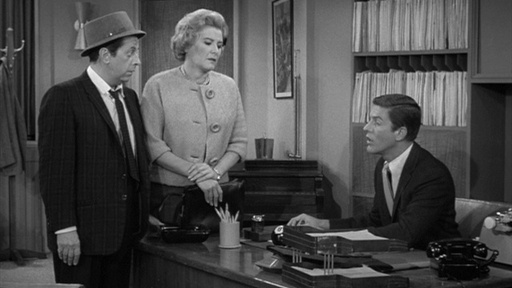
Like its pilot, Head of the Family, The Dick Van Dyke Show was largely drawn upon his own life. Carl Reiner had been both a performer on Your Show of Shows (starring Sid Caesar) and part of a stable of writers that included Mel Brooks, Neil Simon, and Lucille Kallen. He would later be a performer and a writer on Caesar's Hour along with fellow performer and writer (and Your Show of Shows veteran) Howard Morris. He once more worked with writer Mel Brooks, as well as writers Selma Diamond, Larry Gelbart, and Aaron Ruben.  The experiences on these sketch comedy shows provided much of the inspiration for The Dick Van Dyke Show. In fact, the characters of Buddy and Sally were loosely based on writers Mel Brooks and Selma Diamond. Even the star of the fictional Alan Brady Show had some basis in reality. Alan Brady (initially unseen on the show, but later played by Mr. Reiner himself) was based to some degree on Sid Caesar, but combined with touches of Milton Berle and Jackie Gleason as well. The home life of Carl Reiner also provided inspiration for the series. Carl Reiner lived in New Rochelle himself, with his wife Estelle (who would later become famous for her cameos in her son's movies) and his young son, future actor and movie director Rob Reiner.

In drawing upon his own life Carl Reiner then created a sitcom that was different from any other before. In fact, The Dick Van Dyke Show straddled the worlds of early to mid 20th century vaudeville and the United States of the Kennedy era. Films and radio would effectively kill vaudeville in the Thirties, whereupon many vaudeville performers would find work in either motion pictures or radio. With the arrival of regularly scheduled network broadcasts in the Forties, many vaudeville performers and writers then found work in the new medium. Many of the early sketch comedy shows, from Texaco Star Theatre (starring Milton Berle) to Your Show of Shows took their inspiration from vaudeville. As a television show about once such show (The Alan Brady Show), The Dick Van Dyke Show then owed a good deal to vaudeville. Not only were Rose Marie and Morey Amsterdam veterans of vaudeville, but many episodes featured blackouts (as part of the show within the show, The Alan Brady Show) of the sort both seen on the sketch variety shows of the Fifties and on vaudeville stage performances earlier in the century. Scenes set in the writers' office of The Alan Brady Show were a realistic portrayal of what must have happened in writers' offices of many of the variety shows of the Fifties and before that in the offices of writers for vaudeville shows. The writers would throw ideas back and forth, spouting one liners the whole time.

While The Dick Van Dyke Show drew heavily upon vaudeville, however, it may well have been the most up to date sitcom of the time. If Buddy and Sally represented the bygone days of vaudeville, Rob and Laura Petrie represented America in the early Sixties. Unlike Ricky and Lucy Ricardo on I Love Lucy, who lived in an apartment in New York City, Rob and Laura Petrie lived in their own house in the suburb of New Rochelle. This reflected the situation of many young couples in the post-war years, who lived in the suburbs but would commute to work in the city. The very modernity of The Dick Van Dyke Show was even further reflected in the person of Laura Petrie herself. Laura Petrie was unlike any housewife who had appeared on television before. Not only was she very young (she was only 25 in the show's first season), but Laura also dressed in the latest fashions. Indeed, she may have been the first television housewife to regularly wear Capri pants, and there is a very valid argument that The Dick Van Dyke Show may have helped popularise the fashion. Beyond Laura's relative youth and her fashion sense, however, there was one other thing that made her different and much modern than other television housewives before her. While such characters as Margaret Anderson (played by Jane Wyatt on Father Knows Best) and June Cleaver (played by Barbara Billingsley on Leave It to Beaver) were attractive, they were not what one would call, "sexy." On The Dick Van Dyke Show was there was no doubt of Laura Petrie's sex appeal, to the point that Mary Tyler Moore was probably many a young boy's first crush.

The Dick Van Dyke Show differed from previous shows in more than its modernity. Along with The Andy Griffith Show (which had debuted the prior season),  it was one of the first true ensemble shows. While the series was titled The Dick Van Dyke Show and there was little doubt that Dick Van Dyke was the lead, the show was very much a team effort. Episodes centred on the writers as a whole, on Sally, on Buddy, and even on producer Mel Cooley, almost as often as they did Rob and Laura. This set The Dick Van Dyke Show apart from many earlier comedies, in which there was an undisputed star of the show. While there can be little doubt that Ricky, Fred, and Ethel contributed to the success of I Love Lucy, there was little doubt that she was the show's star and nearly every episode of the show centred on her. Along with The Andy Griffith Show, The Dick Van Dyke Show is the direct predecessor of such ensemble comedies as WKRP in Cincinnati, Cheers, Frasier and 30 Rock.

Not only was The Dick Van Dyke Show one of the earliest ensemble shows, but it was also one of the earliest work place comedies. Prior to The Dick Van Dyke Show there only a few comedies that were even partially set in the work place. Mr. Peepers, Private Secretary, and Our Miss Brooks were some of the few sitcoms set in a work place. With much of the action on The Dick Van Dyke Show taking place in the writer's office of The Alan Brady Show, The Dick Van Dyke Show can then be considered one of the forerunners of other work place comedies, from Cheers to The Office.

Of course, even given that The Dick Van Dyke Show was in many respects revolutionary for its time, the show would not have been a success had it not been for the excellence of both its cast and its scripts. In its five seasons on the air The Dick Van Dyke Show won fifteen Emmy Awards in various categories, and it was nominated for even more. Critics at the time recognised The Dick Van Dyke Show for the intelligence of its writing and the quality of the cast's performances. The show regularly tops lists of the greatest sitcoms of all time. Indeed, often it is considered the greatest sitcom of all time. The Dick Van Dyke Show would not have proven to have such lasting influence nor would it still be considered a classic if it had not been a show of the very highest quality.

In fact, The Dick Van Dyke Show may well be one of the few series whose run is very nearly perfect. While episodes of The Dick Van Dyke Show varied in quality, I myself cannot remember any that were actually bad. Of course, much of this may be due to the fact that, unlike many shows, The Dick Van Dyke Show did not overstay its welcome. In its fifth season The Dick Van Dyke Show was still highly rated. There was no doubt that CBS would have renewed it for another season. Rather than continue the series, however, Carl Reiner decided to end it while the show was still on the top. While it is lamentable that there are not more seasons of The Dick Van Dyke Show, its fans can at least be happy that the show never diminished in quality after being on too long.


Regardless, The Dick Van Dyke Show would have an immediate influence on television in the Sixties. One can see echoes of The Dick Van Dyke Show in Sixties sitcoms ranging from Bewitched to He & She. Beyond the Sixties its impact can still be felt, even to this day. The Odd Couple, Barney Miller, Cheers, Mad About You, Seinfeld, and even more modern comedies such as 30 Rock and Modern Family owe a good deal to The Dick Van Dyke Show. With repeats of the series nearly ubiquitous in the past fifty years, it can be safe to say that most of the sitcom writers during that time watched the show and in turn were influenced by it, if not inspired by it.

The Dick Van Dyke Show was perhaps the first sitcom that was identifiably a product of the Sixties, one that would have a lasting influence on television. It should then be surprising that when viewed today the show still seems as fresh and original as ever. Despite obviously having been made in the early to mid Sixties, The Dick Van Dyke Show is not at dated and still holds up today. And while the show's themes have been repeated over and over in other series for the past Fifties years, The Dick Van Dyke Show never seems cliche or shopworn. Such was the quality of its writing and its performances that The Dick Van Dyke Show is essentially timeless. I rather suspect that not only will it be remembered as long as there is television, but that at no time will there not be someone watching the series.

Thursday, September 29, 2011

Facebook Outrages Users Again

Even if someone does not use Facebook there is little way anyone online would not know that Facebook recently made changes that have angered it users. In fact, I dare say that the majority of news stories were not on the changes themselves, but rather on the outrage Facebook users have expressed towards the social networking site over those changes. While it is true that every time Facebook makes changes there are some people who are angry over those changes (anyone who reads this blog regularly knows I am one of them), this time the anger on the part of users was palpable.

The primary source of ire on the part of Facebook users this time was the fact that the social networking site changed its news feed. For those who do not use Facebook, the news feed is the running list of updates one's friends have made on the site. In the past Facebook users have had a choice of viewing the "top stories" on the news feed (determined by Facebook's algorithm) or in chronological order. Recently Facebook changed this. Now the top of one's news feed is filled with "top stories," with the rest of one's new feed in chronological order down below. As the majority of Facebook users prefer to view their news feed in chronological order, this had made many, perhaps most, users very angry.

Now one can mark off updates as "top stories" removing them from the top of one's news feed, but this can be time consuming. One can also get around seeing top stories on one's news feed but creating a friend's list containing all of one's friends, but then one loses the ability to see his or her own updates in his or her news feed. In the end there is no satisfactory solution to the problem of Facebook displaying "top stories" at the top of one's news feed. Here I must point out that Facebook users' anger over the changes to the news feed are twofold. First, most Facebook users prefer to view their news feed in chronological order. They are then not very happy at having to scroll past several "top stories" or mark off several top stories to do so. In fact, I have heard some Facebook users complaint that they can no longer make sense of their news feeds. While I think of the "top stories" as an inconvenience, I cannot say that they have thrown my news feed into total chaos. Second, many Facebook users resent Facebook deciding which updates are "top stories." To wit, when Facebook first implemented these changes the topmost "top story" on my brother's news feed was an update from someone with whom he had not interacted in ages and, in fact, he had planned to unfriend. Here I must say that my experience with Facebook determining top stories has not been so bad (other than I hate taking several minutes of a morning marking them off). All of my top stories have generally been from my closest friends on Facebook and people with whom I interact regularly.

Now I have read that Facebook's changes have resulted in more views for adverts. I have to say that I very seriously doubt this. If most Facebook users are like me, they are much too busy marking off "top stories" to notice the adverts on the right hand sidebar. Indeed, I cannot tell you what the adverts were when I logged into Facebook this morning. This was not the case when my news feed was in chronological order. Because I could browse my news feed in a more causal manner, I might notice an advert if it was interesting enough. If most Facebook users are like me, then, the views on their adverts have probably fallen a good deal. Quite frankly, it would not surprise me if this was the case.

At the same time that Facebook changed the news feed, they introduced the ticker (formerly known as "Happening Now"). The ticker is a small box at the top of the right sidebar that contains a list of updates in real time (not unlike Twitter). The primary complaint about the ticker is that it shares too much information. Unless one has his or her Facebook privacy set just right, it will show literally everything, even to friends of friends. This includes gaming activity, comments, pages one has liked, new friendships, links one has added, and status updates. In some cases one could even see updates from individuals one does not even know. Of course, the way to avoid this is to set one's privacy setting so only friends can see one's updates (which is what mine has always been set to). Of course, even once one gets past the privacy concerns over the ticker, it is still annoying for many users. My brother complained that he has to be careful where he moves his mouse cursor, as if it goes over the ticker a little box will pop up obscuring whatever he is reading. Others have complained that it is just plain ugly.

Now here I must point out that if one has Firefox or Chrome he or shecan do away with the ticker by a Greasemonkey or Stylish script (for Firefox) or an extension for Chrome. I might also point out that the ticker does not display in either Safari or Opera. In the end, then, only those using Internet Explorer cannot do much about the ticker. I use Firefox and downloaded a Greasemonkey script to do away with it the day it was implemented. I have not seen it since.

Of course, Facebook users might not have been so angry if the social networking site had not introduced another change only a few weeks before changing the news feed and introducing the ticker. One of these changes was the so called "Smart Lists." Smart Lists are friend's lists that automatically assign friends to different groups. Some users were not too happy about the Smart Lists for two basic reasons. First, some users resented Facebook for creating lists for them, some of which they will never use. An example of this is myself. Facebook automatically created a "Restricted" list, on which one can place individuals who one does not want to see his or her updates. A "Restricted" list is entirely useless to me. If I do not want someone to see my updates, I will simply unfriend them. Second, as might be expected, the Smart Lists raise privacy concerns. People on lists can see that they are each on a list. Let us say that I used my Acquaintances Smart List (I do not--I have my own custom lists I use). If Tiberius and Julius are both on my Acquaintances, then they can both see that each other is on this list. This is not the case with custom lists, which can only be seen by the user who created them.

Many observers believe the Smart Lists were created in response to the Circles of Google+. If that was the case, then I must say that Facebook did a very poor job. First, Google+ does not automatically assign people to Circles. That is something the user and the user alone does. Second, while Google+ comes with some pre-made Circles, one can delete those Circles if one chooses. One cannot delete Facebook's Smart Lists. The best one can do is to hide those lists so that they do not show on one's home page and remove everyone from them. While I'll admit the Smart Lists may be useful for some, they are not particularly useful for others and for yet others they are probably a minor irritant.

Another change Facebook has made just came about recently, after the changes to the news feed and the introduction of the ticker. This was Facebook Music. Facebook Music allows one to share the music to which one listens via Spotify, Rhapsody, Turntable, or various other music services on Facebook. Now on the surface this does not sound like such a bad thing. In fact, I have enjoyed some of the music listed on Facebook and even enjoyed having that music shared via Spotify. Quite frankly, I think this is one of Facebook's better ideas of late. The problem is that not everyone wants to share everything to which they listen on Facebook. Quite simply, many users apparently do not want the world to know that they listen to Justin Bieber even though they are over the age of 12.  Because of this Spotify has been forced to create what it calls "Private Listening," whereby users can listen to Barry Manilow without their hipster friends seeing it posted on Facebook.

While users have been upset over the changes to the news feed, the introduction of the ticker, the introduction of the Smart Lists, and an apparent lack of privacy whenever one listens to anything on certain music services, I must point out that Facebook has made some changes that I happen to like. In the past any time one posted a status update, link, or any other sort of update, it would be seen by every one of his or her friends. Facebook has now made it so that one can make updates visible only to certain friend lists or even restrict certain individuals from seeing certain updates. I have found this to be particularly useful myself. In the past I always felt guilty whenever I posted anything concerning Farmville to my feed, as many of my friends who do not play the game would see yet another Farmville post (keep in mind, I've always kept my Farmville posts to a bare minimum). Now I can make it so that only my friends on Farmville see any posts I make regarding Farmville. Another use for this feature I have found is restricting posts to certain audiences. Quite simply, I do have relatives and relatives of friends under the age of 18 as friends on Facebook. For that reason I would not post anything with strong language to the social networking site in the past. Now, if I want to post a movie clip with strong language or a music video with strong language, I can simply block that particular update from everyone under the age of 18. Here I should point out that video clips with strong language are about the worst thing I post on Facebook!

Sadly, for many Facebook users, these are not the last of the changes the social networking site intends to make in the near future. Last week Facebook unveiled Timeline, According to Facebook itself, Timeline is "...a new kind of profile." In theory, at least, Timeline will show all of one's activity all the way back to when he or she jointed Facebook, in chronological order. One's information will be displayed in a box to the left, while activity on various apps will appear on the right. One can determine the individual privacy settings of these boxes or (according to a friend who already has Timeline) remove them entirely. Many users have expressed concern that Timeline could be a stalker's dream, with far too much being shared on one's profile. That having been said, my friend who already has Timeline (it is available early to Facebook Developers) has expressed no such concerns over Timeline and seems to like it a good deal. According to him, it's not that different from the way Facebook was a few years ago when one had boxes for different apps and so on. Regardless, coming after unpopular changes such as the alterations to the news feed and the introduction of the ticker, I have to suspect that many will reject the Timeline regardless.

As I said at the start of this post, Facebook users appear to be angrier with the social networking site more than usual and there seems to be greater numbers of Facebook users who are angry. Sadly, I have seen on The Huffington Post and more rarely on other sites individuals show dismiss such users' anger with the words "Well, it's free. If you don't like the changes, then don't use it." Now to some degree this is true. No one is forcing anyone to use Facebook. Quite frankly, however, I think these people are being a bit unrealistic. First, for many of us Facebook has become the primary means by which we connect to certain friends. I would be more than happy if every one of my friends on Faebook would move to Google+ or stay in touch by email or even Twitter. Sadly, I do not think that is going to happen. In the end, then, one must simply put up with the many changes Facebook makes if one wants to stay in touch with certain people on a regular basis. Second, Facebook is not really free. It is supported by advertising paid for by brands of products many of us purchase. In effect, then, Facebook's users are paying for Facebook any time they buy a brand that advertises there (which is pretty much every brand there is these days). I would then say that gives users a right to complain any time Facebook makes changes which displease them. Third, if one believes that one cannot complain about Facebook because "it is free," then he or she must also accept that one cannot complain about the commercial broadcast networks because they are also free. If I disconnected my cable tomorrow, I could still receive NBC, CBS, ABC, and Fox free of charge with an aerial. Does that mean I cannot complain if NBC decided to cancel Parks and Recreation tomorrow? According to these people it would mean I could not. After all, I am getting it "free"--never mind the networks are financed by advertising from many brands that I buy.

Regardless, while I cannot say that I have been overly angry over many of the changes Facebook have made of late (to me they pale in comparison to changes they have made in the past), I cannot blame those who are outraged over such changes. After all, these changes do not simply diminish how much they enjoy the site, but in many cases how they interact with their friends on the site. And given the fact that Google+, Twitter, MySpace, and every other social networking site or microblogging site displays their news feeds or timelines in chronological order, I cannot blame them for being angry for Facebook's new feed not doing so. That having been said, at the same time I do believe that Facebook has gotten a few things right this time. I like the ability of being able to control which of my friends see posts. I have also been enjoying Facebook Music. And while I'll have to see it before I wholly pass judgement, I am wiling to give Facebook the benefit of the doubt where it concerns Timeline. Ultimately, I would say Facebook should give users the ability to view their news feeds in strict chronological order, the ability to delete Smart Lists,and the ability to do away with the Ticker, while letting users keep private everything they want to keep private. If they did that, then maybe Facebook users would not be quite so angry.

Wednesday, September 28, 2011

Artist Richard Hamilton R.I.P.

Painter and collage artist Richard Hamilton passed on 13 September 2011 at the age of 89. He was perhaps best known as the founder of the Pop Art movement, primarily because his collage Just what is it that makes today's homes so different, so appealing was considered one of the earliest works in the movement.

Richard Hamilton was born in London on 24 February 1922. From when he was very young he wanted to be an artist. He left elementary school early and worked as an electrical engineer and attended night classes at St. Martin's School of Art. At age 16 he switched to the Royal Academy, but his education was interrupted by World War II. During World War II he worked as a jig and tool draughtsman at EMI. Following World War II he returned to the Royal Academy, but was eventually expelled. He then attended Slade. It was there that he began illustrating James Joyce's Ulysses, a project which lasted in to the Nineties.

Following Mr. Hamilton's graduation, he was often employed the Institute of Contemporary Arts, for whom he produced leaflets and posters, as well as curated exhibits. He also taught at the Central School of Art and Design. Richard Hamilton's 1956 collage Just what is it that makes today's homes so different, so appealing would prove highly influential and provide the inspiration for the Pop Art of the Sixties. Indeed, among other things the collage featured the cover of a romance comic book book as a poster (anticipating the work of Roy Lichtenstein), an Armour Star tinned ham (anticipating Andy Warhol's Campbell Soup cans), the old Ford Motors logo (anticipating James Rosenquist's I Love You with My Ford), and other familiar items from everyday life. Over the years Mr. Hamilton would do a typographical reworking of fellow artist Marcel DuChamps The Green Box, a series of prints entitled Swinging London, the cover of The Beatles' eponymous double album (popularly known as The White Album),  a series of paintings (informally known as The Maze) based on the conflicts of the Irish Republican Army, and his series of illustrations entitled Imagining Ulysses based on the James Joyce novel.

Richard Hamilton has often been regarded as one of the founding fathers of Pop Art, he did not particularly care to be regarded as such. The reason was simply that while Mr. Hamilton may have provided inspiration for the movement, his work was a very eclectic mix that embraced several different genres and even several different media. While much of his work (such as his silk screens of Marilyn Monroe) could quite rightfully be described as Pop Art, a lot of his work (such as Imagining Ulysses) certainly could not be called such. He was both talented and versatile, with a love not only of art but even technology. Richard Hamilton even designed computers--the OHIO computer prototype in 1984 and the DIAB DS-101 in 1986. Few artists could boast of the achievements of Richard Hamilton, which ranged from typography to painting to collage art.

Tuesday, September 27, 2011

The Late, Great David Croft

David Croft, who with Jimmy Perry created Dad's Army and with Jeremy Lloyd created Are You Being Served?, passed today at the age of 89.

David Croft was born David John Sharland at Poole, Dorset on 7 September 1922. His father Reginald Sharland and his mother Anne Croft were both actors. His father went to Hollywood not long after young David was born and became a major radio star in the United States. His mother was a popular star of British theatre. Mr. Croft would not follow his parents into acting. At age 7 he would appear in his only film--an uncredited, bit part in Goodbye, Mr. Chips (1939). He attended St John's Wood Preparatory School, then Rugby School in Warwickshire. He was forced to leave Rugby before his sixteenth birthday due to not having enough money. He helped out with his mother's acting company and was planning to move to Hollywood to be with his father when World War II broke out. He and his mother moved to Bournemouth, Dorset, where Mr. Croft served as an air warden. In 1942 he joined the Royal Artillery. He was forced to return to England to recover after contracting rheumatic fever. Afterwards he was sent to officer training and then assigned to the Essex Regiment in India. He became brigade entertainments officer. Later he served in Singapore where helped oversee the evacuation of Japanese prisoners of war. Mr. Croft was demobilised in 1947.

Following the war David Croft produced shows for the Butlin's chain of holiday camps. He later became part of the BBC Show Band Singers. He wrote songs and even pantomimes for everyone from Norman Wisdom and Harry Seacombe to Tommy Steele and Cliff Richard. In 1955 he joined Associated Rediffusion where he served as a script editor. In 1959 he moved to Newcastle-upon-Tyne where he served as a producer for Tyne Tees. There he produced his first sitcoms, Under New Management. He also wrote the musical sitcom called Sunshine Street. He later moved to BBC in London, where he produced This is Your Life (a British version of the American show), The Eggheads, and The Benny Hill Show. He then moved to ITV where he produced the popular sitcom Hugh and I and Beggar My Neighbour.

By the late Sixties, when he created Dad's Army with Jimmy Perry, David Croft was a staff producer at BBC. He would not hold the position as staff producer long, as he soon went freelance. Despite this fact, the rest of his work would all be done for BBC. While Dad's Army  would prove to be a hit, it was sometimes a source of contention between Mr. Croft and BBC One. BBC One controller Paul Fox initially objected to the very premise of the programme, worried it was making fun of "...Britain's finest hour." He also insisted on the show's original opening, which included footage of Nazis, be thrown out as being offensive. Eventually Mr. Fox would send a letter of congratulations to Mr. Croft on the success of Dad's Army following its third series. Dad's Army would last for nine series, becoming a hit not only in the United Kingdom but around the world.

David Croft's next series would be created with Jeremy Lloyd and it would also turn into a worldwide hit. While Dad's Army centred around the Home Guard during World War II, Are You Being Served? centred around the Grace Brothers department store.  Like Dad's Army, Are You Being Served? provoked some controversy for its ubiquitous double entendres and at times lascivious content. Like Dad's Army it also proved to be a hit not only in the United Kingdom, but around the world. It ran for ten series and has been repeated every since.

With the success of both Dad's Army and Are You Being Served? David Croft would go onto create more successful sitcoms with both Jimmy Perry and Jeremy Lloyd. With Mr. Perry he created It Ain't Half Hot Mum (rarely seen now due to being considered very politically incorrect), Hi-de-Hi! (set in a holiday camp), and You Rang, M'lord? (centred on an aristocratic family in the 1920's). With Jeremy Lloyd, Mr. Croft created Come Back Mrs. Noah, Oh Happy Band, 'Allo Allo, Grace and Favour (a sequel/spin off to Are You Being Served?), and Which Way to the War. With Richard Spendlove he created Oh, Doctor Beeching! Mr. Croft's last work was with Jeremy Lloyd, a pilot for a series starring Are You Being Served? veteran Wendy Richard entitled Here Comes the Queen. Sadly, Miss Richard's death prevented it from becoming a series.

David Croft wrote over 500 scripts in his career and co-created eleven different shows, most of which were hits. One would be hard pressed to find any other producer of sitcoms anywhere who had such a record of success. Of course, it is not simply a case of Mr. Croft's sitcoms having been successful, at least two of them would become a part of the fabric of Anglophonic pop culture. Both Dad's Army and Are You Being Served? would permeate pop culture to such a point that their catchphrases are still recognisable today.

Indeed, I must say that Mr. Croft probably created more of my favourite television comedies than any other single TV producer. He had a gift for creating very funny characters, who, no matter how outlandish their behaviour, had a basis in reality nonetheless. He also had a gift for creating wholly ludicrous scenarios, in which complications would build upon complications until an explosively funny finale. In many ways David Croft was a master of farce. Perhaps he may well be best remembered for his general gift with words. I rather suspect he created more catchphrases than any other television producer in history. There was "Are you sure that's wise? (from Dad's Army), "Are you free? (from Are You Being Served?), "Least said, soonest mended (from You Rang, M'lord?), and many others. In the entire English speaking world I doubt that there was any other sitcom creator as brilliant as David Croft. And I very seriously doubt there will be again.

Saturday, September 24, 2011

Jim Henson: Master of Muppets

It was 75 years ago today that Jim Henson, creator of the Muppets, was born. There can be no dobut that he is the most famous puppeteer of the 20th Century. And his creations, the Muppets, are still promoted and merchandised to this day. Indeed, in November the Muppets will star in a new theatrical movie, The Muppets.

Jim Henson was born on 24 September 1936 in Jackson, Mississippi. He spent his early childhood in Leland, Mississippi. It was in the late Forties that his family moved to Hyattsville, Maryland. As a child he was heavily influenced by ventriloquist Edgar Bergen and his dummy Charlie McCarthy, who were very popular on radio in the Forties. After his family bought a television set he would be influenced by Burr Tillstrom, the puppeteer who created Kukla and Ollie on the series Kukla, Fran, and Ollie, as well as Bill Baird, the creator of Charlemane the Lion.

Jim Henson was still very young when he received his first job as a professional puppeteer on television. He was still attending Northwestern High School when he created puppets for the WTOP-TV children's series The Junior Morning Show. He was a freshman at the University of Maryland, College Park, in 1955, when he created the five minute puppet show Sam and Friends for WRC-TV. Sam and Friends starred a balding, human puppet named Sam, as well his friends Yorick, Harry the Hipster, and the earliest version of Kermit. The original Kermit had been made from turquoise coat that his mother had thrown in the waste can, with ping pong balls for eyes. Although today Kermit is known as a frog, at the time he was more or less a lizard like creature of an indeterminate species. It would be ten years later, in 1965, that Kermit would officially became a frog after Johnny Carson referred to him as "Kermit the Frog."

The term Muppet had also yet to be coined either. That would come about in 1956 when Jim Henson created the term for his creations which were not quite hand puppets, but not quite stick puppets either. Precisely how Mr. Henson came up with the term is a bit of a mystery. He has often told the story of how he developed the term by combining the words marionette and puppet. That having been said, on other occasions he has said that it was simply a term that he liked and as a result used for his act.

Regardless, Sam and Friends would prove very popular. In its earliest days the puppets primarily lip-synched to current songs. As time went by, however, the puppets would perform in written sketches, many of which were parodies of current television shows. Working with Jim Henson on the show was his future wife Jane, as well as Jerry Juhl, later the head writer on The Muppet Show. Sam and Friends proved very popular, lasting for six years.

Despite the success of  Sam and Friends, it would be some time before Jim Henson found sustained success on a national level. Much of the Sixties would find Mr. Henson and his Muppets making guest appearances on various television shows. It was in 1956 that he first appeared on The Tonight Show, then starring Steve Allen. He would also appear on Steve Allen's primetime show, The Steve Allen Show, in 1956 and 1957. One of the earliest breakthroughs for the Muppets would come in the form of The Jimmy Dean Show in 1963. Rowlf the Dog would be a regular on the show and proved so popular that he even received more fan mail than Jimmy Dean. While Kermit may have been the first Muppet, Rowlf was the first one to enter the national consciousness.

Much of the rest of the Sixties would spent making guest appearances on various shows. The Muppets would appear fairly frequently on The Ed Sullivan Show starting in 1966. Muppets also appeared frequently on The Tonight Show Starring Johnny Carson. In fact, it was on the 31 December 1965 episode that Johnny Carson referred to Kermit, still an indeterminate creature, as "Kermit the Frog." Muppets would also appear on  The Hollywood Palace, The Mike Douglas Show (which they co-hosted for a whole week in 1966), and Perry Como's Kraft Music Hall.

While much of Mr. Henson's work in the Sixties consisted of guest appearances, two pivotal events would occur during the decade that would guarantee the Muppets' success in the future. It was in 1961 that Jim Henson first met then 17 year old Frank Oznowicz. In 1963 Frank was hired by Jim Henson to help bring Rowlf the Dog to life on The Jimmy Dean Show. It would be Jimmy Dean who was the cause of Frank Oznowicz becoming Frank Oz. Unable to remember his name, Mr. Dean introduced him by saying Oz and mumbling the rest of his name. Mr. Oz kept it as his stage name. Frank Oz would prove pivotal to the success of the Muppets. On Sesame Street he introduced the characters Bert, Grover, and the Cookie Monster. On The Muppet Show Frank Oz was the Muppeteer behind Miss Piggy, Fozzie Bear, and Animal. He also became one of Jim Henson's closest friends. While Mr. Oz would branch out to other projects beyond the Muppets, he remained friends with Mr. Henson until Mr. Henson's death in 1990.

The second pivotal event in Jim Henson's career would come in the form of a children's show that debuted in 1969. Mr. Henson was asked to participate on the show Sesame Street. He brought Kermit the Frog to the show, and was also responsible for the creation of Muppet characters specifically for the show. Among these were Ernie, Oscar the Grouch, and even Big Bird. It was while Jim Henson was working on Sesame Street that he created and directed a series of specials under the umbrella title of Tales from Muppetland. Among these specials were Hey, Cinderella; The Frog Prince; and The Muppet Musicians of Bremen.

By the mid-Seventies Jim Henson worried that because of Sesame Street the Muppets might be regarded simply as a children's act. Producer Lorne Michaels invited Jim Henson and the Muppets onto the first season of Saturday Night Live as regular performers. This took the form of a series of sketches known as "The Land of Gorch." Unfortunately it would not prove to be a good experience for Jim Henson, Frank Oz, and the rest of the Muppets team. None of the Muppets' writers were hired to write the sketches on Saturday Night Live, and the Saturday Night Live writers were not particularly happy to write for the Muppets. Fortunately, the Muppets would not have to remain on Saturday Night Live for long, as their biggest success was just ahead of them.

Concerned that the Muppets were being typecast as a children's act, Jim Henson conceived of a variety show that could be enjoyed by people of all ages. He shopped the idea to the various networks, and ABC even ordered two specials that could serve as pilots for the prospective series. The first was the The Muppets Valentine Show. The second was The Muppet Show: Sex and Violence. ABC ultimately passed on the series. Jim Henson had not considered syndication, for fear that the show could fail without a networks backing. Fortunately, Lord Lew Grade of ATV in the United Kingdom came to the rescue. Lord Grade proposed to Mr. Henson that he could finance the show and so it would be able to enter syndication in the United States and other countries with very high production values.

The Muppet Show debuted in 1977 and proved to be a smash hit. It introduced a whole new generation of Muppets who would become superstars all their own, including Miss Piggy, Fozzie Bear, Gonzo, Dr. Teeth and the Electric Mayhem, and others. Because of the show's success it was able to get many big time guest stars, including Vincent Price, Milton Berle, Edgar Bergen and Charlie McCarthy, Steve Martin, George Burns, Elton John, Alice Cooper, Danny Kaye, and Gene Kelly. No guest star ever appeared on the show twice. The success of  The Muppet Show would also lead to a huge amount of merchandising.

It would also be the success of The Muppet Show that would lead to the Muppets' first feature film, The Muppet Movie, in 1979. The Muppet Movie would prove very successful and it was largely because of that success that the still popular Muppet Show ended its run in 1981 as Jim Henson decided to concentrate on feature films. Over the next several years the Muppets would appear in such films as The Great Muppet Caper (1981), The Muppets Take Manhattan (1984), The Muppet Christmas Carol (1992), The Muppets Treasure Island (1996), and Muppets From Space (1999). Since then they have appeared in the television films It's a Very Merry Muppet Christmas Movie and The Muppets' Wizard of Oz.

It would also be largely because of the success both The Muppet Show and the various movies that Jim Henson was able to expand beyond the Muppets. From 1983 to 1987 he produced the children's fantasy show Fraggle Rock for CBC. He would later produce the series The Storyteller for HBO. Still later he would produce the short lived Jim Henson Hour for NBC. Mr. Henson also worked on two non-Muppet fantasy films: The Dark Crystal (1982) and Labyrinth (1986).

Sadly, Jim Henson would die only four years after Labyrinth and almost a year after The Jim Henson Hour. Mr. Henson fell ill and on 15 May 1990 was admitted to New York Hospital. On the morning of 16 May 1990 Jim Henson died. The cause was organ failure resulting from Streptococcus pyogenes. It was a mark of Jim Henson and the Muppets' popularity that there was an enormous outpouring of grief rarely seen even for the best known actors. Jim Henson and his creations were not simply legends. They had become icons.

As to why Jim Henson achieved such superstardom, that is a difficult question to answer. It was not simply that Jim Henson had created puppets that could be enjoyed by young and old alike. Burr Tillstrom (who had been a huge influence on him) and Bob Clampett (creator of the puppet show Time for Beany)  had both created puppet shows that were very popular with adults in their day. Burr Tillstrom's puppet shows, with Kukla and Ollie, relied on very sophisticated wit and word play. Bob Clampett's Time for Beany relied on a sophisticated blend of satire and irreverence. The Muppets would be different from both in that they were much more visual. In some respects the Muppetry of Jim Henson and Frank Oz could be compared to the comedy routines of Ernie Kovacs, relying heavily on sight gags. Example of this are the early "inchworm" sketch (in which Kermit is chewing on what he thinks is an inchworm, but which turns out to be the tongue of a large monster) and the various "Mah Nà Mah Nà" sketches. At the same time much of the humour of the Muppets could be very absurdist.

Of course, much of the reason for the success of the Muppets is the same reason as the success of Kukla and Ollie, and Beany and Cecil. All of them were such well developed characters that it was hard to believe that they were merely puppets. Indeed, children have been known to address Muppets themselves as real individuals, even when the Muppeteer is visible. Even adults tend to treat the Muppets as if they are real--Jim Henson and Kermit the Frog each have their own stars on the Hollywood Walk of Fame. Because the Muppets are actually fairly sophisticated characters, they achieved success that had lasted literally decades.

Another factor in the Muppets' success could also be the fact that, both on The Muppet Show and in their many films, they have consistently been portrayed as underdogs. On The Muppet Show the ragtag troupe was always scurrying to make sure the show went off without a hitch. In their movies the Muppets were often struggling to put on some show or another, or they were at the mercy of villains with far superior resources. No matter what happened, however, the Muppets would always succeed in the end. At the same time that the Muppets were always portrayed as underdogs, it must also be pointed out the Muppets were a diverse group. The Muppets troupe consists of everything from frogs to pigs to dogs to humans. Despite these differences (or perhaps because of them), it is very clear that the Muppets are all friends who care very much for each other.

That a ragtag troupe of diverse performers could overcome incredible odds perhaps should not be surprising coming from Jim Henson. He was a man with an incredible amount of hope and positive attitudes. He once said, "Life's like a movie, write your own ending. Keep believing, keep pretending." In a guest post on the Official Google Blog his son Brian Henson said of his father that, "One of his life philosophies was that we should love people not for their similarities, but for their differences." Jim Henson always looked for the best in life and always appreciated people for not how much they were like him, but for how different they were from him. It was reflected in his work with the Muppets, who could come together to put on a show each week despite disparate personalities and a good number of obstacles. Jim Henson also said once, "My hope still is to leave the world a bit better than when I got here." There can be no doubt that he did.

Friday, September 23, 2011

The Knack...and How to Get It Theatrical Trailer

Tonight I do not feel particularly like making a full blog post, so I thought I would leave you with the theatrical trailer to one of my favourite movies. Here is the trailer to The Knack...and How to Get It.

Wednesday, September 21, 2011

My Beloved Max

"Of all God's creatures there is only one that cannot be made the slave of the lash. That one is the cat. If man could be crossed with the cat it would improve man, but it would deteriorate the cat."~Mark Twain

My cat Max died the morning of 19 September 2011. It was the week before last that he developed a blood clot that robbed him of the use of his hind legs. He had been doing fine until this weekend, when he had a stroke that cost him his life. I am only now writing of his passing as this is the earliest I could do so without breaking down into tears. Indeed, I find myself fighting them back even now.

I had gotten Max when he was a very little kitten. He was only about six weeks old. I had lost my previous cat to a heart attack only a few months before, and my postman's cat had just had kittens. She brought over a little yellow furball, who was part Maine Coon and part American long hair. My youngest niece insisted on naming him "Max." Since I had already had a cat named "Max (for Maxwell Smart)," I decided Max's full name would be "Maximilian." He would come to answer to both names.

Even as a kitten Max could be a handful. In those days I had a screensaver that consisted of the cartoon character Underdog flying across the screen. Max loved to get up on top of the monitor to try to catch Underdog. He also liked to play with my small collection of Hot Wheels toy cars, as well as the number of balls we had about the house. More than one set of Venetian blinds fell to his paws. He loved to climb trees, and even as he got older he would spend hours sitting in the big maple in our front yard. He also enjoyed lounging in our flowerbed.

Even as a kitten Max could be demanding. Like most cats he would demand food when he was hungry. Unlike most cats Max would demand water, even when there was water in his bowl. Max seemed to under the impression that water goes stale in a matter of hours. He was also a very difficult cat to give medicine. He would fight if we tried to give him a pill or even liquid medicine. Mixing medicine in with his food would not even work. If he suspected we had put any sort of medicine in his food, he would refuse to eat it. That having been said, Max was one of the easiest cats to apply flea and tick treatment there. He would just sit there as I applied it. He was also one of the few cats I had who always behaved when I took him to the veterinarian. He never once offered to scratch or bite our vet, no matter what he did to him.

For all that Max could be demanding (I think he thought of us as his pets rather than vice versa), he was one of the most loving cats I ever had. When he wanted attention he would place his paws on me and meow with that trilling meow unique only to Maine Coons. Other times he might roll on his belly and purr loudly as if to say, "Notice me." Max was also the only cat I know who liked to pet humans. He would take one paw and stroke me just as if I was a dog. He also liked to hold my hand between my paws. Like most cats he liked to touch noses and give kitty kisses. For all his size, he loved to be held and carried in my arms. I think he had the loudest purr of any cat I have ever known.

While Max enjoyed playing and exploring, I think he enjoyed the company of humans most of all. He could sit on me for hours as I watched some film or another. Not that Max was ever able to tell me, but I also thought he liked action movies the most. He would put whenever I watched V for Vendetta or The Dark Knight. He was also very sensitive to the health and emotional welfare of the humans in the household. Whenever I was sad Max would come and sit on me, in an effort to cheer me up.  He helped me through the passing of my best friend Brian in June.  When I went through an extended illness in 2008, he never left my side. He slept with me in my room and stayed with me when I was in the living room.

Max was a very large cat at 20 pounds (and none of it fat). He was also a very good hunter. He kept our garden free of rabbits. He would also drive away the bluejays who tried to chase off our songbirds each year (he also knew to leave the songbirds alone). He would chase away any cats that threatened any of the other feline members of our household, as well as stray dogs. In many ways Max was very much the lord of the manor and took his duty of defending its inhabitants seriously.

Max loved milk and anything made from milk. Unlike many cats, he was not lactose intolerant. He would gladly drink a bowl of milk dry or eat any piece of cheese offered him. That having been said, his favourite food was turkey. Indeed, somehow Max knew when Thanksgiving was approaching, as he would keep a careful eye on the kitchen.

I suppose many who have never had a cat for a friend may not understand the level of grief I am experiencing now. But I would argue with anyone who insisted that Max was "just an animal." I loved Max as much as any other member of my family and as much as any of my friends. And I know my love was returned by Max. Even on his last day he wanted nothing more than to be petted and to hold my had one more time. I miss him so terribly and I know that, wherever Max is now, he misses me.