
There seems to be a general agreement among television historians that the Golden Age of Television took place sometime starting in the late Forties and continuing through the Fifties. Beyond this admittedly broad time frame, there have been various time periods offered as when the Golden Age of Television took place. The Museum of Broadcast Communications Encyclopaedia puts what it calls "the 'Golden Age' of Television Drama" as being from 1949 to 1960. Some would extend the Golden Age of Television to 1961, when legendary anthology series Playhouse 90 went off the air. Others have given other dates for the beginning and end of the Golden Age of Television.
While there is some disagreement as to exactly when the Golden Age of Television took place, it is generally agreed it did take place and that it was largely due to the proliferation of dramatic anthology series which often featured critically acclaimed teleplays, as well as various other television events. While there have been naysayers, it is difficult to argue the Golden Age of Television did not take place. Live dramatic anthology series proliferated on television in the early Fifties, such series as The Philco Television Playhouse, Goodyear Television Playhouse, Lux Video Theatre, and, the most critically acclaimed of the early anthology shows, Studio One. Many of the teleplays which appeared on these shows went onto be adapted for Broadway, movies, and often both: "Requiem for a Heavyweight," "No Time for Sergeants," "Marty," and others. The anthology series introduced a whole new crop of talented, intelligent writers, including Paddy Chayefsky, Reginald Rose, Rod Serling, and several others. It was a period when teleplays were often critically acclaimed.
Of course, if there had only been the dramatic anthology series at the time, we might not be speaking of a Golden Age of Television. It must be kept in mind that it was in the late Forties and early Fifties that many classic variety shows debuted, including Toast of the Town (later renamed The Ed Sullivan Show), The Colgate Comedy Hour, The Red Skelton Show, and Your Show of Shows. Classic sitcoms emerged on television, many imported from radio: The George Burns and Gracie Allen Show and The Jack Benny Programme chief among them. Of course, there were original sitcoms as well, chief among them I Love Lucy, but also Make Room for Daddy, Father Knows Best, Topper, Mr. Peepers, and others. While there some of what we would today call "junk," there seemed to be a good deal more quality TV shows on American television at this period than most.
While there can be little argument that a Golden Age of Television took place, there is some argument as to when it precisely took place. Some would begin it as early as 1946, others as late as 1949 (television personality David Susskind among them). Personally, I think the year the Golden Age of Television began could actually be said to be 1948. My reasoning is simple. The Kraft Television Theatre debuted in 1947, ushering in the highbrow, dramatic anthology series. It was followed in 1948 by several similar series: The Ford Theatre, Philco/Goodyear Television Playhouse, Actors Studio, and he legendary Studio One. There would be other legendary anthology shows which debuted throughout the next many years, some rather late (Playhouse 90 would not debut until 1956), but 1948 seems to be the year when the dramatic anthology series really began to take hold.
As to when the Golden Age of Television ended that is a bit trickier. The Museum of Broadcast Communications Encyclopaedia places it at 1960. Others have placed it at 1961, when Playhouse 90 was cancelled. In a television roundtable in the Sixties, David Susskind placed the Golden Age from 1949 to a terribly early 1954! I disagree with all of these ideas as to when the Golden Age of Television ended, I think most television historians will agree with me that 1954 is much too early for the Golden Age to have ended. On the other hand, I think 1961 is much too late. I know there are those who will point out that was the year that Playhouse 90 went off the air, but I do not think that can be used as it ignores other important events in television. To use it an example from another medium, All-Star Comics, one of the most important titles of the Golden Age of Comic books, persisted until 1951. Most comic book historians do not take this into account for obvious reasons (there were other factors, such as most Golden Age titles having been cancelled well before then), and end the Golden Age of Comic Books anywhere from 1945 to more generally 1948 or 1949. That Playhouse 90 lasted until 1961 really makes no difference. Most other other classic, dramatic anthology series were well gone by then.
The fact is that by the early Fifties television began to give rise to such filmed series as I Love Lucy. Many of these filmed series would prove very popular, gradually edging out the live anthology series. A sure sign of the triumph of the filmed television series would arrive in 1955 when the debut of three different Westerns would signal the beginning of a cycle towards Westerns (those shows were Cheyenne. Gunsmoke, and The Life and Legend of Wyatt Earp). Westerns would prove so popular that they overwhelmed American airwaves, with as many as eight such shows airing during some seasons. Of course, the dramatic anthology series were in trouble before the Western cycle began, as 1955 is also the year they began dying off.
Both The Kraft Television Theatre (the show that had started it all) and Philco Television Playhouse went off the air in 1955. Goodyar Television Playhouse, The Alcoa Hour, Armstrong Circle Theatre, and Robert Montgomery Presents went off the air in 1957. Studio One lasted until 1958. Lux Video Theatre until 1959. The United States Steel Hour outlasted them all, surviving until 1963. Given the number of anthology shows that went off the air in 1957, I think it might be a good idea to end the Golden Age of television then. My reasoning is simple. Many of the great anthology shows were already gone. Filmed television series already dominated the network schedules, not just Westerns, but shows like The Phil Silvers Show, The Bob Cummings Show, Medic, The Adventures of Robin Hood, and others. Worse yet, in the summer of 1955 the quiz show The $64,000 Question debuted. By the 1956-1957 season it had produced a spin off in the form of The $64,0000 Challenge, as well inspired such similar quiz shows as Twenty One, The Big Surprise, and Dotto. While many of the filmed shows of the era are justifiably called classics, the quiz shows are one of the low points in television history. Indeed, in 1958 it would become public that most of them had been rigged, igniting the infamous quiz show scandals. Between the live dramatic anthology shows beginning to die off in droves, the domination of filmed series, and the rise of the quiz shows, I think the 1956-1957 season is when the Golden Age of Television ended.
Of course, there would be classic anthology shows which survived the end of the Golden Age and others which debuted after it ended, most of them filmed series. Playhouse 90 debuted the very season the Golden Age ended and lasted until 1961. The United States Steel Hour ended its run in 1963 after ten years on the air. Alfred Hitchcock Presents, the classic filmed suspense anthology show, debuted in 1955 and lasted until 1965. The Twilight Zone, possibly the most famous anthology show of them all, debuted in 1959 and lasted until 1964. The classic horror anthology show Thriller debuted in 1960 and ran two seasons. Anthology series did not die with the end of the Golden Age of Television, although they ceased being produced live for being filmed instead, with but a few exceptions. Regardless, they no longer dominated the television landscape after 1955 and became rare after 1957. By the late Sixties they would be gone.
The Golden Age of Television, 1948 to 1957, was an incredible time for television, when the medium was dominated by writers and there was quality material produced every week. It was brought to an end by filmed series, a cycle towards Westerns which only accelerated the dominance of filmed series, and the birth of the big money quiz show. As television moved into the Sixties, many of the classic filmed series would even end and television would go thought a bleak period from about 1960 to 1963. Oh, there were classic which debuted in this era--The Andy Griffith Show, The Dick Van Dyke Show, The Untouchables, and others, but shows such as The Phil Silvers Show, Have Gun--Will Travel, and Peter Gunn were replaced by with insipid sitcoms such as The Hathaways, the often poorly made clones of 77 Sunset Strip (Surfside Six and others), and rather bland adventure shows such as Follow the Sun. Fortunately for television, a new Golden Age was dawning, one I call the Golden Age of Series Television, when several classic shows with continuing character would air (a short list--The Beverly Hillbillies, Bewitched, The Man From U.N.C.L.E., The Wild Wild West, The Monkees, and others). Of course, this is a story for another time.
Sunday, October 10, 2010

Saturday, October 9, 2010
In Honour of John Lennon's 70th Birthday
Today, at around 3 PM CDT, it will have been seventy years ago that John Lennon was born. I have probably written more about John Lennon in this blog than any other famous person. The reason for this is quite simply that, outside of those people I grew up with and knew personally (family, friends, neighbours), John Lennon had a far greater impact on me than any other individual in history.
 From the sheer number of people who have honoured him the past few days it would seem I am not alone. The news is filled with stories about John Lennon, from a number of articles from news services such as Associated Press to articles in such newspapers as The Times, The Liverpool Daily Post (naturally), The New York Times, The Washington Post, and others. Every major broadcast network, at least in the United Kingdom and United States, have aired tributes to him, sometimes more than one (NBC aired one on The Today Show and one on The NBC Nightly News). Even Google debuted a new John Lennon doodle for their logo. Fans have began gathering last night in Strawberry Field, that portion of Central Park in New York City, honouring John. Today in Liverpool Julian Lennon and his first wife Cynthia unveiled a new monument in his honour. In Reyjavik, Iceland today at 3:00 PM CDT, 8 PM GMT Yoko Ono will light the Imagine Peace Tower, the monument in honour of John and his vision.
It is very clear that for many, perhaps most people, John Lennon has become something greater than a mere rock star. Indeed, he has become something more than a legend. He could certainly be described as an icon, but it seems to me that John's status has surpassed even that of other icons. Even such legendary icons as Frank Sinatra, Marilyn Monroe, and Elvis Presley seem to pale in comparison to the reverence in which John Lennon is held. He occupies a position shared only by prime ministers, presidents, and religious figures (indeed, in 1980 his murder was not described merely as a murder, but an assassination), but even then he seems to somehow be something much larger. I think it would be courting blasphemy to call John Lennon a god (I am not sure that many do not pray to him, however), but his position in our society seems to be something close to it. I think the only thing equivalent to John's place in our society today is that Christian saints occupied during the Middle Ages. He is certainly not a god, but he is something more than a mere man.
I do think it would be correct to describe John Lennon as a hero. In Norse myths and the Icelandic sagas it was believed that when a hero was born, the wolves would howl and the eagles would cry in acknowledgement. I am not sure any wolves howled in Liverpool that night 70 years ago and I do not believe eagles are even to be found in England, but John Lennon was certainly born to sound and fury. John Lennon was born in Liverpool Maternity Hospital on Oxford Street to Julia and Alfred Lennon just as the city was being bombed by the Germans. Many accounts have noted how his Aunt Mimi Smith was able to see her way through the darkened Liverpool streets by the light of the bomb blasts. John received his first name from his paternal grandfather, John "Jack" Lennon. He was given his middle name, Winston, in honour of then prime minister Winston Churchill.
 Despite the dire circumstances of his birth, John Winston Lennon was in some respects born at a fortuitous time. In 1956 a skiffle craze erupted in England, with youths forming bands to perform the obscure American genre of folk music. Among those bands were The Quarrymen, formed by John Lennon. In 1957 a musician named Paul Mcartney joined The Quarrymen, and he and John soon became friends. In 1958 Paul invited a young school friend George Harrison to join the band. The Quarrymen grew away from the skiffle sound, which proved to be a short lived musical fad, and turned to something more lasting--rock 'n' roll. By 1960 they would become The Beatles. Initially The Beatles would be only one of many rock groups which formed in England in the late Fifties and early Sixties. Very early in their career they found themselves contracted to perform in Hamburg. It was in Germany that they would hone both their performing skill and their song writing skills. They returned to Liverpool well trained musicians. As a result their popularity grew in Liverpool, to the point that they were one of the premiere Merseyside bands. Eventually signed to EMI, they released their first single, "Love Me Do," in October 1962. It met with moderate success, as did the next single, "Please Please Me." Their next single, "From Me to You," would prove to be a bona fide hit, It would be their fourth sngle, "She Loves You," that would establish The Beatles as a new phenomenon. It became the fastest selling single in the history of the UK charts and the biggest song ever in the UK for years.
 The rest, as they say, is history. The Beatles soon became the biggest selling pop act in British history, leading to the coining of the term "Beatlemania." There were those who said they were a fad, but they would be proven wrong. It was not long before The Beatles' singles conquered the charts in the United States and then The Beatles themselves conquered the nation. Contrary to the naysayers, The Beatles were not a passing phase. They built upon their success to the point they went beyond mere rock stars. They were even more than legends. They became icons in their own lifetime. Although it was disputed from time to time, John Lennon was perceived as their leader from the beginning. It was reflected in the press from 1964 onwards and in The Beatles' own movies. Even the great Sir Paul McCartney, thought by a few to be the band's leader, said,"I definitely did look up to John. We all looked up to John. He was older and he was very much the leader; he was the quickest wit and the smartest." It was John who was the band's spokesman, their funniest and wittiest member, and often the most outspoken.
Always opinionated and a bit of a thinker, it was while John Lennon was with The Beatles that he began to change and evolve, to form his own vision. He began to address this vision in his songs. He did it earliest in songs co-written with Paul McCartney: "The Word" and "We Can Work It Out." He later addressed it in songs he wrote alone for The Beatles: his masterwork "All You Need is Love" and "Revolution." Encouraged by his wife Yoko Ono, John Lennon would continue to shape his vision. After The Beatles he wrote such songs as "Give Peace a Chance," "Happy Xmas (War is Over)," and, what some consider his signature song, "Imagine." He and Yoko held a Bed In for Peace. In connection with his single "Happy Xmas (War is Over)," he and Yoko bought billboards in eleven major cities reading, "WAR IS OVER! (If You Want It) Happy Christmas from John and Yoko." Much of John Lennon's poltical activism seemed over the top at the time, what we would now call "guerilla marketing," but it got his message across. John's message was simple, summed up in a few words, "Give peace a chance," "All you need is love," and the now current "Imagine Peace."
 In his song "Imagine," John sang, "You may say I'm a dreamer, but I'm not the only one." John Lennon was far from the only dreamer and his message did resonate with his fans. Many who grew up listening to The Beatles would incorporate John's vision into their own lives. It should be no surprise that when he was murdered, his message was incorporated at the impromptu memorials held by fans in New York City and Liverpool. Throughout the years John's message has become as inseparable from his image as his status as a Beatle and a solo performer. Even before he died John had become more than a rock star. He was more than an icon. He was the voice of a whole group of people, whose lives he had touched in a way no pop star had before. Upon John's death one young New Yorker expressed what many of us felt, "I can't believe he's dead. He kept me from dying so many times before."
Of course, as much as we revere John Lennon, it is important to realise he was not perfect. He was not always a good husband to either of his wives. He was not always the best father to Julian. He could be difficult with his friends, even his fellow Beatles (particularly Paul and George). He became addicted to heroin. But for all John's faults, which were many, what showed through the most in him was that he genuinely cared about his friends, even those he was sometimes hardest upon. Indeed, John even cared about his fans. For all his status as an icon, John Lennon was always approachable. He was known to talk to fans, to express concern for them, and to sign autographs for them. It was this openness that made us love him even more. And, sadly, it would be this openness which would lead to his death.
 As I have said before, John Lennon impacted me more than any other celebrity and in ways I can not even measure.Along with the other Beatles, he was the first performer in any medium of which I was aware. The Beatles' songs were ever present on the radio when I was a toddler and a young child. On Saturday morning there was The Beatles cartoon. I would watch both A Hard Day's Night and Help! on NBC Saturday Night at the Movies. When The Beatles broke up, it was John who remained my favourite Beatle. His songs spoke to me in a way Paul, George, or Ringo's did not. The day of his death remains etched in my mind in a way that only the deaths of relatives and close friends are. His vision, his message, became incorporated into my own world view. I certainly am not the pacifist that John was. I can look back at history and see where war was necessary and unavoidable (case in point, World War II), but ultimately I believe war is something best avoided, an absolute last resort. Ultimately, I believe we should give peace a chance. John would influence me in other ways. If I believe in treating people decently, without regard to gender, ethnicity, nationality, or religion, it is largely because of John. True, much of my moral and ethical world view was shaped by growing up in the South where young men above the lowest stations in life were trained to be gentlemen, but much of it also attributable to John Lennon.
Like many fans, it was John's songs that first drew me to him, but, again like most fans, it was his vision that made him more than a rock star for us, more than a legend, more than an icon. John's vision was of a more perfect world, where mankind could exist in peace and harmony without regard to ethnicity, nationality, or creed. He expressed this vision in song after song. "The Word." "We Can Work It Out." "Revolution." "Give Peace a Chance." "Happy Xmas (War is Over)." For many his vision is best summed up by the song "Imagine," which has become omnipresent on the telly and the radio of late. But for me it is another song which I consider his piece de resistance, the song which best summed up his vision. It was a song which he performed with The Beatles as Britain's entry on Our World, the first globally televised television programme. The song's title summed up John's vision succinctly and precisely: "All you need is love." It is the strongest, most powerful message John ever espoused. After all, if one has love, peace is sure to follow.
Terence Towles Canote
9 October 2010

It is very clear that for many, perhaps most people, John Lennon has become something greater than a mere rock star. Indeed, he has become something more than a legend. He could certainly be described as an icon, but it seems to me that John's status has surpassed even that of other icons. Even such legendary icons as Frank Sinatra, Marilyn Monroe, and Elvis Presley seem to pale in comparison to the reverence in which John Lennon is held. He occupies a position shared only by prime ministers, presidents, and religious figures (indeed, in 1980 his murder was not described merely as a murder, but an assassination), but even then he seems to somehow be something much larger. I think it would be courting blasphemy to call John Lennon a god (I am not sure that many do not pray to him, however), but his position in our society seems to be something close to it. I think the only thing equivalent to John's place in our society today is that Christian saints occupied during the Middle Ages. He is certainly not a god, but he is something more than a mere man.
I do think it would be correct to describe John Lennon as a hero. In Norse myths and the Icelandic sagas it was believed that when a hero was born, the wolves would howl and the eagles would cry in acknowledgement. I am not sure any wolves howled in Liverpool that night 70 years ago and I do not believe eagles are even to be found in England, but John Lennon was certainly born to sound and fury. John Lennon was born in Liverpool Maternity Hospital on Oxford Street to Julia and Alfred Lennon just as the city was being bombed by the Germans. Many accounts have noted how his Aunt Mimi Smith was able to see her way through the darkened Liverpool streets by the light of the bomb blasts. John received his first name from his paternal grandfather, John "Jack" Lennon. He was given his middle name, Winston, in honour of then prime minister Winston Churchill.
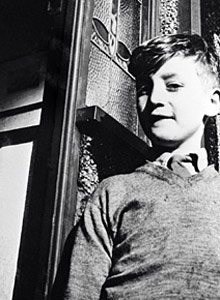

Always opinionated and a bit of a thinker, it was while John Lennon was with The Beatles that he began to change and evolve, to form his own vision. He began to address this vision in his songs. He did it earliest in songs co-written with Paul McCartney: "The Word" and "We Can Work It Out." He later addressed it in songs he wrote alone for The Beatles: his masterwork "All You Need is Love" and "Revolution." Encouraged by his wife Yoko Ono, John Lennon would continue to shape his vision. After The Beatles he wrote such songs as "Give Peace a Chance," "Happy Xmas (War is Over)," and, what some consider his signature song, "Imagine." He and Yoko held a Bed In for Peace. In connection with his single "Happy Xmas (War is Over)," he and Yoko bought billboards in eleven major cities reading, "WAR IS OVER! (If You Want It) Happy Christmas from John and Yoko." Much of John Lennon's poltical activism seemed over the top at the time, what we would now call "guerilla marketing," but it got his message across. John's message was simple, summed up in a few words, "Give peace a chance," "All you need is love," and the now current "Imagine Peace."

Of course, as much as we revere John Lennon, it is important to realise he was not perfect. He was not always a good husband to either of his wives. He was not always the best father to Julian. He could be difficult with his friends, even his fellow Beatles (particularly Paul and George). He became addicted to heroin. But for all John's faults, which were many, what showed through the most in him was that he genuinely cared about his friends, even those he was sometimes hardest upon. Indeed, John even cared about his fans. For all his status as an icon, John Lennon was always approachable. He was known to talk to fans, to express concern for them, and to sign autographs for them. It was this openness that made us love him even more. And, sadly, it would be this openness which would lead to his death.

Like many fans, it was John's songs that first drew me to him, but, again like most fans, it was his vision that made him more than a rock star for us, more than a legend, more than an icon. John's vision was of a more perfect world, where mankind could exist in peace and harmony without regard to ethnicity, nationality, or creed. He expressed this vision in song after song. "The Word." "We Can Work It Out." "Revolution." "Give Peace a Chance." "Happy Xmas (War is Over)." For many his vision is best summed up by the song "Imagine," which has become omnipresent on the telly and the radio of late. But for me it is another song which I consider his piece de resistance, the song which best summed up his vision. It was a song which he performed with The Beatles as Britain's entry on Our World, the first globally televised television programme. The song's title summed up John's vision succinctly and precisely: "All you need is love." It is the strongest, most powerful message John ever espoused. After all, if one has love, peace is sure to follow.
Terence Towles Canote
9 October 2010
Friday, October 8, 2010
Roy Ward Baker Passes at 93
 Roy Ward Baker, who directed such films as Don't Bother to Knock (1952), A Night to Remember (1958), and Quatermass and the Pit (1967), passed at the age of 93 on Wednesday.
Roy Baker was born 19 December, 1916 in London. He would add his mother's married name, Ward, to his name later in his directorial career.
Mr. Baker was still very young when he talked his way into a job with Gainsborough Pictures. He started his career as a runner in 1934 on the movie Chu Chin Chow. By 1936 he was working as an assistant director Windbag the Sailor. He would serve as an assistant director on Oh, Mr. Porter (1937) and the Hitchcock classic The Lady Vanishes (1938). On the films A Girl Must Live (1939) and Night Train to Munich (1940), he was a second unit director. During World War II he worked with the British Army Kinematograph Unit, where his superior officer was novelist Eric Ambler. The two would later collaborate on an adaptation of Ambler's novel The October Man and it was Mr. Ambler who wrote the screenplay for A Night to Remember.
Upon World War II's end Roy Baker became a full fledge director, making his debut with the film Read All About It in 1945. He would do onto direct The October Man (1947), The Weaker Sex (1948), Paper Orchid (1948), Morning Departure (1950), Highly Dangerous (1950), and The House in the Square (1951). It would be Morning Departure, starring Sir John Mills, which would draw the attention of Darryl Zanuck, who hired him for three years at 20th Century Fox.
Mr. Baker's first film for Fox was the thriller Don't Bother to Knock (1952), starring Marilyn Monroe. It was followed by the films noir Night without Sleep (1952) and Inferno (1953). He then returned to the United Kingdom where he directed such films as Passage Home (1956), Tiger in the Smoke (1956), and The One That Got Away (1957). It was in 1958 that a film was released that would be the highlight of his career. It was in 1958 that a one of the highlights of his career. Eric Ambler wrote the sceenplay and Roy Baker directed an adaptation of Walter Lord's book on the Titanic's ill fated voyage, a movie entitled A Night to Remember. The movie was as historically accurate as possible at the time (at that point we did not know the ship had broken in two) and avoided fictional romance for a fairly faithful retelling of the actual events aboard the ship. It was superior not only in its historical accuracy, but quite simply as a film to the wildly overrated Titanic (1997) directed by James Cameron many years later.
While A Night to Remember received critical accolades and did well at the box office, it did not give Mr. Baker better assignments as a director. The next few years he directed such films as Flame in the Streets (1961), The Valiant (1963), and Two Left Feet (1963). It was in 1963 that he would begin directing television shows, starting off with episodes of Zero One. The next several years he directed episodes of such shows as The Human Jungle, Gideon's Way, The Baron, The Avengers, Department S, The Champions, and Randall and Hopkirk (Deceased). The show with which he was most closely connected was perhaps The Saint, for which he directed 18 episodes alone.
In 1967 Mr. Baker would return to film with another highlight of his career and the first film upon which he used the name "Roy Ward Baker." Quatermass and the Pit was Hammer Films' adaptation of the popular British serial, and arguably one of the best science fiction movies they ever made. It was also one of the best horror movies ever made and possibly Mr. Baker's best film. He would direct more movies for Hammer, including the space Western Moon Zero Two, The Vampire Lovers (1970), Scars of Dracula (1970), and Dr. Jekyll and Sister Hyde (1971). He would then go to work for rival Amicus Productions, directing the horror portmanteau films Asylum (1972) and Vault of Horror (1973--based on the E.C. Comics titles), and the Gothic horror film And Now the Screaming Starts (1973). He would finish out the Seventies directing the films Mission: Monte Carlo (1973), the much maligned Hammer/Shaw Brothers co-production Legend of the Seven Golden Vampires (1974), and one last Amicus horror portmanteau film, The Monster Club (1980). He continued to direct television shows, including The Persuaders, Jason King, The Protectors, and Return of The Saint.
From the Eighties into the early Nineties Roy Ward Baker worked exclusively in television. He directed episodes of The Flame Trees of Thika, Q.E.D., Fairly Secret Army, Minder, Saracen, and The Good Guys. He also directed the telefilm Sherlock Holmes and the Masks of Death.
Roy Ward Baker has been described as a technically proficient director, but not a particularly artistic one. I have to disagree with this. In his best films, such as Don't Bother to Knock, A Night to Remember, and Quatermass and the Pit, Mr. Baker utilised a naturalistic, almost documentary like directorial style that was particularly effective not only in heightening realism, but in increasing suspense. At his best, Mr. Baker was capable of producing classics (I would classify all three of the films cited above as such). At his worst Mr. Baker made good, entertaining films. Indeed, I have trouble of thinking of any truly bad film he ever directed. Some might cite Legend of the Seven Golden Vampires, but I must disagree with them. It is actually a good movie, but one saddled with a reputation no doubt created by the wretched American release The Seven Brothers Meet Dracula, in which several minutes were edited (I would say "butchered") from the film. No, Roy Ward Baker is a director whose career is badly in need of reappraisal. He was a talented director with a naturalistic style that made some very fine films.
Thursday, October 7, 2010
Comic Sir Norman Wisdom and Puppeteer Van Snowden
 Sir Norman Wisdom, best know for his series of films featuring hapless Norman Pitkin, passed on Monday at the age of 95.
 Sir Norman Wisdom was born Norman Wisden in London on 4 February 1915. His mother deserted the family when he was still young, leaving Sir Norman and his brother to be reared by his father. His father would later give up the two boys so that they were raised in a children's home. Going out on his own at 14, Sir Norman served in a number of jobs, including cabin boy, apprentice waiter, and errand boy.
During World War II he served in the 10th Royal Hussars in England and India. It was while he was in the Army that Sir Norman learned to sing and play a number of different instruments. After being demobilised in 1946, he started his career in show business in London music halls. It was at this point he took the last name Wisdom. It was not long before he played the West End. In 1948 he received his own television series, Wit and Wisdom. He made his film debut that same year in a small part in the film A Date with a Dream. In 1951 he appeared in TV show Vic's Grill. It was in 1953 that he first appeared in his signature role as Norman in the film Trouble in Store, whose surname was usually Pitkin, but sometimes bore different surnames even if he was the same character. He would go onto play Norman in twelve more films: One Good Turn (1955), Man of the Moment (1955), Up the World (1955), The Square Peg (1956), Follow a Star (1959), The Bulldog Breed (1960), On the Beat (1962), A Stitch in Time (1963), Norman Wisdom: The Early Bird (1965), and Press for Time (1966). In nearly all of the films Norman, also known as The Gump, found himself in some occupation or predicament for which he was hardly suited. The films were huge in the United Kingdom, at one point even surpassing the James Bond series in terms of box office.
Sir Norman Wisdom also appeared in the films Sink the Bismark (1960), There was a Crooked Man (1960), The Girl on the Boat (1961),The Sandwich Man (1966), The Night They Raided Minsky's (1968), and What's Good For the Goose (1970). Beginning in the Seventies Sir Norman's career shifted primarily to television. He starred in the series Norman, Nobody is Norman Wisdom, A Little Bit of Wisdom, and Last of the Summer Wine. He guest starred on the shows Hudson and Halls, BBC2 Playhouse, Bergerac, Casualty , The Last Detective, and Coronation Street. He also appeared in the films Double X: The Name of the Game (1992) Five Children and It (2004), and Expresso (2007).
Sir Norman also toured for many years with his own cabaret act. He also appeared twice on Broadway, in Walking Happy (1966) and Not Now Darling (1970). He did not retire until he was 90 years old.
Sir Norman Wisdom was never a success in the United States, despite being phenomenally success in Britain. Most Americans' exposure to Sir Norman Wisdom would consist primarily of appearances on The Ed Sullivan Show and The Tonight Show with Johnny Carson, the movies Sink the Bismark and The Night They Raided Minsky's, and the TV show Last of the Summer Wine. This is sad, as Sir Norman Wisdom had a true gift for comedy, particularly slapstick. The character he played was invariably an everyman who finds himself over his head, only to finally emerge victorious in the end. It was a character comparable to Chaplin's Little Tramp, and one that should have had more appeal on this side of The Pond.
Puppeteer Van Snowden, who brought to life characters from H. R. Pufnstuf to the Crypt Keeper on Tales from the Crypt, passed on September 22, 2010 at the age of 71. The cause was cancer.
Van Snowden was born in San Francisco County, California on February 19, 1939. He grew up on a farm outside Branson, Missouri. He had wanted to become a Broadway star, but found himself sidetracked into the field of puppetry. He went to work for Sid and Marty Kroft on the movie Pufnstuf (1970), an adaptation of their TV series H. R. Pufnstuf. He would go onto work on several Sid and Mary Krofft productions, sometimes as an actor and sometimes as a puppeteer (often as both), including The Bugaloos, Lidsville, Fol-De-Rol, Sigmund and the Sea Monsters, Land of the Lost, and The Bay City Rollers Show.
Following his stint with Sid and Marty Krofft, Mr. Snowden worked as a puppeteer on such shows as D. C. Follies and Tales From the Crypt (where he brought to life The Crypt Keeper). He also worked on the films Beetlejuice (1988), Child's Play 2 (1990) , Child's Play 3 (1991), Dracula (1992), Tales From the Crypt: Demon Knight (1995), Casper (1996), Tales From the Crypt: Bordello of Blood (1996), and , and The X-Files (1998).
There can be little doubt that Van Snowden had a huge impact on pop culture, even if the average person does not recognise his name. He was involved in nearly every single Sid and Marty Krofft production. Indeed, Sid Krofft said, "Van Snowden was the heart and soul of our company." Mr. Snowden's career did not end with Sid and Marty Krofft, however, as he brought to life E. C. Comics' horror host The Crypt Keeper in the series Tales From the Crypt and Chucky in the Child's Play movies. Few puppeteers in the late 20th Century have had so rich a career as Van Snowden.
Wednesday, October 6, 2010
Trailer Announcer Art Gilmore Passes On
Art Gilmore, who provided the voice for movie trailers, television show introductions, and various other voice work, passed on September 25 at the age of 98.
Arthur Gilmore was born in Tacoma, Washington on March 18, 1912. Shortly after he was born, Mr. Gilmore's family moved to Massachusetts. He attended Washington State University where he began his career in entertainment by working at the university radio station. In 1936 he went to work for Warner Brothers' radio station KFWB in Hollywood. He later moved to the CBS radio station KNX. He served as the announcer on various radio shows, including Amos 'n' Andy, Red Ryder, and The Sears Radio Theatre. He did his first work in film for the 1941 movie Lone Wolf Takes a Chance, where he provided the voice of a newsreel announcer. It would be in the Forties that he did his first work on movie trailers. During World War II he served in the United States Navy.
It would be for his work as the announcer on movie trailers for which Art Gilmore would be best known. Over the years he would provide the voice for the trailers of such movies as Dumbo (1941), Gilda (1946), It's a Wonderful Life (1946), Born Yesterday (1950), A Place in the Sun (1951), Roman Holiday (1953), Shane (1953), The War of the Worlds (1953), Rear Window (1954), White Christmas (1954), War and Peace (1956), South Pacific (1958), Vertigo (1958), Ocean's 11 (1960), Where the Boys Are (1960), Bye Bye Birdie (1963), and Fahrenheit 451. In all he did around 3000 trailers. Mr. Gilmore also served as a the narrator on many documentaries. his voice was utilised in such films as Saboteur (1942), Yankee Doodle Dandy (1942), Rendezvous 24 (1946), The Big Clock (1948), Valentino (1951), and Rear Window (1954).
Mr. Gilmore would eventually move into television. He served as an announcer or narrator on such shows as Shower of Stars, Climax, The Red Skeleton Show, Highway Patrol, and Mackenzie's Raiders. He also provided incidental voices for shows, such as the radio announcer on The Waltons.
Mr. Gilmore would also go into acting. He appeared in such films as Rendezvous 24 (1946), When Worlds Collide (1951), and Suicide Battalion (1958). He appeared in such TV Shows as Boston Blackie, The Whistler, Waterfront, The Adventures of Fu Manchu, Captain Midnight, Mary Tyler Moore, and Emergency. He was a regular on both Dragnet (the Fifties and Sixties incarnations) and Adam-12.
Art Gilmore was perhaps the most famous trailer announcer besides the legendary Don Lafontaine. And this was with good reason. Mr. Gilmore had a strong, clear voice capable of conveying just the right emotion for the movie whose trailer he announced. Indeed, he announced trailers for everything from comedies to thrillers to dramas to science fiction movies. His talents also proved useful on television, where his strong, authoritative narration of Highway Patrol would provide inspiration for generations of television narrators, down to today's Law and Order franchise. Mr. Gilmore had an enormous gift in a strong voice that could display nearly every emotion under the sun. And he put it to good use in hundreds of hours of movie trailers and TV shows.
Arthur Gilmore was born in Tacoma, Washington on March 18, 1912. Shortly after he was born, Mr. Gilmore's family moved to Massachusetts. He attended Washington State University where he began his career in entertainment by working at the university radio station. In 1936 he went to work for Warner Brothers' radio station KFWB in Hollywood. He later moved to the CBS radio station KNX. He served as the announcer on various radio shows, including Amos 'n' Andy, Red Ryder, and The Sears Radio Theatre. He did his first work in film for the 1941 movie Lone Wolf Takes a Chance, where he provided the voice of a newsreel announcer. It would be in the Forties that he did his first work on movie trailers. During World War II he served in the United States Navy.
It would be for his work as the announcer on movie trailers for which Art Gilmore would be best known. Over the years he would provide the voice for the trailers of such movies as Dumbo (1941), Gilda (1946), It's a Wonderful Life (1946), Born Yesterday (1950), A Place in the Sun (1951), Roman Holiday (1953), Shane (1953), The War of the Worlds (1953), Rear Window (1954), White Christmas (1954), War and Peace (1956), South Pacific (1958), Vertigo (1958), Ocean's 11 (1960), Where the Boys Are (1960), Bye Bye Birdie (1963), and Fahrenheit 451. In all he did around 3000 trailers. Mr. Gilmore also served as a the narrator on many documentaries. his voice was utilised in such films as Saboteur (1942), Yankee Doodle Dandy (1942), Rendezvous 24 (1946), The Big Clock (1948), Valentino (1951), and Rear Window (1954).
Mr. Gilmore would eventually move into television. He served as an announcer or narrator on such shows as Shower of Stars, Climax, The Red Skeleton Show, Highway Patrol, and Mackenzie's Raiders. He also provided incidental voices for shows, such as the radio announcer on The Waltons.
Mr. Gilmore would also go into acting. He appeared in such films as Rendezvous 24 (1946), When Worlds Collide (1951), and Suicide Battalion (1958). He appeared in such TV Shows as Boston Blackie, The Whistler, Waterfront, The Adventures of Fu Manchu, Captain Midnight, Mary Tyler Moore, and Emergency. He was a regular on both Dragnet (the Fifties and Sixties incarnations) and Adam-12.
Art Gilmore was perhaps the most famous trailer announcer besides the legendary Don Lafontaine. And this was with good reason. Mr. Gilmore had a strong, clear voice capable of conveying just the right emotion for the movie whose trailer he announced. Indeed, he announced trailers for everything from comedies to thrillers to dramas to science fiction movies. His talents also proved useful on television, where his strong, authoritative narration of Highway Patrol would provide inspiration for generations of television narrators, down to today's Law and Order franchise. Mr. Gilmore had an enormous gift in a strong voice that could display nearly every emotion under the sun. And he put it to good use in hundreds of hours of movie trailers and TV shows.
Tuesday, October 5, 2010
Film Editor Sally Menke
Film editor Sally Menke, best known for her work with Quentin Tarantino, passed on September 27, 2010 at the age of 56. She had been hiking and her body appeared extremely dehydrated. No foul play was suspected.
Miss Menke was born in Mineola, New York on December 17, 1953. In 1978 she graduated from the Tisch School of Arts at New York University. She began her career as an editor with PBS and CBS Reports. She made the shift to feature films in 1983 with the film Cold Feet. Over the next few years she edited such films as Teenage Mutant Ninja Turtles (1990) and The Search for Intelligent Life in the Universe (1992). She interviewed for Quentin Tarantino when he was looking for an editor who would work cheap on his film Reservoir Dogs (1992). Not only did Mr. Tarantino hire Sally Menke, but she would work on nearly every one of his films.
Sally Menke would go onto direct such films as Heaven and Earth (1993), Who Do You Think You're Fooling (1994), Pulp Fiction (1994), Mulholland Falls (1996), Nightwatch (1997), Jackie Brown (1997), All the Pretty Horses (2000), D.C. Smalls (2001), Daddy and Them (2001), Kill Bill Vol. 1 (2003), Kill Bill Vol. 2 (2004), Grindhouse (2007--the segment "Death Proof"), Inglourious Basterds (2009), and Peakcock (2010). She was nominated for Oscars for Pulp Fiction and Inglourious Basterds.
Miss Menke was born in Mineola, New York on December 17, 1953. In 1978 she graduated from the Tisch School of Arts at New York University. She began her career as an editor with PBS and CBS Reports. She made the shift to feature films in 1983 with the film Cold Feet. Over the next few years she edited such films as Teenage Mutant Ninja Turtles (1990) and The Search for Intelligent Life in the Universe (1992). She interviewed for Quentin Tarantino when he was looking for an editor who would work cheap on his film Reservoir Dogs (1992). Not only did Mr. Tarantino hire Sally Menke, but she would work on nearly every one of his films.
Sally Menke would go onto direct such films as Heaven and Earth (1993), Who Do You Think You're Fooling (1994), Pulp Fiction (1994), Mulholland Falls (1996), Nightwatch (1997), Jackie Brown (1997), All the Pretty Horses (2000), D.C. Smalls (2001), Daddy and Them (2001), Kill Bill Vol. 1 (2003), Kill Bill Vol. 2 (2004), Grindhouse (2007--the segment "Death Proof"), Inglourious Basterds (2009), and Peakcock (2010). She was nominated for Oscars for Pulp Fiction and Inglourious Basterds.
Monday, October 4, 2010
Actor Joe Mantell R.I.P.
Joe Mantell, who appeared in films from The Birds to Chinatown, passed on September 29, 2010 at the age of 94. The cause was pneumonia.
Joe Mantell was born in Brooklyn on December 21, 1915. During World War II he served in the United States Army.
He made his movie debut in Undercover Man in 1949, playing the uncredited role of a newsboy. He appeared in uncredited roles in Barbary Pirate (1949), Point of New York (1949), and And Baby Makes Three (1949). Throughout much of the Fifities Mr. Mantell appeared on television, in such shows as Out There, Suspense, Lights Out, Mister Peepers, The Philco-Goodyear Playhouse, Inner Sanctum, Studio One, Kraft Theatre, The 20th Century Fox Hour, Alfred Hitchcock Presents, Climax, Westinghouse Desilu Playhouse, Wanted Dead or Alive, One Step Beyond, and The Untouchables. He appeared in the films Marty (1955--reprising the role of Angie from Philco-Goodyear Playhouse), Storm Centre (1956), The Sad Sack (1957), Onionhead (1958), and The Crowded Sky (1960).
In the Sixties he appeared in such shows as The Roaring 20's, The Detectives Starring Robert Taylor, Pete and Gladys, Cain's Hundred, Combat, The Defenders, The Twilight Zone, My Three Sons, The Virginian, Mission: Impossible, The Man From U.N.C.L.E., and Mannix. He appeared in the films The Birds (1963), Mister Buddwing (1966), and Kelly's Heroes (1970). In the Seventies he appeared in the films Chinatown (1974). He appeared on such shows as Ironside, All in the Family, Maude, Lou Grant, and Hart to Hart. In the Eighties he appeared on the shows Hart to Hart and Barney Miller. He appeared in the films Blame It on the Night (1984), Mover and Shakers (1985), and The Two Jakes (1990--in which he reprised his role as Walsh from Chinatown).
Joe Mantell was an immensely talented actor who fully deserved the Oscar nomination for his role as Angie in Marty. He was capable of playing roles convincingly even when they were very small. There is no greater proof of this than the role of Walsh in Chinatown. The role was not very big, but Mr. Mantell remains memorable. Indeed, it is a mark of his skill as an actor that he delivered the most memorable lines in both Marty and Chinatown--"What do you feel like doin’ tonight?" in the former, "Forget it, Jake. It's Chinatown" in the latter. While it is true that both lines were written by the movie's respective writers, but it was Mr. Mantell's delivery that made them memorable.
Joe Mantell was born in Brooklyn on December 21, 1915. During World War II he served in the United States Army.
He made his movie debut in Undercover Man in 1949, playing the uncredited role of a newsboy. He appeared in uncredited roles in Barbary Pirate (1949), Point of New York (1949), and And Baby Makes Three (1949). Throughout much of the Fifities Mr. Mantell appeared on television, in such shows as Out There, Suspense, Lights Out, Mister Peepers, The Philco-Goodyear Playhouse, Inner Sanctum, Studio One, Kraft Theatre, The 20th Century Fox Hour, Alfred Hitchcock Presents, Climax, Westinghouse Desilu Playhouse, Wanted Dead or Alive, One Step Beyond, and The Untouchables. He appeared in the films Marty (1955--reprising the role of Angie from Philco-Goodyear Playhouse), Storm Centre (1956), The Sad Sack (1957), Onionhead (1958), and The Crowded Sky (1960).
In the Sixties he appeared in such shows as The Roaring 20's, The Detectives Starring Robert Taylor, Pete and Gladys, Cain's Hundred, Combat, The Defenders, The Twilight Zone, My Three Sons, The Virginian, Mission: Impossible, The Man From U.N.C.L.E., and Mannix. He appeared in the films The Birds (1963), Mister Buddwing (1966), and Kelly's Heroes (1970). In the Seventies he appeared in the films Chinatown (1974). He appeared on such shows as Ironside, All in the Family, Maude, Lou Grant, and Hart to Hart. In the Eighties he appeared on the shows Hart to Hart and Barney Miller. He appeared in the films Blame It on the Night (1984), Mover and Shakers (1985), and The Two Jakes (1990--in which he reprised his role as Walsh from Chinatown).
Joe Mantell was an immensely talented actor who fully deserved the Oscar nomination for his role as Angie in Marty. He was capable of playing roles convincingly even when they were very small. There is no greater proof of this than the role of Walsh in Chinatown. The role was not very big, but Mr. Mantell remains memorable. Indeed, it is a mark of his skill as an actor that he delivered the most memorable lines in both Marty and Chinatown--"What do you feel like doin’ tonight?" in the former, "Forget it, Jake. It's Chinatown" in the latter. While it is true that both lines were written by the movie's respective writers, but it was Mr. Mantell's delivery that made them memorable.
Subscribe to:
Posts (Atom)
