Saturday, June 29, 2019
A Reminder for the Sixth Annual Rule, Britannia Blogathon
This is a reminder that I will be hosting the 6th Annual Rule, Britannia Blogathon from August 2 to August 4 2019. If you are interested and would like to write post for the blogathon, the rules are here in the original post from June 1.
Friday, June 28, 2019
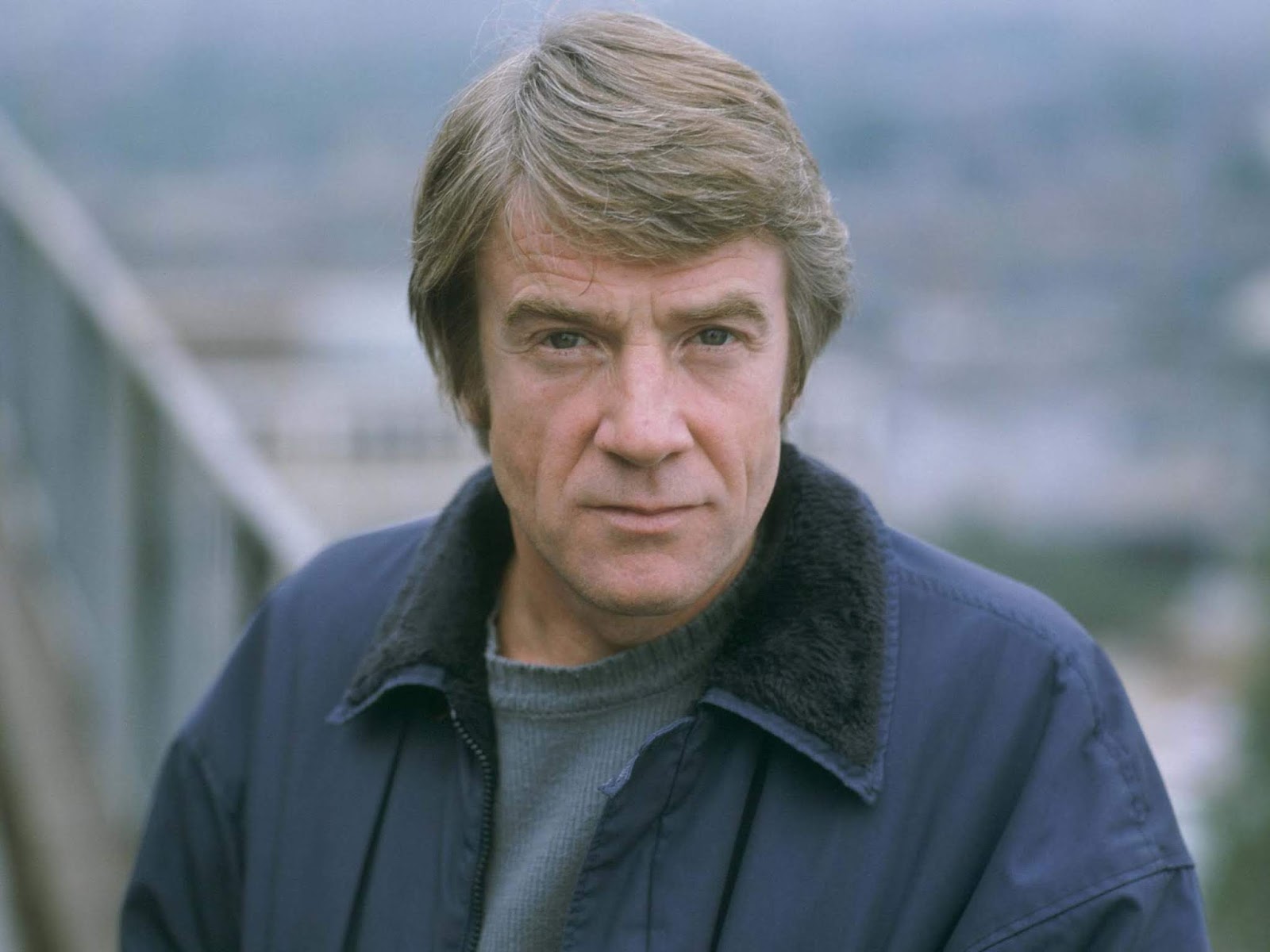
Max Wright Passes On
Max Wright, best known for playing Willie Tanner on the sitcom ALF, died on June 26 2019 at the age of 75. The cause was lymphoma.
Max Wright was born on August 2 1943 in Detroit, Michigan. He began his career on stage and made his Broadway debut in The Great White Hope in 1968. He continued to appear on Broadway in the Seventies in such productions as The Cherry Orchard, The Basic Training of Pavlo Hummel, Stages, Once in a Lifetime, The Inspector General, King Richard III, and Lunch Hour. He made his television debut in 1974 in a production of Etienne that aired on Great Performances. He appeared in the TV movies Red Alert and Playing for Time. He made his film debut in Last Embrace in 1979. He appeared in the movies All That Jazz (1979) and Simon (1980).
The Eighties would see Mr. Wright work extensively in television. He played Dabney Coleman's boss on the comedy Buffalo Bill, director of the Humanidyne Institute Dick Stetmeyer on Misfits of Science, and, of course, Willie Tanner on ALF. He guest starred on Hart to Hart, WKRP in Cincinnati, Open All Night, Code Red, Tales from the Darkside, I Gave at the Office, After MASH, E/R, Code Name: Foxfire, Benson, Cheers, Comedy Factory, You Are the Jury, and Faerie Tale Theatre. He appeared in the films Reds (1981), The Sting II (1983), Fraternity Vacation (1985), Touch and Go (1986), Soul Man (1986), and Going to the Chapel (1988).
In the Nineties Max Wright returned to Broadway in the productions Ivanov and Twelfth Night. He was a regular on the TV series Dudley and The Norm Show. He appeared in the mini-series The Stand. He guest starred on the shows Murder, She Wrote; Who's the Boss?; Ghostwriter; Quantum Leap; The Powers That Be; Murphy Brown; Roc; Monty; Friends; The John Laroquette Show; Early Edition; Aaahh!!! Real Monsters; High Incident; Mad About You; and The Drew Carey Show. He appeared in the mini-series From the Earth to the Moon. He appeared in the films The Shadow (1994), Grumpier Old Men (1995), A Midsummer's Night Dream (1999), and Snow Falling on Cedars (1999). In the Naughts he guest starred on the TV show A Minute with Stan Hooper and appeared in the movie Easter (2002).
Max Wright will probably always be remembered as Willie Tanner on ALF, and with good reason. Aside from being the most successful television show on which he appeared, he was also very good on it. Mr. Wright made believable a show with a premise that some in the audience might have found unbelievable. Of course, Max Wright played other uptight characters similar to Willie on other shows, including Buffalo Bill and Misfits of Science. That having been said, he could play other types of roles. As hard as it can be to imagine, Mr. Wright played Nazi scientist Dr. Mengele in the TV movie Playing for Time and did a fine job doing it. In All That Jazz Max Wright played producer Joshua Penn, who survives largely on Dexedrine pills and cigarettes. In Reds he played a historical figure, flamboyant editor, author, and playwright Floyd Dell. Max Wright was an immensely talented actor who leaves behind a number of memorable roles.
Max Wright was born on August 2 1943 in Detroit, Michigan. He began his career on stage and made his Broadway debut in The Great White Hope in 1968. He continued to appear on Broadway in the Seventies in such productions as The Cherry Orchard, The Basic Training of Pavlo Hummel, Stages, Once in a Lifetime, The Inspector General, King Richard III, and Lunch Hour. He made his television debut in 1974 in a production of Etienne that aired on Great Performances. He appeared in the TV movies Red Alert and Playing for Time. He made his film debut in Last Embrace in 1979. He appeared in the movies All That Jazz (1979) and Simon (1980).
The Eighties would see Mr. Wright work extensively in television. He played Dabney Coleman's boss on the comedy Buffalo Bill, director of the Humanidyne Institute Dick Stetmeyer on Misfits of Science, and, of course, Willie Tanner on ALF. He guest starred on Hart to Hart, WKRP in Cincinnati, Open All Night, Code Red, Tales from the Darkside, I Gave at the Office, After MASH, E/R, Code Name: Foxfire, Benson, Cheers, Comedy Factory, You Are the Jury, and Faerie Tale Theatre. He appeared in the films Reds (1981), The Sting II (1983), Fraternity Vacation (1985), Touch and Go (1986), Soul Man (1986), and Going to the Chapel (1988).
In the Nineties Max Wright returned to Broadway in the productions Ivanov and Twelfth Night. He was a regular on the TV series Dudley and The Norm Show. He appeared in the mini-series The Stand. He guest starred on the shows Murder, She Wrote; Who's the Boss?; Ghostwriter; Quantum Leap; The Powers That Be; Murphy Brown; Roc; Monty; Friends; The John Laroquette Show; Early Edition; Aaahh!!! Real Monsters; High Incident; Mad About You; and The Drew Carey Show. He appeared in the mini-series From the Earth to the Moon. He appeared in the films The Shadow (1994), Grumpier Old Men (1995), A Midsummer's Night Dream (1999), and Snow Falling on Cedars (1999). In the Naughts he guest starred on the TV show A Minute with Stan Hooper and appeared in the movie Easter (2002).
Max Wright will probably always be remembered as Willie Tanner on ALF, and with good reason. Aside from being the most successful television show on which he appeared, he was also very good on it. Mr. Wright made believable a show with a premise that some in the audience might have found unbelievable. Of course, Max Wright played other uptight characters similar to Willie on other shows, including Buffalo Bill and Misfits of Science. That having been said, he could play other types of roles. As hard as it can be to imagine, Mr. Wright played Nazi scientist Dr. Mengele in the TV movie Playing for Time and did a fine job doing it. In All That Jazz Max Wright played producer Joshua Penn, who survives largely on Dexedrine pills and cigarettes. In Reds he played a historical figure, flamboyant editor, author, and playwright Floyd Dell. Max Wright was an immensely talented actor who leaves behind a number of memorable roles.
Thursday, June 27, 2019
Godspeed Billy Drago
Billy Drago, who played Frank Nitti in the movie The Untouchables (1987) and had a regular role on the TV show The Adventures of Brisco County, Jr., died on June 24 2019 at the age of 73. The cause was complications from a stroke.
Billy Drago was born William Eugene Burrows Jr. on November 30 1945 in Houston, Kansas. His mother was Romany and his father was thought to be Chiricahua Apache in descent. After graduating from high school he worked as a stuntman at Boot Hill in Dodge City. He attended the University of Kansas in Lawrence. After graduating from college he was a radio host for a time before joining an acting company. He eventually moved to New York City where he began his acting career. He took his grandmother's maiden name to avoid confusion with another actor with the last name Burrows. Billy Drago made his television debut in the TV movie No Other Love in 1979 and that same year he appeared in two episodes of the TV show The Chisholms. He made his film debut in Windwalker in 1980.
In the Eighties he played Deputy Mather in Pale Rider (1985) and Frank Nitti in The Untouchables (1987). He also appeared in the films Cutter's Way (1981), Invasion U.S..A. (1985), Vamp (1986), Hunter's Blood (1986), Banzai Runner (1987), Hero and the Terror (1988), Freeway (1988), Dark Before Dawn (1988), True Blood (1989), Gwang tin lung fu wui (1989), Prime Suspect (1989), and Delta Force 2: The Colombian Connection (1990). He guest starred on the shows Strike Force, Gavilian, Cutter to Houston, Automan, Partners in Crime, Hardcastle and McCormick, Trapper John M.D., Moonlighting, Hunter, Hill Street Blues, The Fall Guy, T. J. Hooker, The Wizard, Friday the 13th: The Series, and Monsters.
In the Nineties he played the primary villain, John Bly, on the TV show The Adventures of Brisco County, Jr. He played another recurring villain, Barbas, the Demon of Fear, on the TV series Charmed. He guest starred on the TV shows Walker, Texas Ranger; Nash Bridges; and The X-Files. He appeared in the films Diplomatic Immunity (1991), Guncrazy (1992), Lady Dragon 2 (1993), The Outfit (1993), Deadly Heroes (1993), Never Say Die (1994), Lunarcop (1995), Phoenix (1995), Mirror Mirror 3: The Voyeur (1995), Drifting School (1995), Blood Money (1996), Mad Dog Time (1996), Blue Devil, Blue Devil (1996), Convict 762 (1997), A Doll in the Dark (1997), Monkey Business (1998), Soccer Dog: The Movie (1999), Lima: Breaking the Silence (1999), Very Mean Men (2000), and Mirror Mirror 4: Reflections (2000).
In the Naughts Mr. Drago continued to appear on Charmed as Barbas. He guest starred on the TV shows Masters of Horror and Supernatural. His last television appearance was on the TV movie Ghost Town in 2009. He appeared in the films Death Game (2001), Desert Rose (2002), The Circuit (2002), Welcome to America (2002), Mysterious Skin (2004), Demon Hunter (2005), Seven Mummies (2006), The Hills Have Eyes (2006), Lime Salted Love (2006), The Dead One (2007), Moving McAllister (2007), Zombie Hunters (2007), Rounds (2008), Dark Moon Rising (2009), The Ritual (2009), and Downstream.
In the Teens Billy Drago appeared in the films Balls to the Wall (2011), Night of the Templar (2013), Low Down (2014), and The Dance (2014).
Billy Drago was best known for playing villains, and there should be very little wonder why. He was very good at playing them. He even played historical gangsters on more than one occasion, including Frank Nitti in The Untouchables and Lucky Luciano in The Outfit. His two recurring roles on television were villains, John Bly on The Adventures of Brisco County, Jr. and Barras on Charmed. He had a memorable turn as a villainous hoodoo man in The X-Files episode "Theef." That's not to say Billy Drago couldn't play good guys. He played a good guy in the Monsters episode "Cocoon," and another good guy in the movie Diplomatic Immunity. While it was rare that he played good guys, Mr. Drago always did well when he did. Despite being typecast as a heavy, from all reports Billy Drago was a nice guy. His Brisco County co-star Bruce Campbell said of him, "He was sinister and understated on screen, sweet and humble off screen." A good guy in real life, Billy Drago was very good at playing the bad guy.
Billy Drago was born William Eugene Burrows Jr. on November 30 1945 in Houston, Kansas. His mother was Romany and his father was thought to be Chiricahua Apache in descent. After graduating from high school he worked as a stuntman at Boot Hill in Dodge City. He attended the University of Kansas in Lawrence. After graduating from college he was a radio host for a time before joining an acting company. He eventually moved to New York City where he began his acting career. He took his grandmother's maiden name to avoid confusion with another actor with the last name Burrows. Billy Drago made his television debut in the TV movie No Other Love in 1979 and that same year he appeared in two episodes of the TV show The Chisholms. He made his film debut in Windwalker in 1980.
In the Eighties he played Deputy Mather in Pale Rider (1985) and Frank Nitti in The Untouchables (1987). He also appeared in the films Cutter's Way (1981), Invasion U.S..A. (1985), Vamp (1986), Hunter's Blood (1986), Banzai Runner (1987), Hero and the Terror (1988), Freeway (1988), Dark Before Dawn (1988), True Blood (1989), Gwang tin lung fu wui (1989), Prime Suspect (1989), and Delta Force 2: The Colombian Connection (1990). He guest starred on the shows Strike Force, Gavilian, Cutter to Houston, Automan, Partners in Crime, Hardcastle and McCormick, Trapper John M.D., Moonlighting, Hunter, Hill Street Blues, The Fall Guy, T. J. Hooker, The Wizard, Friday the 13th: The Series, and Monsters.
In the Nineties he played the primary villain, John Bly, on the TV show The Adventures of Brisco County, Jr. He played another recurring villain, Barbas, the Demon of Fear, on the TV series Charmed. He guest starred on the TV shows Walker, Texas Ranger; Nash Bridges; and The X-Files. He appeared in the films Diplomatic Immunity (1991), Guncrazy (1992), Lady Dragon 2 (1993), The Outfit (1993), Deadly Heroes (1993), Never Say Die (1994), Lunarcop (1995), Phoenix (1995), Mirror Mirror 3: The Voyeur (1995), Drifting School (1995), Blood Money (1996), Mad Dog Time (1996), Blue Devil, Blue Devil (1996), Convict 762 (1997), A Doll in the Dark (1997), Monkey Business (1998), Soccer Dog: The Movie (1999), Lima: Breaking the Silence (1999), Very Mean Men (2000), and Mirror Mirror 4: Reflections (2000).
In the Naughts Mr. Drago continued to appear on Charmed as Barbas. He guest starred on the TV shows Masters of Horror and Supernatural. His last television appearance was on the TV movie Ghost Town in 2009. He appeared in the films Death Game (2001), Desert Rose (2002), The Circuit (2002), Welcome to America (2002), Mysterious Skin (2004), Demon Hunter (2005), Seven Mummies (2006), The Hills Have Eyes (2006), Lime Salted Love (2006), The Dead One (2007), Moving McAllister (2007), Zombie Hunters (2007), Rounds (2008), Dark Moon Rising (2009), The Ritual (2009), and Downstream.
In the Teens Billy Drago appeared in the films Balls to the Wall (2011), Night of the Templar (2013), Low Down (2014), and The Dance (2014).
Billy Drago was best known for playing villains, and there should be very little wonder why. He was very good at playing them. He even played historical gangsters on more than one occasion, including Frank Nitti in The Untouchables and Lucky Luciano in The Outfit. His two recurring roles on television were villains, John Bly on The Adventures of Brisco County, Jr. and Barras on Charmed. He had a memorable turn as a villainous hoodoo man in The X-Files episode "Theef." That's not to say Billy Drago couldn't play good guys. He played a good guy in the Monsters episode "Cocoon," and another good guy in the movie Diplomatic Immunity. While it was rare that he played good guys, Mr. Drago always did well when he did. Despite being typecast as a heavy, from all reports Billy Drago was a nice guy. His Brisco County co-star Bruce Campbell said of him, "He was sinister and understated on screen, sweet and humble off screen." A good guy in real life, Billy Drago was very good at playing the bad guy.
Wednesday, June 26, 2019
Bryan Marshall Passes On
Bryan Marshall, who appeared frequently on British television, in Hammer films, and in the James Bond movie The Spy Who Loved Me (1977), died yesterday, June 25 2019, at the age of 81.
Bryan Marshall was born in Battersea, London on May 19 1938. He attended the Salesian College in Battersea and trained in acting at the Royal Academy of Dramatic Art. He performed at the Bristol Old Vic. He made his television debut in an episode of Teletale in 1964. In the Sixties he had a regular roles in the TV series United!, Spindoe, The Tenant of Wildfell Hall, and Villette. He appeared in the mini-series Vanity Fair. He guest starred on the programmes No Hiding Place, Gideon's Way, R3, Dr. Finlay's Casebook, Redcap, This Man Craig, The Forsythe Saga, Sanctuary, Sat'day While Sunday, The Informer, Z Cars, The Saint, Softly Softly, The Avengers, ITV Playhouse, Strange Report, and Special Branch. His film debut was in the Hammer Film Rasputin: The Mad Monk (1966). He appeared in three more Hammer movies: The Witches (1966), The Viking Queen (1967), and Quatermass and the Pit (1967). He also appeared in the movies Alfie (1966), Mosquito Squadron (1969), and I Start Counting (1970).
In the Seventies Mr. Marshall had regular roles on the TV shows Sam and the River, Warship, Rooms, and Buccaneer. He appeared in the mini-series Persuasion and Murder at the Wedding. He guest starred on the shows The Onedin Line, The Frighteners, New Scotland Yard, The Frighteners, Villains, Play for the Day, Dixon of Dock Green, Country Matters, Menace, Thriller, My Good Woman, BBC Play of the Month, Softly Softly: Task Force, Late Night Theatre, Churchill's People, Piccadilly Circus, Crown Court, Out, The Professionals, The Boy Merlin, Airport Chaplain, Armchair Theatre, and Dick Turpin. He appeared in the films Man in the Wilderness (1971), Because of the Cats (1973), The Tamarind Seed (1974), The Spy Who Loved Me (1977), and The Long Good Friday (1980).
In the Eighties Bryan Marshall was a regular on Prisoner: Cell Block H, Golden Pennies, and Embassy. He was the host of Australia's Most Wanted. He appeared in the mini-series Tanamera - Lion of Singapore. He guest starred on The Chinese Detective, Tales of the Unexpected, A Country Practice, Special Squad, Neighbours, Pulaski, The Flying Doctors, Mission: Impossible, and Rafferty's Rules. He appeared in the films 4D Special Agents (1981), BMX Bandits (1983), Bliss (1985), Hot Target (1985), The Man from Snowy River II (1988), and The Punisher (1989).
In the Nineties he guest starred on the shows Time Trax, Blue Murder, Water Rats, Big Sky, The New Adventures of Robin Hood, Thief Takers, Halifax f.p., Heartbeat, The Knock, and The Bill. He appeared in the films The Phantom Horseman (1992), Country Life (1994), Chicken (1996), Hard Edge (1997), and Selkie (2000).
In the Naughts Bryan Marshall guest starred on the shows Dalziel and Pascoe, Home and Away, Stingers, and All Saints. He appeared in the movie Courts mais GAY: Tome 13 (2007). His final appearance on screen was in the 2012 mini-series A Moody Christmas.
Bryan Marshall was an extremely talented actor, able to play villains or heroes with equal skill. Over the course of his career he played everything from doctors to military officers to lawyers. There seemed to be no role that he could not do.
Bryan Marshall was born in Battersea, London on May 19 1938. He attended the Salesian College in Battersea and trained in acting at the Royal Academy of Dramatic Art. He performed at the Bristol Old Vic. He made his television debut in an episode of Teletale in 1964. In the Sixties he had a regular roles in the TV series United!, Spindoe, The Tenant of Wildfell Hall, and Villette. He appeared in the mini-series Vanity Fair. He guest starred on the programmes No Hiding Place, Gideon's Way, R3, Dr. Finlay's Casebook, Redcap, This Man Craig, The Forsythe Saga, Sanctuary, Sat'day While Sunday, The Informer, Z Cars, The Saint, Softly Softly, The Avengers, ITV Playhouse, Strange Report, and Special Branch. His film debut was in the Hammer Film Rasputin: The Mad Monk (1966). He appeared in three more Hammer movies: The Witches (1966), The Viking Queen (1967), and Quatermass and the Pit (1967). He also appeared in the movies Alfie (1966), Mosquito Squadron (1969), and I Start Counting (1970).
In the Seventies Mr. Marshall had regular roles on the TV shows Sam and the River, Warship, Rooms, and Buccaneer. He appeared in the mini-series Persuasion and Murder at the Wedding. He guest starred on the shows The Onedin Line, The Frighteners, New Scotland Yard, The Frighteners, Villains, Play for the Day, Dixon of Dock Green, Country Matters, Menace, Thriller, My Good Woman, BBC Play of the Month, Softly Softly: Task Force, Late Night Theatre, Churchill's People, Piccadilly Circus, Crown Court, Out, The Professionals, The Boy Merlin, Airport Chaplain, Armchair Theatre, and Dick Turpin. He appeared in the films Man in the Wilderness (1971), Because of the Cats (1973), The Tamarind Seed (1974), The Spy Who Loved Me (1977), and The Long Good Friday (1980).
In the Eighties Bryan Marshall was a regular on Prisoner: Cell Block H, Golden Pennies, and Embassy. He was the host of Australia's Most Wanted. He appeared in the mini-series Tanamera - Lion of Singapore. He guest starred on The Chinese Detective, Tales of the Unexpected, A Country Practice, Special Squad, Neighbours, Pulaski, The Flying Doctors, Mission: Impossible, and Rafferty's Rules. He appeared in the films 4D Special Agents (1981), BMX Bandits (1983), Bliss (1985), Hot Target (1985), The Man from Snowy River II (1988), and The Punisher (1989).
In the Nineties he guest starred on the shows Time Trax, Blue Murder, Water Rats, Big Sky, The New Adventures of Robin Hood, Thief Takers, Halifax f.p., Heartbeat, The Knock, and The Bill. He appeared in the films The Phantom Horseman (1992), Country Life (1994), Chicken (1996), Hard Edge (1997), and Selkie (2000).
In the Naughts Bryan Marshall guest starred on the shows Dalziel and Pascoe, Home and Away, Stingers, and All Saints. He appeared in the movie Courts mais GAY: Tome 13 (2007). His final appearance on screen was in the 2012 mini-series A Moody Christmas.
Bryan Marshall was an extremely talented actor, able to play villains or heroes with equal skill. Over the course of his career he played everything from doctors to military officers to lawyers. There seemed to be no role that he could not do.
Tuesday, June 25, 2019
Godspeed Bob Dorian
Ten years before Turner Classic Movies launched, there was another cable channel that showed classic movies. American Movie Classics (AMC) launched on October 1 1984, and it specialised in movies made before the Fifties. In many ways AMC paved the way for TCM. Like TCM, AMC would sometimes show marathons of related movies (for example, the Marx Brothers films). In 1993 AMC started holding an annual Film Preservation Festival coordinated alongside the Film Foundation. And like TCM, AMC had its own congenial hosts who introduced movies. While Gene Klavan and Nick Clooney would later introduce movies that aired during the daytime, the host most closely associated with American Movie Classics was Bob Dorian. Bob Dorian was the host of primetime movies on AMC for well over a decade. Sadly, Bob Dorian died on June 15 2019 at the age of 85.
Bob Dorian was born Robert Vierengel on April 19 1934 in Brooklyn, New York. Mr. Dorian was a movie buff even as a child. He would often spend Saturdays watching three or more movies all for the price of a dime. He would later work as a movie usher. He began acting when he was 14 and over the years he would hold a number of different jobs. He did stand-up comedy for a short time, as well as trapeze catching in a circus. He played bass in a New York City based jazz group called Four Dimensions. Prior to working as the host of AMC, his greatest claim to fame may have been as a magician. He used the stage name "the Amazing Dorian." He was a member of the Magic Castle. Mr. Dorian appeared on the 1976 television special Magic at the Roxy alongside Carl Ballantine and David Copperfield.
As an actor Bob Dorian's most famous role would come with The Evil Dead (1981), on which he was the voice of an archaeologist on a tape recorder that triggers the events in the film. It would be an acting job that would lead directly to becoming the host of American Movie Classics. In the early Eighties he appeared as Dracula in a commercial for a video game. The shoot lasted two days and he wound up talking about old movies a good deal with the producer on the commercial, Norm Blumenthal. When Norm Blumenthal helped launch AMC, he remembered Bob Dorian and asked if he would be interested in hosting the new cable channel. The job was originally meant to last only six months. Ultimately Mr. Dorian was a host on AMC from its launch in 1984 to 2000. He left the channel not long before it shifted its format so that it no longer showed classics exclusively, but also aired commercials as well (originally movies were shown uninterrupted on AMC).
In addition to hosting AMC, he had a recurring role on the channel's first original series, Remember WENN. After leaving AMC he guest starred on the TV show Ed and appeared in the movies The Curse of the Jade Scorpion (2001), Hollywood Ending (2002), Strike the Tent (2005), and Mnemonica (2009).
Bob Dorian also worked as an actor on stage, most notably appearing in a touring production of the stage version of The Wizard of Oz. With Dorothy Curley he wrote the book Bob Dorian's Classic Movies: Behind the Scenes of 100 Great Movies from Hollywood's Golden Years, published in 1990.
In many ways Bob Dorian was the perfect host for AMC. He was always careful to emphasise that he was not a film historian, but merely an actor and a fan. That having been said, Mr. Dorian was more knowledgeable than the average fan, with a wealth of stories upon which to draw. He also displayed a remarkable enthusiasm for movies. It was clear watching Mr. Dorian that he loved movies, whether he was introducing a classic such as Citizen Kane (1941) or a not-so-classic such as Zombies of the Stratosphere (1952). Bob Dorian's love for movies continued well after he left AMC. In a 2009 interview with the web site Go Fatherhood, he said that he watched six to eight movies a week (mostly on TCM).
Of course, it must be kept in mind that Bob Dorian was not only a host on AMC, but he was also a well-respected magician. He was a long standing member of the Magic Castle and continued his magic career even after he had become a host on American Movie Classics.
Over the years many young people have been introduced to classic movies through Turner Classic Movies. Before TCM, however, there were many introduced to classic movies by American Movie Classics. Bob Dorian played a large role in the early success of AMC. He provided a friendly, avuncular presence that often made the introductions more entertaining than the films being shown.
Bob Dorian was born Robert Vierengel on April 19 1934 in Brooklyn, New York. Mr. Dorian was a movie buff even as a child. He would often spend Saturdays watching three or more movies all for the price of a dime. He would later work as a movie usher. He began acting when he was 14 and over the years he would hold a number of different jobs. He did stand-up comedy for a short time, as well as trapeze catching in a circus. He played bass in a New York City based jazz group called Four Dimensions. Prior to working as the host of AMC, his greatest claim to fame may have been as a magician. He used the stage name "the Amazing Dorian." He was a member of the Magic Castle. Mr. Dorian appeared on the 1976 television special Magic at the Roxy alongside Carl Ballantine and David Copperfield.
As an actor Bob Dorian's most famous role would come with The Evil Dead (1981), on which he was the voice of an archaeologist on a tape recorder that triggers the events in the film. It would be an acting job that would lead directly to becoming the host of American Movie Classics. In the early Eighties he appeared as Dracula in a commercial for a video game. The shoot lasted two days and he wound up talking about old movies a good deal with the producer on the commercial, Norm Blumenthal. When Norm Blumenthal helped launch AMC, he remembered Bob Dorian and asked if he would be interested in hosting the new cable channel. The job was originally meant to last only six months. Ultimately Mr. Dorian was a host on AMC from its launch in 1984 to 2000. He left the channel not long before it shifted its format so that it no longer showed classics exclusively, but also aired commercials as well (originally movies were shown uninterrupted on AMC).
In addition to hosting AMC, he had a recurring role on the channel's first original series, Remember WENN. After leaving AMC he guest starred on the TV show Ed and appeared in the movies The Curse of the Jade Scorpion (2001), Hollywood Ending (2002), Strike the Tent (2005), and Mnemonica (2009).
Bob Dorian also worked as an actor on stage, most notably appearing in a touring production of the stage version of The Wizard of Oz. With Dorothy Curley he wrote the book Bob Dorian's Classic Movies: Behind the Scenes of 100 Great Movies from Hollywood's Golden Years, published in 1990.
In many ways Bob Dorian was the perfect host for AMC. He was always careful to emphasise that he was not a film historian, but merely an actor and a fan. That having been said, Mr. Dorian was more knowledgeable than the average fan, with a wealth of stories upon which to draw. He also displayed a remarkable enthusiasm for movies. It was clear watching Mr. Dorian that he loved movies, whether he was introducing a classic such as Citizen Kane (1941) or a not-so-classic such as Zombies of the Stratosphere (1952). Bob Dorian's love for movies continued well after he left AMC. In a 2009 interview with the web site Go Fatherhood, he said that he watched six to eight movies a week (mostly on TCM).
Of course, it must be kept in mind that Bob Dorian was not only a host on AMC, but he was also a well-respected magician. He was a long standing member of the Magic Castle and continued his magic career even after he had become a host on American Movie Classics.
Over the years many young people have been introduced to classic movies through Turner Classic Movies. Before TCM, however, there were many introduced to classic movies by American Movie Classics. Bob Dorian played a large role in the early success of AMC. He provided a friendly, avuncular presence that often made the introductions more entertaining than the films being shown.
Saturday, June 22, 2019
The 50th Anniversary of Judy Garland's Death
It was fifty years ago today that legendary movie star Judy Garland died. Miss Garland's husband, Mickey Deans, found her dead in the bathroom of their house at Cadogan Lane in Belgravia, London. The cause of her death would be ruled a "an incautious self-overdosage" of barbiturates by Coroner Gavin Thurston. He stressed that there was no evidence for suicide and that the overdose was unintentional. Judy Garland was only 47 years old.
For me Judy Garland's death would be significant as the first celebrity death I can remember. I was six years old at the time and, like many (perhaps most) people in my generation I had already seen The Wizard of Oz (1939) multiple times. Of course, at the time, Miss Garland's death puzzled me. At that point I was only familiar with Judy Garland as Dorothy Gale. I had yet to see her in any other roles. It is for that reason that I was under the impression that she was still only fifteen to sixteen years old. I asked my mother how someone so young could die, and she simply explained that The Wizard of Oz was made many years ago and Judy Garland was much older now. I guess Mom didn't want to explain to me that Dorothy Gale had died of a drug overdose or that 47 was still a terribly young age at which to die.
Of course, much of the reason that Judy Garland's death had such an impact on me is that she was the first classic movie star to whom I was ever exposed and The Wizard of Oz was the first movie I would ever see that was a classic at the time I first saw it. Beginning in the late Fifties, The Wizard of Oz aired every year on broadcast network television. This was a tradition that would last into the late Nineties. As a result, I was not alone in The Wizard of Oz being the first classic film I ever saw. It was also the first classic movie ever seen by many younger Baby Boomers, many Gen Xers, and many Gen Yers. While I can't speak for the Boomers or Gen Yers, I am guessing it is the rare Gen Xer who wasn't drawn to Judy Garland's performance as Dorothy in The Wizard of Oz.
As I grew older I would see Miss Garland in films other than The Wizard of Oz. In the days before cable television and Turner Classic Movies, many local television stations would show movies on the weekend and other times. As a result I would see many of Miss Garland's movies before I reached adulthood. Given the frequency with which the local TV stations showed the "Andy Hardy" movies, I probably saw Love Finds Andy Hardy (1938), Andy Hardy Meets Debutante (1940), and Life Begins for Andy Hardy (1941) while I was still very young. I know that I saw Babes in Arms (1939), Meet Me in St. Louis (1944), Easter Parade (1948), and Ziegfeld Girl (1941) before I became an adult. Judy Garland was then not only the first classic movie star to whom I was ever exposed, she would also become one of my favourites while I was still very young.
I would not be the only one for whom Judy Garland would number among his favourites. Miss Garland has maintained a following to this day. In fact, she is recognised by many people who might not recognise any other classic movie stars beyond such big names as Humphrey Bogart and Marilyn Monroe.While much of this is due to having starred in The Wizard of Oz, it seems to me that the general public outside of classic movie fans are aware of her other movies as well. I know people who aren't necessarily classic movie buffs, but who are aware of Meet Me in St. Louis (1944) and A Star is Born (1954) nonetheless. While her status as a gay icon is well known, I believe her appeal goes well beyond the LGBTQ community. I know for a fact that I am not the only cisgender, heterosexual male who is a Judy Garland fan. Quite simply, love for Judy Garland cuts cross the lines of gender, sexual orientation, age, race, and religion. Judy Garland fans come in a wide array of people.
Of course, beyond being the first classic movie star of whom I was aware, Judy Garland would have an enormous impact on my life in another way as well. Quite simply, the first classic movie my darling Vanessa Marquez ever saw was The Wizard of Oz, which she saw when she was only three or four years old. While Vanessa often joked that she wanted to be an actress as soon as she left the womb, it was The Wizard of Oz and Judy Garland that really made her want to become an actress. Indeed, Judy Garland would remain one of Vanessa's favourite actresses for the rest of her life. Had Vanessa never become an actress and chose some other profession instead, it is quite possible that I would never have met her. In the end, I largely owe finding the best friend I ever had and the love of my life to The Wizard of Oz and Judy Garland.
While I don't remember a lot about Judy Garland's death in 1969, even at the time I knew that it was major news. I seem to recall it was the lead story on our local evening newscast (I can't recall if we were watching KOMU or KRCG that night). I know for a fact that it was a front page headline on such major newspapers as The Chicago Tribune, The New York Times, and many others. It is a mark of just how popular Judy Garland remains that the anniversary of her death has been observed by such media outlets as The Independent, The Los Angeles Times, PBS, Time magazine, and many others.
What is more, I have seen more social media posts pertaining to Judy Garland today than I believe I ever have. I read that many fans have left memorials at Miss Garland's grave in the Hollywood Forever Cemetery today, and Judy Garland's daughter, Lorna Luft, even left a very sweet letter for fans there. I cannot think of many stars whose death would be so observed fifty years afterwards. Miss Garland remains one of the best loved movie stars of all time. Judy Garland was a superstar in her lifetime. She remains a superstar fifty years after her death.
For me Judy Garland's death would be significant as the first celebrity death I can remember. I was six years old at the time and, like many (perhaps most) people in my generation I had already seen The Wizard of Oz (1939) multiple times. Of course, at the time, Miss Garland's death puzzled me. At that point I was only familiar with Judy Garland as Dorothy Gale. I had yet to see her in any other roles. It is for that reason that I was under the impression that she was still only fifteen to sixteen years old. I asked my mother how someone so young could die, and she simply explained that The Wizard of Oz was made many years ago and Judy Garland was much older now. I guess Mom didn't want to explain to me that Dorothy Gale had died of a drug overdose or that 47 was still a terribly young age at which to die.
Of course, much of the reason that Judy Garland's death had such an impact on me is that she was the first classic movie star to whom I was ever exposed and The Wizard of Oz was the first movie I would ever see that was a classic at the time I first saw it. Beginning in the late Fifties, The Wizard of Oz aired every year on broadcast network television. This was a tradition that would last into the late Nineties. As a result, I was not alone in The Wizard of Oz being the first classic film I ever saw. It was also the first classic movie ever seen by many younger Baby Boomers, many Gen Xers, and many Gen Yers. While I can't speak for the Boomers or Gen Yers, I am guessing it is the rare Gen Xer who wasn't drawn to Judy Garland's performance as Dorothy in The Wizard of Oz.
As I grew older I would see Miss Garland in films other than The Wizard of Oz. In the days before cable television and Turner Classic Movies, many local television stations would show movies on the weekend and other times. As a result I would see many of Miss Garland's movies before I reached adulthood. Given the frequency with which the local TV stations showed the "Andy Hardy" movies, I probably saw Love Finds Andy Hardy (1938), Andy Hardy Meets Debutante (1940), and Life Begins for Andy Hardy (1941) while I was still very young. I know that I saw Babes in Arms (1939), Meet Me in St. Louis (1944), Easter Parade (1948), and Ziegfeld Girl (1941) before I became an adult. Judy Garland was then not only the first classic movie star to whom I was ever exposed, she would also become one of my favourites while I was still very young.
I would not be the only one for whom Judy Garland would number among his favourites. Miss Garland has maintained a following to this day. In fact, she is recognised by many people who might not recognise any other classic movie stars beyond such big names as Humphrey Bogart and Marilyn Monroe.While much of this is due to having starred in The Wizard of Oz, it seems to me that the general public outside of classic movie fans are aware of her other movies as well. I know people who aren't necessarily classic movie buffs, but who are aware of Meet Me in St. Louis (1944) and A Star is Born (1954) nonetheless. While her status as a gay icon is well known, I believe her appeal goes well beyond the LGBTQ community. I know for a fact that I am not the only cisgender, heterosexual male who is a Judy Garland fan. Quite simply, love for Judy Garland cuts cross the lines of gender, sexual orientation, age, race, and religion. Judy Garland fans come in a wide array of people.
Of course, beyond being the first classic movie star of whom I was aware, Judy Garland would have an enormous impact on my life in another way as well. Quite simply, the first classic movie my darling Vanessa Marquez ever saw was The Wizard of Oz, which she saw when she was only three or four years old. While Vanessa often joked that she wanted to be an actress as soon as she left the womb, it was The Wizard of Oz and Judy Garland that really made her want to become an actress. Indeed, Judy Garland would remain one of Vanessa's favourite actresses for the rest of her life. Had Vanessa never become an actress and chose some other profession instead, it is quite possible that I would never have met her. In the end, I largely owe finding the best friend I ever had and the love of my life to The Wizard of Oz and Judy Garland.
While I don't remember a lot about Judy Garland's death in 1969, even at the time I knew that it was major news. I seem to recall it was the lead story on our local evening newscast (I can't recall if we were watching KOMU or KRCG that night). I know for a fact that it was a front page headline on such major newspapers as The Chicago Tribune, The New York Times, and many others. It is a mark of just how popular Judy Garland remains that the anniversary of her death has been observed by such media outlets as The Independent, The Los Angeles Times, PBS, Time magazine, and many others.
What is more, I have seen more social media posts pertaining to Judy Garland today than I believe I ever have. I read that many fans have left memorials at Miss Garland's grave in the Hollywood Forever Cemetery today, and Judy Garland's daughter, Lorna Luft, even left a very sweet letter for fans there. I cannot think of many stars whose death would be so observed fifty years afterwards. Miss Garland remains one of the best loved movie stars of all time. Judy Garland was a superstar in her lifetime. She remains a superstar fifty years after her death.
Friday, June 21, 2019
Rear Window (1954)
There are those individuals whose favourite season of the year is summer. For them summer means going on picnics, fun days at the beach, long Sunday drives, and so on. I don't number among those people. For me summer means heat, humidity, sweat, and long days spent in air conditioning awaiting the arrival of autumn. Summer is by far my least favourite time of year. That fact is probably much of the reason Alfred Hitchcock's classic Rear Window (1954) appeals so much to me. Heat and humidity play a central role in Rear Window. It is one of the few movies that presents how truly miserable summer can be.
Rear Window centres upon photographer L. B. "Jeff" Jefferies, who is confined to his Greenwich Village apartment while recovering from a broken leg. Across a courtyard from the rear window of his apartment is another apartment complex. Because New York City is in the middle of an unbearable heat wave, nearly everyone leaves their windows open. Confined to a wheelchair and having only occasional visits from his socialite girlfriend Lisa (played by Grace Kelly) and his nurse Stella (played by Thelma Ritter) for company, Jeff has nothing better to do than watch his neighbours across the courtyard. Unfortunately for Jeff, he becomes convinced that a murder has occurred in one of the apartments across from his.
Rear Window was based on the short story "It Had to Be Murder" by Cornell Woolrich. The story was first published in the February 1942 issue of Dime Detective. Like Rear Window, "It Had to Be Murder" centres on a man confined to his apartment with a broken leg, who watches his neighbours' apartments from his rear window. And like the movie, in "It Had to Be Murder" the main character becomes convinced that a murder has occurred. According to Frances Nivens in First You Dream, Then You Die, a biography of Cornell Woolrich, Mr. Woolrich had been inspired to write the story after two little girls had spied on him in his apartment.
Producer and songwriter Buddy DeSylva bought the rights to "It Had to Be Murder" not long after it was published. The rights would later be sold to Joshua Logan and Leland Hayward, Joshua Logan planning to direct a film based on the story before he directed the film version of his hit play Mr. Roberts. Unfortunately for Joshua Logan, his agent, the legendary Lew Wasserman, sold the rights to "It Had to Be Murder" right from under him to another one of his clients, Alfred Hitchcock.
To write the script for Rear Window, Alfred Hitchcock hired John Michael Hayes, who had a considerable resume in radio, including such shows as Escape, The Adventures of Sam Spade, Inner Sanctum Mysteries, and Suspense (a show which Hitchcock himself helped launch). Mr. Hayes would go onto work with Alfred Hitchcock on the films To Catch a Thief (1955), The Trouble with Harry (1955), and The Man Who Knew Too Much (1956).
The screenplay for Rear Window would run into some problems with Joseph Breen of the Production Code Administration (PCA). He objected to everything from sexiness of Miss Torso (one of Jeff's neighbours across the courtyard) to the implication that Jeff and Lisa were having sex (implied when she mentions that she is spending the night). Fortunately, Joseph Breen retired as Rear Window went into production. His place as the head of the PCA was taken by Geoffrey Shurlock, who was considerably more liberal than Mr. Breen ever had been. Mr. Shurlock had no objections to Rear Window.
In addition to the leads, Alfred Hitchcock cast Raymond Burr in the all-important role of the film's villain, Lars Thorwald. Aside from Mr. Burr's considerable experience playing bad guys on screen, he was also cast for his tall, stout build, which resembled that of producer David O. Selznick. Hitchcock had long harboured a grudge against Selznick, believing Selznick had interfered overly much in the films he made for him (which included Rebecca, Saboteur, Spellbound, Notorious, The Paradine Case, and Under Capricorn). As a bit of revenge, then, Alfred Hitchcock made Raymond Burr look as much like David O. Selznick as possible, giving the actor grey, curly hair and the same sort of glasses that the producer wore. Hitchcock even went so far to instruct Mr. Burr on Selznick's posture, ways he moved, and mannerisms, down to how he held a telephone receiver.
Given the plot of Rear Window, the sets in the film would play an important role, so much so that Jeff's apartment and the various other apartments can very nearly be considered characters themselves. Although the film was set in New York City, it was shot almost entirely at Paramount Studios. It took six weeks for set designers Hal Pereira and Joseph MacMillan Johnson to build the set for Rear Window. Ultimately it proved to be the largest set of its type ever built at Paramount. The set used a sophisticated lighting system meant to simulate natural lighting during both the movie's day and night scenes. The set also had a huge drainage system, a necessity during the rain scene in the film. Although Franz Waxman is credited with the score for Rear Window, it is limited only to the film's opening and closing credits. To keep the movie as realistic as possible, the only sounds in Rear Window are those one might hear in real life (songs on radios and so on).
Edith Head designed the costumes for Rear Window. She had previously worked with Alfred Hitchcock on his film Notorious (1946). She would work on many more of Hitchcock's films through the Seventies, including To Catch a Thief, The Trouble with Harry, Vertigo, and The Birds.
Rear Window premiered on August 4 1954, at the Rivoli Theatre in New York City. Proceeds of the premiere went towards the American–Korean Foundation. It received its wide release on September 1 1954. Rear Window received overwhelmingly positive reviews from critics upon its release. William Brogdon of Variety wrote, "Hitchcock combines technical and artistic skills in a manner that makes this an unusually good piece of murder mystery entertainment." Bosley Crowther of The New York Times wrote, "The boorish but fascinating pastime of peeking into other people's homes—a thing that New York apartment dwellers have a slight disposition to do—is used by Director Alfred Hitchcock to impel a tense and exciting exercise in his new melodrama, Rear Window, which opened last night at the Rivoli." Audiences as well as critics enjoyed Rear Window upon its initial release. It was the fourth highest grossing film of 1954. Since then Rear Window has come to be regarded as one of Alfred Hitchcock's greatest films. In fact, it is one of the few films with a 100% rating at review aggregation site Rotten Tomatoes.
Rear Window remains my one of my favourite Alfred Hitchcock films, and my favourite that he made with Jimmy Stewart (yes, I prefer it to Vertigo). Much has been made of how Rear Window addresses the theme of voyeurism, but for me a theme equally present in Rear Window is that of confinement and claustrophobia. After all, Jeff really can't go much of anywhere. He has a broken leg and is pretty much confined to his apartment. Because of this he is both restless and bored, and with nothing better to do he takes to watching his neighbours across the courtyard. The fact that New York City is in the middle of a heat wave only makes matters worse. While I have never had a broken leg nor have I been involuntarily confined for a long time, I can identify with Jeff to a degree. During the height of summer, when it is overly hot and humid, it is not unusual for me to remain inside for most of the time. Quite simply, I feel as if it is too hot and muggy to do anything. Fortunately, I have television, the internet, and plenty of books to keep me occupied, so I don't have to resort to watching my neighbours.
Much of the reason that Alfred Hitchcock made Rear Window is that he wanted to make "a purely cinematic film (as he told François Truffaut)." Arguably, Rear Window is the most cinematic film that Hitchcock ever made. Indeed, the movie's theme of voyeurism can not only be applied to the act of watching one's neighbours, but watching movies as well. That the film also manages to examine the themes of voyeurism and confinement while being a very entertaining suspense thriller is a mark of Alfred Hitchcock's skill as a director. While I won't say that Rear Window is the greatest film that Hitchcock ever made, it certainly numbers among them.

Subscribe to:
Posts (Atom)