Thursday, March 23, 2023

Turner Classics Movies Celebrates Warner Bros.' 100th Anniversary in April


On April 4 2023 Warner Bros. turns 100 years old. Turner Classic Movies will be celebrating the studio's 100th anniversary for the entire month of April. Every single movie airing during the month was either produced or distributed by Warner Bros. What is more, TCM will not only be showing Warner Bros.' best known feature films, but a wide variety of silent movies, animated shorts, live-action shorts, documentaries, and interstitials.

As part of the celebration, TCM will be showing restorations of 10 films. These films will also be available on HBO Max. Below are the ten films, with the times they are showing (all times are Central).

Monday, April 3 12:15 AM One Way Passage (1932) – a Blu-ray HD Remaster
Monday, April 3 4:45 PM Helen of Troy (1956) – a Blu-ray HD Remaster
Monday, April 3 7:00 PM Safe in Hell (1931) – a Blu-ray HD Remaster introduced by filmmaker Alexander Payne
Friday, April 7, 9:00 PM Storm Warning (1951) – a Blu-ray HD Remaster introduced by Martin Scorsese
Sunday, April 9, 10:15 PM A Lion is in the Streets (1953) – a Blu-ray HD Remaster introduced by Daphne Dentz and Robyn Sklaren from the Warner Bros. Discovery Library
Tuesday, April 11 11:15 PM The Strawberry Blonde (1941) – a Blu-ray HD Remaster introduced by Wes Anderson
Friday, April 14, 7:00PM The Land of the Pharaohs (1955) – a Blu-ray HD Remaster introduced by Martin Scorsese
Monday, April 17, 7:00 PM Rio Bravo (1959) – a 4k restoration introduced by filmmaker Martin Scorsese
Friday, April 21, 9:00 PM Rachel, Rachel (1968) – a Blu-ray HD Remaster introduced by filmmaker and actor Ethan Hawke
Wednesday, April 26, 7:00 PM East of Eden (1955) – a 4k restoration introduced by filmmakers Wes Anderson and Joanna Hogg

The movies during Turner Classic Movies' celebration of Warner Bros.' 100th anniversary are scheduled according to theme. Among the themes are The Early Years; Warner Joins a Gang (Warner Bros. was known for its gangster movies, after all); Produced by Hammer, Distributed by Warner (yes, that's right, we get Hammer films outside of October);  and The Superhero Era Begins (DC Comics has been a sister company of Warner Bros. since 1969) as well as themes centred on Warner Bros.' contract players (Bette Davis, Humphrey Bogart, et. al.). In addition to the classic feature films and short subjects, TCM will be showing original documentaries next month, including Cinema Finds Its Voice (2023) and  Jack L. Warner: The Last Mogul (1993). As might be expected, classic Warner Bros. cartoons are being shown throughout the month. Over all, it looks to be a great month for Warner Bros. fans.

I have to admit that I am disappointed that TCM isn't showing Stand and Deliver (1988) next month. It was produced by American Playhouse, but has been distributed by Warner Bros. since its original release. I am also disappointed that some of Warner Bros.' greatest movies are rather awkwardly scheduled. The Letter (1940) late, late at night (or early, early in the morning, if you prefer)?  King's Row (1940) early Saturday morning? These movies really should be in primetime, in my humble opinion.

Here are my picks of what to watch next month. I am including the classic Warner Bros. cartoons, although TCM did not provide the exact time they will air. All times are Central.

Saturday, April 1:
11:00 AM The Dawn Patrol (1930)
11:30 AM Vitaphone Shorts: "Gus Arnheim and His Cocoanut Grove Orchestra"(1927), "Baby Rose Marie: The Child Wonder" (1929), "Lambchops" (1929)

Sunday, April 2:
12:15 AM The Jazz Singer (1927)
5:30 AM Little Caesar (1931)
1:00 PM High Sierra (1941)
3:00 PM Key Largo (1948)
"Racketeer Rabbit" (1943) following Key Largo
7:00 PM The Public Enemy (1933)
"The Scarlet Pumpernickel" (1950), following The Public Enemy

Monday, April 3:
7:45 AM The Gold Diggers of 1937 (1936)
"Big House Bunny" (1950), before Safe in Hell at 7:00 PM

Tuesday, April 4:
4:15 PM Smart Blonde (1937)
7:00 PM 42nd Street (1933)
9:00 PM Gold Diggers of 1933 (1933)
10:45 PM Footlight Parade (1933)

Wednesday, April 5:
5:00 PM Gold Diggers of 1935 (1935)
7:00 PM The Sea Wolf (1940)

Thursday, April 6:
7:30 AM Our Miss Brooks (1957)
"Rabbit Hood" (1949), right before The Adventures of Robin Hood
7:00 PM The Adventures of Robin Hood (1938)
9:00 PM Life with Father (1947)

Friday, April 7:
1:15 AM The Letter (1940)
1:00 PM The Private Lives of Elizabeth and Essex (1939)
4:30 PM The Charge of the Light Brigade (1936)
"What's Opera, Doc?" (1957), before They Won't Forget (1937)
7:00 PM They Won't Forget (1937)

Saturday, April 8:
7:30 AM King's Row (1940)
3:00 PM The Summer of '42 (1971)
7:00 PM Casablanca (1942)

Sunday, April 9:
8:00 AM Sergeant York (1941)
7:00 PM A Star is Born (1954)

Monday, April 10:
12:15 PM The Curse of Frankenstein (1957)
1:45 PM Frankenstein Must Be Destroyed (1970)
"Hair Raising Hare" (1946), in between Hammer movies
3:30 PM Dracula Has Risen from the Grave (1969)
5:15 PM Taste the Blood of Dracula (1970)
7:00 PM The Treasure of the Sierra Madre (1948)

Tuesday, April 11:
9:15 AM Arsenic and Old Lace (1944)
5:00 PM The Great Lie (1941)
7:00 PM Now, Voyager (1942)
9:15 PM Dark Victory (1939)
11:15 AM The Strawberry Blonde (1941)

Wednesday, April 12:
5:15 AM Nora Prentiss (1947)
10:15 AM They Made Me a Criminal (1939)
7:00 PM White Heat (1951)
9:30 PM Yankee Doodle Dandy (1942)

Thursday, April 13:
1:45 AM The Sea Hawk (1940)
8:45 AM They Drive by Night (1940)
9:15 PM Sergeant Rutledge (1960)

Friday, April 14:
4:30 PM A Face in the Crowd (1957)
9:00 PM Mister Roberts (1955)
11:15 PM Dial M for Murder (1954)

Saturday, April 15:
1:15 AM House of Wax (1954)
4:30 AM Doctor X (1932)
6:00 AM The Mystery of the Wax Museum (1933)
8:00 AM Them! (1954)
10:00 AM The Bad Seed (1956)
2:30 PM What Ever Happened to Baby Jane? (1962)
7:00 PM My Fair Lady (1964)
10:00 PM The Music Man (1962)

Sunday, April 16:
12:00 PM Bullitt (1968)
9:30 PM Cool Hand Luke (1967)
11:45 PM The Wild Bunch (1969)

Monday, April 17:
11:30 AM Ocean's 11 (1960)
4:15 PM Robin and the 17 Hoods (1964)
7:00 PM Rio Bravo (1959)
9:30 PM The Big Sleep (1944)

Tuesday, April 18:
12:00 AM Strangers on a Train (1951)
9:45 AM Two Guys from Milwaukee (1946)
3:00 PM Johnny Belinda (1948)
"The Last Hungry Cat" (1961), right before Stage Fright (1950)
5:00 PM Stage Fright (1950)
"Duck Amuck" (1953), after Stage Fright
7:00 PM Mildred Pierce (1945)
11:00 PM To Have and Have Not (1944)

Wednesday, April 19:
7:00 PM Black Legion (1937)
9:00 PM The Maltese Falcon (1941)
12:00 PM Tab Hunter Confidential (2015)

Thursday, April 20:
"Rabbit Seasoning" (1952), before Alice Doesn't Live Here Anymore (1974)
7:00 PM Alice Doesn't Live Here Anymore (1974)
9:00 PM Mean Streets (1973)
11:15 PM Full Metal Jacket (1987)

Friday, April 21:
2:30 AM A Clockwork Orange (1971)
7:00 PM Bonnie and Clyde (1967)

Saturday, April 22:
3:00 AM Start the Revolution Without Me (1970)
4:45 AM Captain Blood (1935)
7:00 AM The Adventures of Don Juan (1948)
11 :00 AM The Great Race (1965)
5:00 PM Time After Time (1979)
"What’s Up, Doc? (1950), before All the President's Men (1976)
7:00 PM All the President’s Men (1976)
9:30 PM The Exorcist (1973)

Sunday, April 23:
10:30 AM A Warm December (1973)
"Duck Dodgers in the 24 ½th Century" (1953), before Superman (1980)
7:00 PM Superman (1980)
9:30 PM Batman (1989)

Monday, April 24:

 3:15 PM It’s Alive (1974)
 5:00 PM The Omega Man (1971)
"One Froggy Evening" (1955), right before The Colour Purple (1985)
7:00 PM The Colour Purple (1985)

Tuesday, April 25:
12:00 PM Caged (1950)
2:00 PM Baby Doll (1956)
9:00 PM Calamity Jane (1953)

Wednesday, April 26:
10:45 AM Up Periscope (1959)
7:00 PM East of Eden (1955)
9:15 PM Rebel Without a Cause (1955)
11:15 PM Giant (1956)

Thursday, April 27:
"Feed the Kitty" (1952), before Spencer's Mountain (1963) at 2:30 PM
10:00 PM Unforgiven (1992)

Friday, April 28:
2:30 PM The Song Remains the Same (1976)
5:00 PM Jimi Hendrix (1973)
"Long-Haired Hare" (1940), before Woodstock (1970)
7:00 PM Woodstock: The Director’s Cut (1970)
11:00 PM Super Fly (1972)

Saturday, April 29:
2:30 AM Cleopatra Jones (1973)
7:00 AM The Horn Blows at Midnight (1945)
8:30 AM The Man Who Came to Dinner (1941)
10:30 AM No Time for Sergeants (1958)
12:45 PM Auntie Mame (1958)
2:15 PM What’s Up, Doc? (1972)
5:00 PM The In-Laws (1979)
7:00 PM Local Hero (1983)
9:00 PM Crossing Delaney (1988)

Sunday, April 30:
1:00 PM The Right Stuff (1983)
"Rabbit of Seville" (1950), before Malcolm X (1992)
7:00 PM Malcolm X (1992)

Wednesday, March 22, 2023

Godspeed Lance Reddick

Lance Reddick, who played Cedric Daniels on  The Wire and Charon in the John Wick movies, among many other roles, died on March 17 2023 at at the age of 60.

Lance Reddick was born on June 7 1962 in Baltimore. He attended Friends School of Baltimore and as a teenager attended the Peabody Preparatory Institute, studying music. He studied music at the Eastman School of Music at the University of Rochester in New York and graduated with a Bachelor of Music degree. While in college he began acting with the thought that it could help his musical career. He attended the Yale School of Drama.

Lance Reddick made his television debut in an episode of New York Undercover. He made his film debut in Great Expectations in 1998. In the Nineties he guest starred on such shows as Swift Justice, The Nanny, Hallmark Hall of Fame, The West Wing, and The Corner. It was in 2000 that he began playing Detective John Basil on the HBO television series Oz. He also appeared in the recurring role of Assistant ME Taylor on Law & Order: Special Victims Unit. Lance Reddick appeared in the movies The Siege (1998) and I Dreamed of Africa (2000).

In the Naughts Mr. Reddick began a long run as Cedric Daniels on The Wire. The character went from being a police lieutenant to a police major to a police colonel to deputy commissioner for operations in the course of the series. He also played Matthew Abaddon on Lost and Phillip Broyles on Fringe late in the decade. He guest starred on the shows 100 Centre Street, Law & Order: Criminal Intent, Law & Order, CSI: Miami, Numb3rs, and Svetlana. He appeared in the movies Don't Say a Word (2001), Bridget (2002), Brother to Brother (2004), Dirty Work (2006), Tennessee (2008), The Way of War (2009), and Jonah Hex (2010).

In the Teens Lance Reddick continued to appear as Philip Broyles on Fringe. He played DCI Jeffrey Tetazoo on the TV series Intelligence, Chief Irvin Irving on Bosch, and Christian DeVille on Corporate. He guest starred on the shows It's Always Sunny in Philadelphia, Comedy Bang! Bang!, Wanda Sykes Presents Herlarious, Wilfrid, The Blacklist, Key and Peele, Castle, Mary + Jane, and American Horror Story.He did a good deal of voice work, playing Sam Wilson/The Falcon on the animated series The Avengers: Earth's Mightiest Heroes, Cutler on Tron: Uprising, Ra's al Ghul on Beware The Batman, Lunaris on DuckTales, and the Captain on Castlevania. He was also a guest voice on Rick and Morty. It was in 2014 that he first played Charon, the concierge of the Continental in John Wick. He reprised in the role in John Wick: Chapter 2 (2017) and John Wick: Chapter 3--Parabellum (2019). He also appeared in the movies Won't Back Down (2012), White House Down (2013), Oldboy (2013), The Guest (2014), Faults (2014), Search Party (2014), Little Woods (2018), Canal Street (2018), The Domestics (2018), Monster Party (2018), Angel Has Fallen (2019), Business Ethics (2019), Faith Ba$ed (2020), and Sylvie's Love (2020).

In the Twenties Lance Reddick continued to appear as Chief Irving on the TV show Bosch. He was a regular on the TV series Resident Evil. He was a regular on the animated series Farzar, Vindicators 2, Paradise PD, and The Legend of Vox Machina. He guest starred on the show Young Sheldon. He will appear as Charon for one last time in John Wick: Chapter 4, set to be released this Friday, March 24 2023.

Lance Reddick also provided voices for a wide variety of video games.

Lance Reddick was gifted with a sonorous voice and his screen presence was palpable. He was also extremely versatile, playing a wide variety of  roles. He played Cedric Daniels on The Wire, the ambitious, but honest police officer with an eye on a career in politics. He was also Johnny Basil, a police officer who went undercover at Oswald State Correctional Facility. In contrast to Cedric Daniels, Johnny Basil eventually succumbed to the dark side. In contrast to both of these roles is Charon, the efficient, faithful, and brave concierge of the Continental in the John Wick movies. On Fringe Lance Reddick not only played Phillip Broyles, but also Phillip Broyles's doppelganger in a parallel universe. During his career he played everything from police officers to military officials to medical doctors. Lance Reddick was an extremely talented actor capable of playing a wide variety of roles. He always gave good performances.

Monday, March 20, 2023

"Spring Break" by Cheap Trick

Today is the first day of spring. It is only one of two times of year, along with fall, when the weather is actually pleasant in Missouri. Winter can be cold, and summer is a hot, muggy hellscape here (definitely my least favourite time of year). In fact, the only reason spring isn't my favourite season is because Halloween is in the fall. Anyway, in celebration of spring, here is one of my favourite songs, "Spring Break" by Cheap Trick from the 1983 movie of the same name.

Saturday, March 18, 2023

The 1970-1971 Television Season: When the Networks Tried to Be "Relevant"

For the 1970-1971 television season, the broadcast networks' key words were "youth," "now," and "relevance." That season CBS, ABC, and, to a lesser degree, NBC debuted several television shows that starred young casts and dealt with topical, social issues, shows such as The Storefront Lawyers, The Young Lawyers, and The Psychiatrist. This certainly was not because the networks wanted to appear "relevant" after years of criticism for airing primarily escapist television. Instead, the networks were hoping that these new shows would attract the key demographic of 18 to 49 year old viewers most valued by Madison Avenue. Despite this, while featuring young casts and dealing with topical issues, most of these shows were designed to have some appeal for the broader television audience in an effort to maximize their ratings.

Despite all the networks' ballyhoo about shows that dealt with topical, social issues, in many respects it was nothing new. Shows that touched upon the issues of the day had aired earlier than the 1970-1971 season. In the Fifties it was not unusual for such anthology shows as Studio One and Playhouse 90 to occasionally deal with various hot topics of the time. The Twilight Zone often addressed various social issues and human nature in general. Debuting in 1961, The Defenders ushered in a small cycle of socially conscious television shows, and dealt with such topics as the Civil Rights movement, conscientious objectors, and mercy killing. One of its episodes, "The Benefactor," which addressed abortion, was so controversial the show's regular sponsors (Brown & Williamson, Lever Brothers, and Kimberly-Clark) refused to sponsor it. The Defenders was followed by such socially conscious shows as East Side West Side, Channing, Mr. Novak, and For the People. At the same time as these socially conscious shows were airing, the sketch comedy show That Was the Week That Was, based on the British show of the same name, often dealt with the politics of the day.

Even after the socially conscious dramas of the early to mid-Sixties faded away, there were still some shows that would touch upon social issues. From the beginning the Western Bonanza occasionally addressed such issues as racism and mental illness, and this would only increase as the Sixties progressed. At the time Star Trek  was known for addressing social issues through the lens of science fiction.  The Smothers Brothers Comedy Hour proved controversial because it insisted on addressing politics and topical issues. Rowan & Martin's Laugh In also addressed politics and topical issues from time to time.

In some respects, then, it should have come as no surprise when a spate of shows dealing with socio-political topics in their episodes debuted in the 1970-1971 season. Indeed, it is likely that such shows as The Young Rebels and The Interns owed their existence to one show: The Mod Squad. The Mod Squad centred on three, young undercover detectives ("one black, one white, one blonde"). The Mod Squad was one of the earliest shows to deal with the counterculture in a serious manner, and it dealt with such issues as abortion, child abuse, domestic violence, racism, and the Vietnam War. It debuted on September 24 1968 on ABC and proved to be a hit. For its first season it ranked 28 in the Nielsen ratings for the year.

The impact of The Mod Squad was felt during the 1969-1970 season, with shows debuting that dealt with the hot topics of the day. Room 222 was a comedy-drama that debuted on ABC on  September 17 1969. It was set at the fictional Walt Whitman High School in Los Angeles, and starred Lloyd Haynes as a young history teacher. From time to time Room 222 dealt with such topics as feminism, homophobia, racism, and the Vietnam War. While Room 222 occasionally dealt with topical issues, they were at the core of the short-lived The New People. The show centred on a group of young people stranded on an island meant for an above-ground nuclear test but never used. The show followed the characters as they attempted to create their own society. Debuting on ABC on September 22 1969, it only lasted until January.

While Room 222 and The New People both debuted on ABC, NBC would also debut a show that dealt with socio-political topics in the 1969-1970 season. Airing on NBC, The Bold Ones was an umbrella title for four rotating shows. When one of the original shows, The Protectors, was cancelled, it was replaced by a show called The Senator, starring Hal Holbrook as a United States Senator from an unnamed state. Because of its very nature, The Senator often addressed social issues, including air pollution, anti-war protests, and the welfare system. In addition to Room 222, The New People, and The Senator, two medical dramas debuted during the 1969-1970 season that occasionally touched upon social issues, Marcus Welby, M.D. (on ABC) and Medical Center (on CBS).

The first of the shows featuring young casts and dealing with social issues to debut in the 1970-1971 season was Storefront Lawyers. Storefront Lawyers debuted on CBS on September 16 1970. The show starred Robert Foxworth as a young lawyer, David Hansen, who leaves a prestigious law firm to found a non-profit called  Neighborhood Legal Services. Working with him were Deborah Sullivan (Sheila Larken) and Gabriel Kay (David Arkin). A legal student, Robeto Alvarez (A. Martinez) worked as their law clerk. Storefront Lawyers differed from The Mod Squad (and most of the other new, socially conscious shows that season) in that it lacked an older character who acted as a father figure. Set in Century City, Storefront Lawyers dealt with such issues as domestic violence, affirmative action, racism, and illiteracy.

Storefront Lawyers
received mixed reviews, with the majority tending to be negative. Worse yet, the show did not perform particularly well in the ratings. CBS then revamped the show as Men at Law, in which David Hansen returns to his old law firm. It did no better in the ratings, and was cancelled at the end of the season. Curiously, while Storefront Lawyers was meant to appeal to a younger demographic, according to the book Archie Bunker's America: TV in an Era of Change, 1968-1978, its "strongest audience" was "those over fifty."

The second new, socially "relevant" show of the 1970-1971 season also debuted on CBS. The Interns was a medical drama loosely based on the 1962 film The Interns and its 1964 sequel The New Interns, which were in turn based on the novel The Interns by Robert Frede. Despite this, The Interns shared no characters in common with the two movies or the novel, although it was set in the same hospital as the movies, New North Hospital in Los Angeles. While inspired by the movie The Interns, the show owed a good deal to The Mod Squad. Like the young characters on The Mod Squad, the young characters on The Interns reported to a father figure--in the case of The Interns, Dr. Peter Goldstone (Broderick Crawford). Of the five interns on the show, one was a woman, Dr. Lydia Thorpe (Sandra Smith). Another was Black, Cal Barrin (Hal Fredrick). Yet another was married. Dr. Sam Marsh was played by Mike Farrel, now best known for M*A*S*H, while his wife, Bobbe Marsh, was played by Elaine Giftos. The remaining interns were Greg Pettit (Stephen Brooks) and Pooch Hardin (Christopher Stone).

For a show meant to appeal to a young demographic, CBS scheduled the show at a time when it was likely they would not be watching television. It debuted on Friday, September 19 1970 at 7:30 PM Central/6:30 PM Central. It is perhaps for that reason it did not do very well in the ratings. Its first episode ranked 45th out of the 80 shows on the air, and the ratings did not improve from there.  The Interns received largely negative reviews from critics. Jack Gould of The New York Times described it as "one more hospital drama of scant distinction." From descriptions of The Interns, it would appear to be an uncomfortable blend of medical soap opera and social relevance. Not only did episodes deal with racism, abortion, riots, drugs, and mental illness, but one of the doctors was in a serious car accident, another doctor was accused of having an affair with a woman by her husband, another doctor was accused of murder, and most of them appear to have been sued at some point. The Interns would not survive the 1970-1971 season.

The Interns
was immediately followed by the next new show to deal with social issues. Headmaster (also known as The Headmaster) debuted on CBS on September 19 1970 at 8:30 PM. Headmaster was unusual among the socially "relevant" shows to debut in the 1970-1971 season in that its regular cast was all over 30. Headmaster starred Andy Griffith as Andy Thompson, the headmaster of Concord School, a small private school in California. His wife, Margaret (Claudette Nevins), also worked at the school as an English teacher. Jerry Van Dyke was the school's football coach, Jerry Brownell, while Parker Fennelly was the school's custodian, Mr. Purdy. Despite the casting of Andy Griffith and Jerry Van Dyke, Headmaster was not a sitcom, but a comedy drama. Indeed, it was a sharp contrast to The Andy Griffith Show.  Its first episode guest starred Butch Patrick (best known as Eddie Munster on The Munsters) as a student who succumbs to peer pressure to do drugs. Despite starring Andy Griffith, Headmaster dealt with the issues of the day.

If CBS was hoping that Headmaster would be Andy Griffith's triumphant return to television, they would be sorely disappointed. Headmaster was lambasted by the critics. In no less than The New York Times it was referred to as "Modern TV waste." Audiences apparently did not care for Headmaster either. In the beginning, probably on the strength of Andy Griffith alone, its first episode ranked 20th out of the 80 shows on the air for the week. In its second week it dropped all the way to 38th for the week. After that, its ratings got even worse. With it clear that Headmaster was a failure, it was replaced in its timeslot by another show starring Andy Griffith. The New Andy Griffith Show was a more traditional rural comedy much like The Andy Griffith Show.

While CBS's new socially relevant shows did not receive sterling reviews, none of them were met with as hostile a reaction from critics as The Young Rebels. Debuting on ABC on September 20 1970, it may have received the worst reviews of any show debuting that season. The Young Rebels was set during the Revolutionary War and centred around a group of young guerillas known as the Yankee Doodle Society. It starred Richard Ely as Jeremy Larkin, leader of the Yankee Doodle Society; Louis Gossett Jr. as Isak Poole, a former slave turned blacksmith; and Alex Henteloff as Henry Abington, who developed explosives and various devices with which to fight the British. They were often aided by the young he Marquis de Lafayette, played by Philippe Forquet.

Despite being counted among the youthful, socially relevant shows of the time and being an obvious attempt by ABC to appear socially relevant, only the first episode of The Young Rebels acknowledged contemporary social issues (in that case, protests by the youth). Afterwards the show became essentially another family action show, closer in spirit to Daniel Boone than The Mod Squad. Regardless, critics were largely hostile to The Young Rebels at worst and indifferent to it at best. Viewers were not impressed, and The Young Rebels suffered from low ratings. Of course, this might have been the case even if it was a quality show. It was scheduled against extremely popular family shows, Wild Kingdom and the first half of The Wonderful World of Disney on NBC and Lassie on CBS. The Young Rebels ended its run after only 15 episodes.

The Young Lawyers
, debuting the next night, Monday, September 21 1970, fared somewhat better than The Young Rebels. The Young Lawyers was patterned somewhat after The Mod Squad. Its title was also somewhat inaccurate, as its young protagonists were only legal students rather than full-fledged lawyers. The Young Lawyers starred Zalman King as Aaron Silverman, a legal student who opens the Neighborhood Law Office, a centre for legal aid. Joining him was fellow legal student Pat Walters (Judy Pace). They were assisted by lawyer David Barett (Lee J. Cobb). A new character, Chris Blake (Phillip Clark) was introduced to the show at mid-season. In hopes of higher ratings, ABC wanted changes made to The Young Lawyers, including toning down the socially conscious stories and the introduction of a WASP character (Aaron Silverman was Jewish and Pat Waters was Black). The changes did not sit well with writer Stephen Kandel, who named the new WASP character "Christian White," according to fellow writer Harlan Ellison. Stephen Kandel's script would go through several drafts before ABC's censors caught on and insisted the name be changed.

Unlike some of the relevance shows of the 1970-1971 season, The Young Lawyers received somewhat respectable reviews. The critics' general opinion of The Young Lawyers may best be summed up by Rick Du Brow of UPI, who wrote of the series, "..the show, while nothing great, has a rather nice feel to it." Unfortunately, The Young Lawyers would not do well in the ratings, probably because ABC scheduled it in the worst possible time slot. In the Eastern and Central time zones, it aired immediately before Monday Night Football (then in its first season)  at 7:30 PM Eastern/6:30 PM Central. To make matters worse, in the Eastern and Central time zones it faced stiff competition in the form of Gunsmoke on CBS and the first half of Rowan & Martin's Laugh-In on NBC. On the West Coast it aired after Monday Night Football at 8:45 PM Pacific. There it faced Mayberry R.F.D. and The Doris Day Show on CBS and the first part of NBC Monday Night at the Movies on NBC. The end result is that The Young Lawyers did very badly in the ratings. It lasted the entire season, but it would not get a second season.

ABC's next relevance show to debut starred a familiar face to television viewers. Then as now, Vince Edwards was best known as Ben Casey. It was on March 8 1970 that the TV movie Dial Hot Line aired on ABC Movie of the Week. It starred Vince Edwards as social worker David Leopold, who was in charge of a crisis hot line. The TV movie would inspire the series Matt Lincoln, although several changes would be made from the television movie. The character David Leopold was renamed "Matt Lincoln" and he was a psychiatrist rather than a social worker. In addition to the crisis hot line, Dr. Lincoln also operated a free walk-in clinic. In the TV movie David Leopold was assisted by Tag (Chelsea Brown), Jimmy (Felton Perry), and Ann (June Harding). who were retained in the TV series Matt Lincoln as Dr. Lincoln's assistants. On the television series further help came in the form of  Matt Lincoln's father, Dr. Matthew Lincoln, Sr. (Dean Jagger). The series covered such issues as heroin addiction, pollution, and alcoholism, among others.

While Ben Casey had proven to be a smash hit in the Sixties, lightning would not strike twice for Vince Edwards. Matt Lincoln had the misfortune of airing against Family Affair and the first half of The Jim Nabors Hour on CBS and the smash hit of the 1970-1971 season, The Flip Wilson Show, on NBC. It only managed to last half a season, ending its run on January 14 1971. It was replaced by the Western Alias Smith and Jones.

Unlike ABC and CBS, during the 1970-1971 season NBC did not invest heavily in relevance shows. Its only new show during the season to deal with social issues was The Psychiatrist. Even then it did not air the whole season. The Psychiatrist was one of four shows that aired under the umbrella title Four In One. Four in One differed from other umbrella titles, such as The Bold Ones and The NBC Mystery Movie in that its shows were not rotated weekly. Instead, the entire run of a show would be aired over several weeks before going onto the next show. The Psychiatrist was the last of the four shows to air on Four In One. The Psychiatrist starred Roy Thinnes as Dr. James Whitman, a psychiatrist who often used unusual methods to help his patients. Luther Adler played Dr. Bernard Altman, with whom Dr. Whitman worked. During its run of six episodes, The Psychiatrist dealt with such issues as drug addiction, abortion, and racism.

The Psychiatrist received largely positive reactions from critics, but the umbrella title Four In One did not fair particularly well in the ratings. Much of this may have been due to its competition on CBS, the high-rated Hawaii Five-O. The Psychiatrist, along with another show that aired under the umbrella series, San Francisco International Airport, would not see another season. McCloud would join NBC's brand new umbrella title, NBC Mystery Movie, the following season. Night Gallery would be spun off as its own series.

While "relevance" was among the broadcast networks' key words at the start of the 1970-1971 season, by the end of the season every single one of the relevance dramas were cancelled. As television journalist Les Brown remarked in his 1971 book Televi$ion: The Business Behind the Box, "Relevance may have been the shortest program cycle in the history of the medium." While the broadcast networks (particularly CBS and ABC) were wrong about youth-oriented, relevant dramas being the wave of the future, they were right about one thing. Relevance would play a role in television in the Seventies. It was on January 12 1971 that the sitcom All in the Family debuted. The show dealt with such issues as racism, the Vietnam War, antisemitism, homosexuality, feminism, and so on. As a mid-season replacement CBS did not have high expectations for the show, and it initially received ratings low enough to warrant cancellation. Fortunately the show received seven Emmy nominations, which probably saved it from the chopping block. The following season it would become the no. 1 show on the air.  All in the Family would be followed by other socially relevant sitcoms, such as Maude and Good Times. The youth oriented dramas dealing with social issues may have failed, but All in the Family insured relevance would still have a place on American television.

As to why the youth oriented, relevant dramas failed, much of it may have been because many of them were not very good. With a few exceptions (The Young Lawyers, The Psychiatrist) most of the shows did not get good reviews. In most cases the various shows were nothing new, featuring the same old, tired storylines with socially relevant angles grafted onto them. Indeed, most of the shows belonged to already established television genres, such as medical dramas (The Interns, Matt Lincoln) and legal dramas (Storefront Lawyers, The Young Lawyers). Even The Young Rebels, set during the Revolutionary War, fit in quite nicely with previous frontier dramas and Westerns. Making matters worse, there was a sameness about many of the shows because they were obviously patterned after The Mod Squad: a small group of young people (at least one of who was usually Black and another a woman) with an older father figure to serve as guidance.

Of course, much of the reason the socially relevant dramas of the 1970-1971 failed was also bad scheduling. The vast majority of the shows were placed in the 7:30 PM Eastern/6:30 PM Central time slot, a time when the conventional wisdom is that children have control of the television set. I rather doubt kids in 1970-1971 were much interested in watching Storefront Lawyers or The Interns. This scheduling also somewhat limited the shows in how they dealt with their subject matter. With children possibly watching, there were many topics with which they could not deal in a matter befitting the seriousness of the subject. Even when a show was recognized by critics as being of some quality, such as The Young Lawyers, it was done in by poor scheduling.

While the youth oriented, relevant shows of the 1970-1971 season failed, they would have a lasting impact on television in the Seventies. It wasn't simply sitcoms such as All in the Family and Maude that dealt with social issues. Medical shows such as Marcus Welby, M.D. and Medical Center would continue to do so. Such diverse dramas as The Waltons, Bonanza, Little House on the Prairie, Kojak, and Lou Grant dealt with such topics as racism, drug addiction, feminism, and so on. Since the Seventies various television shows have touched upon social issues from time to time. The youth oriented, socially relevant shows of the 1970-1971 might have been failures in the ratings, but they proved to have a lasting impact after all.

Friday, March 17, 2023

Happy St. Patrick's Day 2023

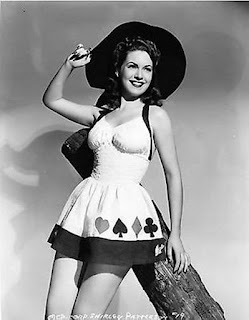
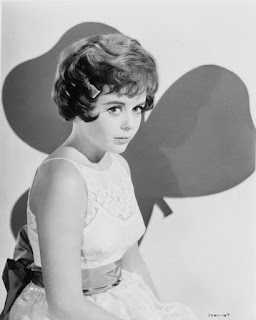
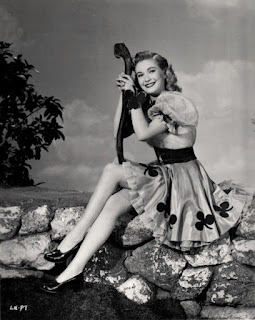
As many of you know, I don't celebrate St. Patrick's Day as I have absolutely no Irish blood, nor am I a paralegal or engineer. That having been said, I know many people who do and I thought they might appreciate some vintage pinups appropriate to the holiday. Without further ado, here they are....

First up is Angela Greene, who has a calendar to remind her of the date!


Next up is Shirley Patterson, who has a hat befitting the holiday.


Here's Dorothy Malone dressed for the holiday.


Here's Deborah Walley with a shamrock.


Here's Lori Nelson celebrating the holiday a bit more traditionally.


And here's the lovely Olga San Juan sitting on a really big hat!

Happy St. Patrick's Day!

Thursday, March 16, 2023

The Problem with Warner Bros.' 100th Anniversary Video


Warner Bros. may well have been the first studio from the Golden Age of Hollywood of which I was aware. After all, the Warner Bros. shield was prominently featured before all of the classic Warner Bros. cartoons I watched voraciously as a kid. Later I would discover their classic television shows in reruns, from Maverick to 77 Sunset Strip to F Troop. It was only a little bit later that I discovered their classic films, including The Maltese Falcon (1941), Casablanca (1942), Now, Voyager (1942), and Mildred Pierce (1945) on local television stations. Many of my favourite stars were signed to Warner Bros., including Humphrey Bogart, Bette Davis, James Cagney, and Edward G. Robinson. If I had to name my favourite movie studio of all time, it might well be Warner Bros.

It is because of that I have been eagerly awaiting Warner Bros.' 100th anniversary on April 4. It was in December that Warner Bros. dropped a video in tribute to their 100th anniversary. As it turned out, the video was not eagerly embraced by classic film buffs, myself included. The Warner Bros. 100th Anniversary video was shown during this past Sunday's Academy Awards ceremony, where it was once more met with a less than favourable reaction from classic film buffs. The problem? It includes clips from movies that were originally neither produced nor even distributed by Warner Bros.

Indeed, many of the films prominently featured in the video were produced not by Warner Bros., but their archrival MGM. The Wizard of Oz (1939), North by Northwest (1959), 2001: A Space Odyssey (1968), Ben-Hur (1959), An American in Paris (1941), and A Christmas Story (1983) were all produced by Metro-Golwyn-Mayer. Gone with the Wind (1939) was produced by Selznick International Pictures in association with MGM. Willy Wonka & the Chocolate Factory (1971) was produced by Wolper Pictures and distributed by Paramount.

Now all of these films are now owned by Warner Bros. It was in 1986 that Ted Turner bought MGM/UA Entertainment Co. from Kirk Kerokian. He almost immediately sold it back to Mr. Kerokian, but he kept the pre-1986 MGM/UA film and television library. It was with the MGM/UA library and other libraries that Ted Turner formed Turner Entertainment Co. in 1986. It was in 1996 that Turner Entertainment Co. was acquired by Time Warner. The end result of this is that Warner  has control of the pre-MGM library. Quite simply, Warner owns The Wizard of Oz, 2002: A Space Odyssey, and other movies made by Metro-Goldwyn Mayer. As to Willy Wonka & the Chocolate Factory, it was in 1977 that Paramount declined to renew the distribution rights for the film. The rights then defaulted to Quaker Oats Company, who were involved in the production of the film. Quaker Oats Company then sold Willy Wonka & the Chocolate Factory to Warner Bros.

Movies neither originally produced nor distributed by Warner Bros. being featured in the 100th Anniversary video would not be so bad if it were not for the fact that many prominent classic films that were produced and distributed by Warner Bros. are nowhere to be seen in the video. Such Warner Bros. classics as Little Caesar (1931), Stella Dallas (1937), The Adventures of Robin Hood (1938), The Man Who Came to Dinner (1942), Kings Row (1942), Now, Voyager (1942), Arsenic and Old Lace (1944),
and Christmas in Connecticut (1944), among others, are nowhere to be seen.

Of course, in omitting many of Warner Bros.' classic films from the video, they also omitted almost all of their classic stars. Humphrey Bogart is the only one featured prominently in the video. Absent from the video are Bette Davis, James Cagney, Edward G. Robinson, Errol Flynn, Mary Astor, Joan Fontaine, and many others. Going by the video, Warner Bros. would apparently have you believe that George Clooney is more important to film history than Bette Davis.

Warner Bros. not only gave short shrift to their contract players from the Golden Age of Hollywood, but even the classic cartoon characters for which they may be best known. There is only one clip from a classic Warner Bros. cartoon and another from Space Jam (1996). Given that the classic Warner Bros. cartoons is how many of us were introduced to the studio, one would think they would have included several clips from the classic cartoons. One would think they would not only highlight Bugs Bunny, but Daffy Duck, Elmer Fudd, Porky Pig, and maybe a few other of their classic cartoon characters.

As if omitting many of Warner Bros.' classic feature films and animated shorts in favour of movies produced by other studios wasn't bad enough, Warner Bros. also largely ignored its classic television shows. The classic Wonder Woman, starring Lynda Carter, is the oldest Warner Bros. show featured in the video. Missing are such classics as Maverick, 77 Sunset Strip, F Troop, The F.B.I., The Streets of San Francisco, and Kung Fu. While I appreciate that clips from ER found their way into the video, Warner Bros. effectively ignored three decades worth of television shows. Indeed, watching the video one would think Friends was Warner Bros.' greatest contribution to TV. history I hate to inform Warner Bros., but I think people will still be watching Maverick long after Friends has been forgotten.

Now I do appreciate that Warner Bros. highlighted the contribution that DC Comics has made to the company (DC Comics was bought by Kinney National Company in 1967, who then bought Warner Bros.-Seven Arts in 1969). I also appreciate that they featured a clip from Stand and Deliver (1988--although produced by American Playhouse, it was distributed by Warner Bros.). I do think that Warner Bros. genuinely meant for the video to be a celebration of the studio's history. The problem is that in some ways it plays more like a celebration of MGM's history.

As a fan of Warner Bros. since childhood, what I wanted to see in this video was a real tribute to the studio. I wanted to see clips from the many classic movies they produced and/or distributed. I wanted to see clips from The Adventures of Robin Hood and High Sierra. I wanted to see clips from such classic cartoons as "What's Opera, Doc?" and "One Froggy Evening." I wanted to see clips from such TV shows as Maverick and 77 Sunset Strip. I wanted to see clips from Warner Bros.' history. As much as I love The Wizard of Oz and Willy Wonka & the Chocolate Factory, they are only movies that Warner Bros. currently owns, and as such are not a major part of the studio's history. Warner Bros. did not produce them and did not originally distribute them. Indeed, while I think Louis B. Mayer would probably get a big laugh out of the video, I think Jack Warner (and probably the other Warner brothers as well) would be furious. Honestly, I think Warner Bros. should create another video that truly acknowledges the studio's history. This one really doesn't.

Tuesday, March 14, 2023

The Academy Needs to Get the Oscars On-Air In Memoriam Right

The 95th Academy Awards were held this past Sunday and, as usual, film buffs are divided on whether it was good or not. Everyone seems to agree upon one thing though, that the on-air In Memoriam segment left a lot to be desired. Quite simply, it omitted far too many people, including many that one would have thought would have been guaranteed to have been included the In Memoriam.

Indeed, legendary actress Marsha Hunt, who appeared in Pride and Prejudice (1940) and Raw Deal (1948), did not make the cut. Robert Morse had a career on stage, in television, and in film. He appeared in such movies as The Loved One (1965) and How to Succeed in Business Without Really Trying (1967). Despite this, he did not appear in the In Memoriam. Paul Sorvino had a career that spanned over fifty years and appeared in such films as The Brinks Job (1978), Goodfellas (1990), and The Rocketeer (1991). Apparently this was not enough to warrant being included in the In Memoriam. Cindy Williams was best known for television's Laverne & Shirley, but she appeared in movies as well, including the classics American Graffiti (1973) and The Conversation (1974). This wasn't enough for her to be included in the In Memoriam. The list of individuals who were excluded from the 95th Academy Awards' In Memoriam segment is not a short one. Among others, Ricou Browning, Pat Carroll, Kevin Conroy, Carole Cook, Melinda Dillon, Bert I. Gordon, Gilbert Gottried, Anne Heche, Marsha Hunt, Leslie Jordan, Yvette Mimieux, Stella Stevens, Topol, and Fred Ward were all omitted. I am sure there were others which I might have missed, for which I apologize.

The In Memoriam segment of this Sunday's Oscars was met with anger from film buffs almost immediately, and in one instance the family of one of those omitted. Dee Dee Sorvino, widow of Paul Sorvino was upset that he was omitted from the In Memoriam, and even demanded an apology that he was left out. His daughter Mira Sorvino said she was "hurt and shocked" that her father was left out of the In Memoriam and also said, "It is baffling beyond belief that my beloved father and many other amazing brilliant departed actors were left out." I can fully sympathize with both Dee Dee Sorvino and Mira Sorvino's pain at Paul Sorvino being omitted from the In Memoriam.

It was in 2019 that my dearest friend Vanessa Marquez was omitted from the on-air In Memoriam segment, despite a petition demanding her inclusion that reached over 12,000 signatures, as well as letters, at least one from an Academy member, asking that she be included. To say that I was angry and hurt would be an understatement. I am still angry and hurt. Of course, The Academy has omitted bigger names than Vanessa both before and since 2019. Believe it or not, over the years such legends as James Arness, Michael Gough, Andy Griffith, Ann Rutherford, Robert Vaughn, Barbara Hale, Adam West, Stanley Donen, Abe Vigoda, Aretha Franklin, Julie Adams, Honor Blackman, Adam Schlesinger, Ed Asner, and Michael Nesmith have been omitted from the In Memoriam segment, Here I must stress that this is a short list. A list of every single well known actor, director, writer, and composer omitted from the Oscars on-air In Memoriam would be much, much longer.

Now in past years the Academy of Motion Pictures Arts and Sciences has included a more comprehensive In Memoriam on the website (in 2019 Vanessa was included in this). And this year they had a QR code on the screen which one could scan to their phone and be taken to a place where they could watch a longer, more inclusive In Memoriam video. The problem I have with both of these is that it is not the same as being featured in the In Memoriam segment aired during the ceremony. As both a fan of many omitted from the In Memoriam over the years and the close friend of one of those omitted, I can safely say that we want to see our favourites honoured during the broadcast.

Of course, as much as film buffs might want to blame the Academy of Motion Picture Arts and Sciences for the many omissions in the In Memoriam segment over the years, they are not the only ones to blame. ABC is also a culprit. For years ABC has insisted that the Oscars ceremony be shorter, this despite the fact that the one thing that film buffs have never complained about is the length of the ceremony. Indeed, it was ABC who insisted that the Academy cut eight categories from the ceremony last year, angering both the industry and film buffs.  Because ABC insists that the ceremony be shorter, I have no doubt that the Academy feels it has to keep the In Memoriam segment as brief as possible. I have two thoughts about this. First, the Academy Awards ceremony is the Super Bowl for film buffs. If ABC had the Super Bowl, I have to suspect that they would not insist the game be shorter. In insisting that the ceremony be shorter, ABC is then showing disrespect to the Oscars' core audience. Second, if the Academy feels it has to cut time somewhere, the In Memoriam segment is not the place to do it. The In Memoriam should be of such a length that it includes every single artist who has died in the past year. TCM Remembers runs about four to five minutes and manages to include nearly everyone, although honestly I wouldn't mind if the Oscars In Memoriam ran ten minutes. ABC needs to realize that the core audience for the Oscars are film buffs and we don't care how long the ceremony is and we don't care how long the In Memoriam is. In fact, we'd prefer a longer In Memoriam segment that includes everyone to a shorter one that omits beloved stars, Indeed, people have been complaining about omissions in the In Memoriam segment for literally years. The very fact that her Stand and Deliver (1988) co-star Lydia Nicole felt the need to create a petition to include Vanessa in the on-air Oscars In Memoriam shows how badly the Academy has been omitting individuals from the segment.

In the end, both ABC and the Academy of Motion Arts and Sciences should realize that the In Memoriam segment is not for the Academy's members and it certainly isn't for the broadcast network. It is for the fans and loved ones of those who have died in the past year. It is an opportunity for film buffs to say goodbye to the stars they love. To omit beloved stars is not only an insult to those stars, but an insult to their fans and loved ones as well. ABC and the Academy need to start treating the In Memoriam segment with the seriousness it deserves.