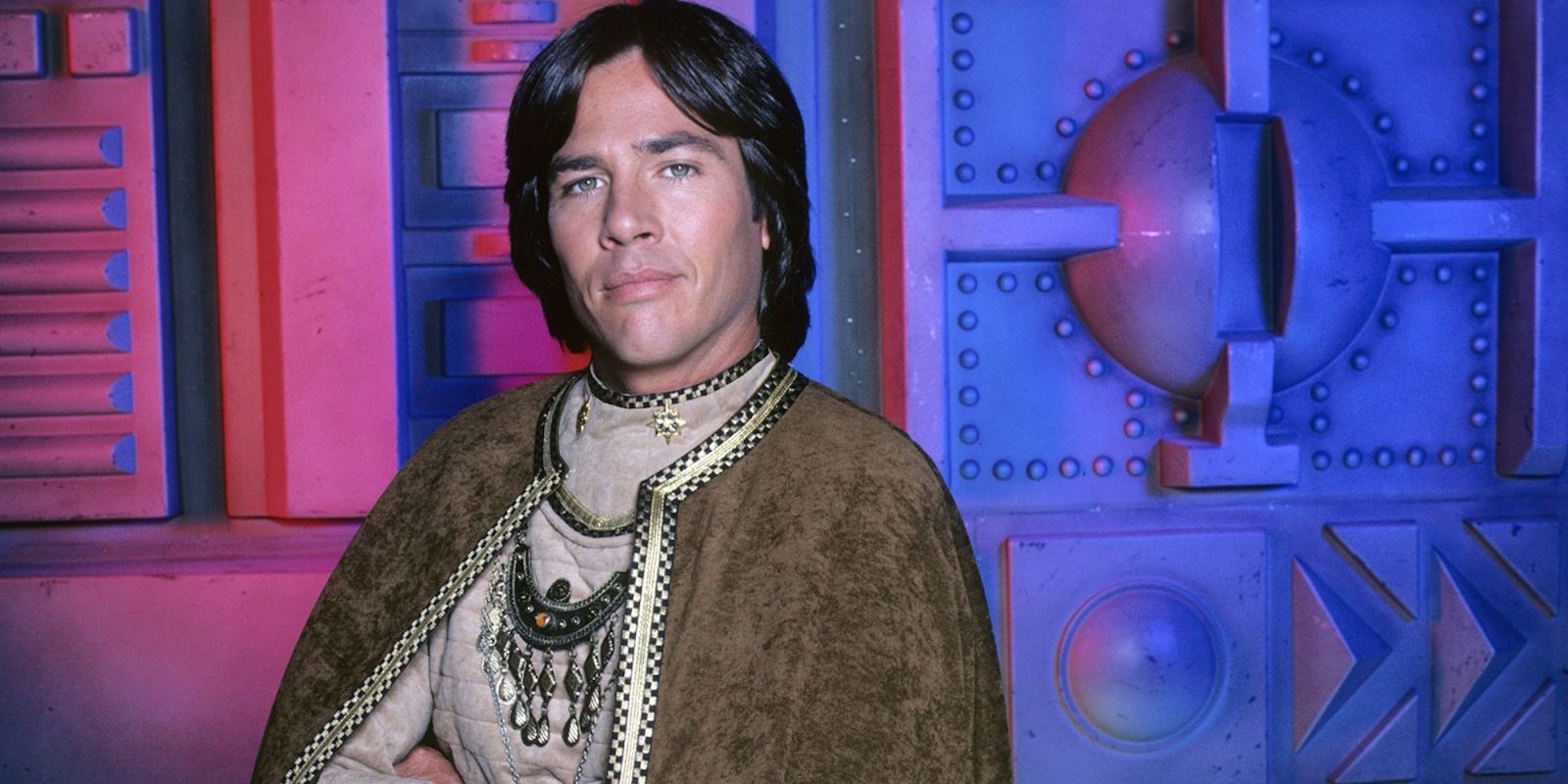
Bruce Lansbury, who produced such popular shows as The Wild Wild West; Wonder Woman; and Murder, She Wrote died February 13 2017 at the age of 87. He had suffered from Alzheimer’s disease.
Bruce Lansbury was born in London on January 12 1930. His twin was Edgar Lansbury, whose career was primarily in the theatre. His parents were actress Moyna Macgill and socialist politician Edgar Lansbury. His older sister was renowned actress Dame Angela Lansbury. At the beginning of World War II, Bruce Lansbury's mother migrated to New York City along with his sister, his brother, and himself. The family settled in Los Angeles in the mid-Forties. Bruce Lansbury served in the United States Army and later graduated from UCLA with a bachelor's degree.
Mr. Lansbury began his television career at WABC in Los Angeles. He later went to work for CBS in programme development. It was shortly before the show's second season that he joined The Wild Wild West. When the show's creator and executive producer, Michael Garrison died from a fall down the stairs, Bruce Lansbury took over as the show's producer. In all he produced 69 episodes of The Wild Wild West. Afterwards he served as a producer on Mission: Impossible from 1969-1972.
In the late Sixties Bruce Lansbury joined Paramount Television as vice president: creative affairs. He oversaw such shows as The Odd Couple; The Brady Bunch; Love, American Style; Happy Days; and Petrocelli. While at Paramount he created the short-lived mystery series The Magician, starring Bill Bixby. Following his stint at Paramount, Mr. Lansbury served as executive producer on the short-lived fantasy series The Fantastic Journey. He then served as supervising producer on Wonder Woman and later Buck Rogers in the 25th Century.
In the Eighties Bruce Lansbury was an executive producer on The Powers of Matthew Star and a supervising producer on Street Hawk (which he also created) and Knight Rider. He wrote episodes of the 1990-1991 series Zorro. From 1992 to 1996 Bruce Lansbury served as a supervising producer on Murder, She Wrote, which starred his sister Dame Angela Lansbury. He also wrote several episodes of the show.
Bruce Lansbury was responsible for producing several hours of memorable television. While his episodes of The Wild Wild West may not be quite as good as those produced under Michael Garrison's watch, the show remained an entertaining series and, unlike many genre shows of the Sixties, never jumped the shark. Wonder Woman remains an enjoyable bit of Seventies, superhero camp. Arguably Mr. Lansbury not only produced but wrote some of the best episodes of Murder, She Wrote. While it did not run very long, I must say that I have very fond memories of The Magician myself. While the shows Bruce Lansbury produced may not have been Playhouse 90, they were entertaining and generally well done. Indeed, not many producers can boast having produced several shows (The Wild Wild West; Mission: Impossible; Wonder Woman; and Murder, She Wrote) that are still watched years after they first aired.
Thursday, February 16, 2017
Tuesday, February 14, 2017
Happy Valentine's Day 2017
Here at A Shroud of Thoughts it is customary to post classic, Hollywood pinups on holidays. Valentine's Day is no different, so, without further ado, here are this year's pinups.
Happy Valentine's Day!
Dorothy Hart is posing with a heart.
Toby Wing has turned herself into a Valentine card!
Joan Leslie is the Queen of Hearts!
Lynn Merrick has her calendar marked!
Leslie Caron is eagerly awaiting her Valentine!
And, of course, it wouldn't be Valentine's Day without Ann Miller!
Monday, February 13, 2017
The Beatles' "Penny Lane"/"Strawberry Fields Forever"
It was fifty years ago today that The Beatles' single "Penny Lane"/"Strawberry Fields Forever" was released in the United States. Like many of The Beatles' later singles it was a double A-side. "Penny Lane" would go to no. 1 on the Billboard Hot 100, while "Strawberry Fields Forever" peaked at no. 8. In the United Kingdom both songs only peaked at no. 2, breaking a four year streak of every Beatle single going to no. 1. Regardless, both "Penny Lane" and "Strawberry Fields Forever" remain two of The Beatles' best remembered songs, more so than some of their songs that did reach no. 1 on the British single chart.
Both songs were originally recorded for the album that would become known as Sgt. Pepper's Lonely Hearts Club Band. In fact, "Strawberry Fields Forever" was the first song recorded during the Sgt. Pepper's Lonely Hearts Club Band sessions. The two songs were released as a single under pressure from EMI, who thought it had been too long since The Beatles had released a single.
Both songs dealt with actual places in Liverpool. The name "Penny Lane" not only refers to an actual street in Liverpool, but the entire area surrounding Smithdown Place. This includes Newcastle Road (where John Lennon lived for the first five years of his life), Church Road, Allerton Road, and Smithdown Road. In the Sixties Penny Lane was a bus roundabout. John Lennon and Paul McCartney would meet at the junction of Penny Lane to catch the bus to the centre of Liverpool.
"Strawberry Fields Forever" was inspired by Strawberry Field, a Salvation Army children's home in Woolton, Liverpool. It was not far from where John Lennon grew up, and he attended the annual garden parties they held each summer. Strawberry Field was originally a private estate. In 1936 it was sold to the Salvation Army. The Salvation Army opened it as a children's home on July 7 1936. While the original house would eventually be demolished, a smaller building would be built to take its place. It remained open until 2005, at which point it became a Salvation Army church and prayer centre.
Promotional films would be shot for both "Penny Lane" and "Strawberry Fields Forever". Curiously, the promo film for "Penny Lane" was not shot on Penny Lane, as The Beatles did not want to travel all the way to Liverpool. Instead it was shot on and around Angel Road in the East End of London, with some scenes shot on the King's Road in Chelsea. The rather surreal film for "Strawberry Fields Forever" was shot at Knole Park in Sevenoaks, Kent. The promotional films for "Penny Lane" and "Strawberry Fields Forever" made their debut on the BBC's music programme Top of the Pops on February 7 1967. They were later shown in the United States on the ABC variety show The Hollywood Palace on February 25 1967.
Sadly, the complete promotional films for "Penny Lane" and "Strawberry Fields Forever" are not available online. That being the case, here are the songs courtesy of Spotify.
Both songs were originally recorded for the album that would become known as Sgt. Pepper's Lonely Hearts Club Band. In fact, "Strawberry Fields Forever" was the first song recorded during the Sgt. Pepper's Lonely Hearts Club Band sessions. The two songs were released as a single under pressure from EMI, who thought it had been too long since The Beatles had released a single.
Both songs dealt with actual places in Liverpool. The name "Penny Lane" not only refers to an actual street in Liverpool, but the entire area surrounding Smithdown Place. This includes Newcastle Road (where John Lennon lived for the first five years of his life), Church Road, Allerton Road, and Smithdown Road. In the Sixties Penny Lane was a bus roundabout. John Lennon and Paul McCartney would meet at the junction of Penny Lane to catch the bus to the centre of Liverpool.
"Strawberry Fields Forever" was inspired by Strawberry Field, a Salvation Army children's home in Woolton, Liverpool. It was not far from where John Lennon grew up, and he attended the annual garden parties they held each summer. Strawberry Field was originally a private estate. In 1936 it was sold to the Salvation Army. The Salvation Army opened it as a children's home on July 7 1936. While the original house would eventually be demolished, a smaller building would be built to take its place. It remained open until 2005, at which point it became a Salvation Army church and prayer centre.
Promotional films would be shot for both "Penny Lane" and "Strawberry Fields Forever". Curiously, the promo film for "Penny Lane" was not shot on Penny Lane, as The Beatles did not want to travel all the way to Liverpool. Instead it was shot on and around Angel Road in the East End of London, with some scenes shot on the King's Road in Chelsea. The rather surreal film for "Strawberry Fields Forever" was shot at Knole Park in Sevenoaks, Kent. The promotional films for "Penny Lane" and "Strawberry Fields Forever" made their debut on the BBC's music programme Top of the Pops on February 7 1967. They were later shown in the United States on the ABC variety show The Hollywood Palace on February 25 1967.
Sadly, the complete promotional films for "Penny Lane" and "Strawberry Fields Forever" are not available online. That being the case, here are the songs courtesy of Spotify.
Saturday, February 11, 2017
Before Rock 'n' Roll There Was Cab Calloway
Lamont: "What are you bringing all of this up for now? Here we all are into a discovery about Africa and you're talking about slicking down your hair to look like white people."
Fred: "I ain't sayin' nothin' about no white people. I said Cab Calloway!"
(Sanford and Son, "Lamont Goes African", season 2 episode 17)
Rock 'n' roll grew out of a number of different music genres. Both blues and rhythm and blues have often been acknowledged as progenitors of rock music. Less often acknowledged is the debt that rock 'n' roll owes to jazz, more specifically Swing. Swing music is essentially jazz written specifically for dancing. Swing bands are noted for their strong rhythm sections, accompanied by a lead section of brass, woodwinds, and sometimes even stringed instruments such as guitar or violin. Swing proved phenomenally popular from 1935 to 1946. In fact, this time period is often called "the Swing Era". Swing would have an impact on the development of rock music, from African American musicians such as Count Basie, Duke Ellington, and Fletcher Henderson to Western Swing musicians such as Bob Willis and Hank Thompson. Among the Swing artists to have the most impact on rock 'n' roll was Cab Calloway.
Cab Calloway was born to an upper middle class family in Rochester, New York on December 25 1907. His mother was a teacher, while his father was a lawyer who also worked in real estate. He had formal training from a young age. Cab Calloway's parents, realising their son had musical talent, enrolled him in private voice lessons. Throughout his childhood young Cab Calloway continued to study music in school. He also learned music from another source. While still a teenager he began going to the various jazz clubs in Baltimore, and even performing at them. Among his mentors was legendary drummer Chick Webb.
Despite his talent in music, Cab Calloway's parents hoped that he would follow his father into a legal career. He even enrolled at Crane College in Chicago. Despite this his love of jazz proved too strong, and Cab Calloway soon found himself performing at the Dreamland Ballroom, the Sunset Cafe, and the Club Berlin in Chicago as both a drummer and a singer. It was not long before he left school to devote himself to music full time.
Cab Calloway eventually joined a group called The Missourians. It was not long before he became the band's leader and it was renamed "Cab Calloway and His Orchestra". Their big break came when they were hired to substitute for the Cotton Clubs house band, Duke Ellington Orchestra, while they were touring. Cab Calloway and His Orchestra proved so popular that the Cotton Club hired them as a house band alongside Duke Ellington's group. Radio broadcasts were regularly made from The Cotton Club through NBC's Red Network, giving both Duke Ellington and Cab Calloway national exposure.
With nationwide exposure on the radio, it would not be long before Cab Calloway began having hit records. His single "Saint Louis Blues" went to no. 16 on the Billboard singles chart. It was "Minnie the Moocher" that would prove to be Mr. Calloway's biggest hit. The song proved to be phenomenally popular and reached no. 1 on the Billboard singles chart. From the Thirties into the Forties Cab Calloway would have a whole string of hits, including "Saint James Infirmary", "Kicking the Gong Around", "Tickeration", "Minnie the Moocher's Wedding Day", "Reefer Man", "Moon Glow", "Angels With Dirty Faces", "(Hep Hep!) The Jumping Jive", and "Blues in the Night". His popularity led to several appearances in movies, including The Big Broadcast (1932), The Singing Kid (1936), and Stormy Weather (1943).
Unfortunately by the late Forties Cab Calloway's career would be in decline. A number of bad financial decisions, as well as gambling debts, led to the break up of Cab Calloway and His Orchestra. Following the end of World War II the popularity of Swing music had also gone into decline. Cab Calloway continued to appear in films (such as Rhythm and Blues Revue in 1955 and St. Louis Blues in 1958) and even in such stage productions as Porgy and Bess. In 1980 he appeared in the movie The Blues Brothers.
Cab Calloway's appearance in The Blues Brothers resulted in renewed interest in his career. He played at The Ritz London in 1985. Along with other performers he was filmed for a BBC television special entitled The Cotton Club Comes to the Ritz. In 1986 he appeared on Broadway in Uptown... It's Hot!. In 1988 he performed with the Cincinnati Pops Orchestra. He later appeared at the Apollo Theatre. Cab Calloway died on November 18 1994 at age 86.
As pointed out above, many Swing musicians had an impact on rock music. Count Basie, Duke Ellington, Fletcher Henderson, and yet other would influence the development of rock 'n' roll. That having been said, the influence of Cab Calloway on rock 'n' roll would go well beyond his music. Quite simply, Cab Calloway was the consummate showman. His clothing on stage was outrageous by the standards of the time. In fact, it was Cab Calloway who popularised the zoot suit. On stage Mr. Calloway almost never stood still. He would dance around the stage, often with a conductor's baton that he would thrust and even twirl. Even his singing differed a bit from that typical in jazz of the time. It was a combination of traditional vaudeville singing, scat singing, and, quite often, improvisation.
Indeed, it must be noted that in many ways Cab Calloway and His Orchestra was quite different from other swing bands of the time. Most swing bands were led by an instrumentalist. Glenn Miller played trombone. Duke Ellington was a pianist. Tommy Dorsey played trombone, while his brother Jimmy played clarinet and saxophone. Nearly all of these bands had vocalists and many of these vocalists would become quite popular (Frank Sinatra, Kay Starr, Billie Holiday, and many others got their start with the Big Bands). That having been said, Cab Calloway and His Orchestra was actually led by vocalist, much in the same way many modern day rock bands are. Cab Calloway not only performed much as modern day rock stars would, but he even recorded the song "I Want to Rock" many years before the word "rock" was ever applied to a genre of music.
Cab Calloway would have an immediate influence on a number of artists who followed him. Jazz singer Louis Prima, jazz trumpeter Dizzy Gillespie (who played with Cab Calloway for a time), and pop singer Frankie Laine all drew upon Cab Calloway for inspiration. Many of the early rock 'n' roll acts also looked to Cab Calloway for their stage performances. Mr. Calloway's influence upon Little Richard is obvious, but such diverse rock acts as Jerry Lee Lewis and even Elvis himself drew upon his showmanship in some way. Artists from James Brown to Prince owe something to Cab Calloway. In fact, it seems possible that the many tropes of rock music performances (jumping around the stage, et. al.) can be traced back to Cab Calloway.
Cab Calloway was a flamboyant, expressive vocalist who headed his own band at a time when Big Bands were generally led by instrumentalists. He was not simply a talented songwriter and singer, but one who put on incredible shows for which he is still well known. That he had lasting impact on rock 'n' roll, as well as other genres of music, should perhaps not be surprising.
Fred: "I ain't sayin' nothin' about no white people. I said Cab Calloway!"
(Sanford and Son, "Lamont Goes African", season 2 episode 17)
Rock 'n' roll grew out of a number of different music genres. Both blues and rhythm and blues have often been acknowledged as progenitors of rock music. Less often acknowledged is the debt that rock 'n' roll owes to jazz, more specifically Swing. Swing music is essentially jazz written specifically for dancing. Swing bands are noted for their strong rhythm sections, accompanied by a lead section of brass, woodwinds, and sometimes even stringed instruments such as guitar or violin. Swing proved phenomenally popular from 1935 to 1946. In fact, this time period is often called "the Swing Era". Swing would have an impact on the development of rock music, from African American musicians such as Count Basie, Duke Ellington, and Fletcher Henderson to Western Swing musicians such as Bob Willis and Hank Thompson. Among the Swing artists to have the most impact on rock 'n' roll was Cab Calloway.
Cab Calloway was born to an upper middle class family in Rochester, New York on December 25 1907. His mother was a teacher, while his father was a lawyer who also worked in real estate. He had formal training from a young age. Cab Calloway's parents, realising their son had musical talent, enrolled him in private voice lessons. Throughout his childhood young Cab Calloway continued to study music in school. He also learned music from another source. While still a teenager he began going to the various jazz clubs in Baltimore, and even performing at them. Among his mentors was legendary drummer Chick Webb.
Despite his talent in music, Cab Calloway's parents hoped that he would follow his father into a legal career. He even enrolled at Crane College in Chicago. Despite this his love of jazz proved too strong, and Cab Calloway soon found himself performing at the Dreamland Ballroom, the Sunset Cafe, and the Club Berlin in Chicago as both a drummer and a singer. It was not long before he left school to devote himself to music full time.
Cab Calloway eventually joined a group called The Missourians. It was not long before he became the band's leader and it was renamed "Cab Calloway and His Orchestra". Their big break came when they were hired to substitute for the Cotton Clubs house band, Duke Ellington Orchestra, while they were touring. Cab Calloway and His Orchestra proved so popular that the Cotton Club hired them as a house band alongside Duke Ellington's group. Radio broadcasts were regularly made from The Cotton Club through NBC's Red Network, giving both Duke Ellington and Cab Calloway national exposure.
With nationwide exposure on the radio, it would not be long before Cab Calloway began having hit records. His single "Saint Louis Blues" went to no. 16 on the Billboard singles chart. It was "Minnie the Moocher" that would prove to be Mr. Calloway's biggest hit. The song proved to be phenomenally popular and reached no. 1 on the Billboard singles chart. From the Thirties into the Forties Cab Calloway would have a whole string of hits, including "Saint James Infirmary", "Kicking the Gong Around", "Tickeration", "Minnie the Moocher's Wedding Day", "Reefer Man", "Moon Glow", "Angels With Dirty Faces", "(Hep Hep!) The Jumping Jive", and "Blues in the Night". His popularity led to several appearances in movies, including The Big Broadcast (1932), The Singing Kid (1936), and Stormy Weather (1943).
Unfortunately by the late Forties Cab Calloway's career would be in decline. A number of bad financial decisions, as well as gambling debts, led to the break up of Cab Calloway and His Orchestra. Following the end of World War II the popularity of Swing music had also gone into decline. Cab Calloway continued to appear in films (such as Rhythm and Blues Revue in 1955 and St. Louis Blues in 1958) and even in such stage productions as Porgy and Bess. In 1980 he appeared in the movie The Blues Brothers.
Cab Calloway's appearance in The Blues Brothers resulted in renewed interest in his career. He played at The Ritz London in 1985. Along with other performers he was filmed for a BBC television special entitled The Cotton Club Comes to the Ritz. In 1986 he appeared on Broadway in Uptown... It's Hot!. In 1988 he performed with the Cincinnati Pops Orchestra. He later appeared at the Apollo Theatre. Cab Calloway died on November 18 1994 at age 86.
As pointed out above, many Swing musicians had an impact on rock music. Count Basie, Duke Ellington, Fletcher Henderson, and yet other would influence the development of rock 'n' roll. That having been said, the influence of Cab Calloway on rock 'n' roll would go well beyond his music. Quite simply, Cab Calloway was the consummate showman. His clothing on stage was outrageous by the standards of the time. In fact, it was Cab Calloway who popularised the zoot suit. On stage Mr. Calloway almost never stood still. He would dance around the stage, often with a conductor's baton that he would thrust and even twirl. Even his singing differed a bit from that typical in jazz of the time. It was a combination of traditional vaudeville singing, scat singing, and, quite often, improvisation.
Indeed, it must be noted that in many ways Cab Calloway and His Orchestra was quite different from other swing bands of the time. Most swing bands were led by an instrumentalist. Glenn Miller played trombone. Duke Ellington was a pianist. Tommy Dorsey played trombone, while his brother Jimmy played clarinet and saxophone. Nearly all of these bands had vocalists and many of these vocalists would become quite popular (Frank Sinatra, Kay Starr, Billie Holiday, and many others got their start with the Big Bands). That having been said, Cab Calloway and His Orchestra was actually led by vocalist, much in the same way many modern day rock bands are. Cab Calloway not only performed much as modern day rock stars would, but he even recorded the song "I Want to Rock" many years before the word "rock" was ever applied to a genre of music.
Cab Calloway would have an immediate influence on a number of artists who followed him. Jazz singer Louis Prima, jazz trumpeter Dizzy Gillespie (who played with Cab Calloway for a time), and pop singer Frankie Laine all drew upon Cab Calloway for inspiration. Many of the early rock 'n' roll acts also looked to Cab Calloway for their stage performances. Mr. Calloway's influence upon Little Richard is obvious, but such diverse rock acts as Jerry Lee Lewis and even Elvis himself drew upon his showmanship in some way. Artists from James Brown to Prince owe something to Cab Calloway. In fact, it seems possible that the many tropes of rock music performances (jumping around the stage, et. al.) can be traced back to Cab Calloway.
Cab Calloway was a flamboyant, expressive vocalist who headed his own band at a time when Big Bands were generally led by instrumentalists. He was not simply a talented songwriter and singer, but one who put on incredible shows for which he is still well known. That he had lasting impact on rock 'n' roll, as well as other genres of music, should perhaps not be surprising.
Friday, February 10, 2017
Why Facebook Should Ditch Messenger on the Web
The past several weeks Facebook has been rolling out a major change to its users on its web site. Quite simply, it has replaced its Messages with a web version of its mobile app Messenger. Facebook made no formal announcement that it planned to do so. Users simply logged onto Facebook on their personal computers one day and suddenly discovered the change. To say users who access Facebook through the website on desktop and laptop computers are unhappy about the change would be an understatement.
Indeed, a response from a member of Facebook's Help Team to the question "How to change Messenger back to Messages?" on Facebook's Help Community garnered over 1500 comments, all of them critical of Messenger. The question itself has hundreds of other responses, nearly all of which are also critical of Messenger. Check any news story on the change and one will find several comments from people who outright hate the fact that Messages was replaced by a web version of Messenger. There is even a Facebook group for those who despise the web version of Messenger.
I have no doubt many will simply dismiss the complaints about the web version of Messenger as people hating change, but looking over the comments both in the Facebook Help Community and the various news articles make it clear that a good number of Facebook's users on PCs have legitimate complaints about it. People are not simply saying that they hate Messenger, they are saying why they hate Messenger.
Among the primary complaints is the look of the Messenger web interface. Many people hate the colour scheme (which can be changed), with several stating that it is much too bright. Another complaint is that the fonts are far too large and that the Messenger web interface is not as compact as the old Messages interface. Many have commented that it looks as if it was designed for twelve year-olds. Now all of this might seem trivial except for one thing. Quite simply, many of the complaints about the Messenger interface are coming from people with poor eyesight and older people, who say that the Messenger interface is difficult to use. It seems clear that Facebook did not take those with poor eyesight into account when they designed the Messenger web interface.
Even once one gets past the look of the Messenger web interface there are yet other problems with its functionality (or lack thereof). On the old Facebook Messages one could set it so that hitting the "Enter" key would create a new paragraph rather than sending the message on its way. On Facebook Messenger hitting the "Enter" key automatically sends the message. To create a new paragraph, one has to hit "Shift+Enter", which is rather awkward when composing a message. Many users are very annoyed about this.
Another problem is that one cannot copy text from messages in Messenger. This is a serious problem for many people, myself among them. In the past if I had to write a short article for someone, I could simply send it to them in a message on Facebook and then they could then copy the article and paste it into whatever blog or document it was for. I'm not sure how many people actually used Facebook this way, but from the various comments it would seem that several people would like to be able to copy text from messages. Like me, I think many of these people will go back to using email for such purposes, which I don't think is what Facebook intended.
Yet another problem with the Messenger interface is that individual messages are not timestamped. One has no idea when a specific message was sent beyond the date. In other words, one has no idea how long ago a message was sent. I can see how this could have a negative impact on messages that might contain time-sensitive information.
Of course, what may be worse than the lack of a timestamp for individual messages is the inefficiency of Messenger's search. On Facebook Messages one could search for a specific topic in one's messages and come up with only those specific messages. On Facebook Messenger the search results will still deliver messages with the topic for which one is searching; unfortunately it also displays the whole conversation. This means one may have to go through a whole conversation before finding what he or she wants.
Among the worst of the problems with the Messenger interface is that the box for composing messages is much too small. It is a narrow strip that one cannot enlarge at all. Obviously this will be a problem for anyone composing a message that is more than a few lines at best. I think Facebook did not take into account that many Facebook users used Messages as if it was email, rather than as if it was chat. They weren't simply writing short messages of a few lines, such as a text message on a phone, but longer messages of several lines and even paragraphs.
In the end, in forcing the Facebook Messenger web interface on users who neither wanted it nor needed it, I think Facebook made a mistake that many social media sites and other web sites have made of late. Quite simply, they assumed that because something is popular with their mobile users, then web users will like it as well. It is the same mistake I believe Google has made with the New Google+. The simple fact is that what works well on a mobile device often will not work well on a personal computer. Computers have larger screens and more memory and don't share many of the constraints that smart phones and tablets do. In my experience, what PC users want out of social media sites is functionality. Sadly, that is something that Messenger is sorely lacking. Indeed, I haven't even begun to list all of the problems there are with Facebook Messenger's web interface, and I already listed quite a few.
Given the outrage over the change from Facebook Messages to Facebook Messenger on the web, I think Facebook should simply deem it the failure that it is and allow users to switch back to Facebook Messages. Honestly, I think there are so many changes that they would have to make to the Facebook Messenger interface for it to be acceptable to many web users that it would be far easier to simply give Facebook Messages back to users. Indeed, it seems to be what users want. Sadly, if the past many years have proven anything, Facebook doesn't seem to care much about what its users want.
Indeed, a response from a member of Facebook's Help Team to the question "How to change Messenger back to Messages?" on Facebook's Help Community garnered over 1500 comments, all of them critical of Messenger. The question itself has hundreds of other responses, nearly all of which are also critical of Messenger. Check any news story on the change and one will find several comments from people who outright hate the fact that Messages was replaced by a web version of Messenger. There is even a Facebook group for those who despise the web version of Messenger.
I have no doubt many will simply dismiss the complaints about the web version of Messenger as people hating change, but looking over the comments both in the Facebook Help Community and the various news articles make it clear that a good number of Facebook's users on PCs have legitimate complaints about it. People are not simply saying that they hate Messenger, they are saying why they hate Messenger.
Among the primary complaints is the look of the Messenger web interface. Many people hate the colour scheme (which can be changed), with several stating that it is much too bright. Another complaint is that the fonts are far too large and that the Messenger web interface is not as compact as the old Messages interface. Many have commented that it looks as if it was designed for twelve year-olds. Now all of this might seem trivial except for one thing. Quite simply, many of the complaints about the Messenger interface are coming from people with poor eyesight and older people, who say that the Messenger interface is difficult to use. It seems clear that Facebook did not take those with poor eyesight into account when they designed the Messenger web interface.
Even once one gets past the look of the Messenger web interface there are yet other problems with its functionality (or lack thereof). On the old Facebook Messages one could set it so that hitting the "Enter" key would create a new paragraph rather than sending the message on its way. On Facebook Messenger hitting the "Enter" key automatically sends the message. To create a new paragraph, one has to hit "Shift+Enter", which is rather awkward when composing a message. Many users are very annoyed about this.
Another problem is that one cannot copy text from messages in Messenger. This is a serious problem for many people, myself among them. In the past if I had to write a short article for someone, I could simply send it to them in a message on Facebook and then they could then copy the article and paste it into whatever blog or document it was for. I'm not sure how many people actually used Facebook this way, but from the various comments it would seem that several people would like to be able to copy text from messages. Like me, I think many of these people will go back to using email for such purposes, which I don't think is what Facebook intended.
Yet another problem with the Messenger interface is that individual messages are not timestamped. One has no idea when a specific message was sent beyond the date. In other words, one has no idea how long ago a message was sent. I can see how this could have a negative impact on messages that might contain time-sensitive information.
Of course, what may be worse than the lack of a timestamp for individual messages is the inefficiency of Messenger's search. On Facebook Messages one could search for a specific topic in one's messages and come up with only those specific messages. On Facebook Messenger the search results will still deliver messages with the topic for which one is searching; unfortunately it also displays the whole conversation. This means one may have to go through a whole conversation before finding what he or she wants.
Among the worst of the problems with the Messenger interface is that the box for composing messages is much too small. It is a narrow strip that one cannot enlarge at all. Obviously this will be a problem for anyone composing a message that is more than a few lines at best. I think Facebook did not take into account that many Facebook users used Messages as if it was email, rather than as if it was chat. They weren't simply writing short messages of a few lines, such as a text message on a phone, but longer messages of several lines and even paragraphs.
In the end, in forcing the Facebook Messenger web interface on users who neither wanted it nor needed it, I think Facebook made a mistake that many social media sites and other web sites have made of late. Quite simply, they assumed that because something is popular with their mobile users, then web users will like it as well. It is the same mistake I believe Google has made with the New Google+. The simple fact is that what works well on a mobile device often will not work well on a personal computer. Computers have larger screens and more memory and don't share many of the constraints that smart phones and tablets do. In my experience, what PC users want out of social media sites is functionality. Sadly, that is something that Messenger is sorely lacking. Indeed, I haven't even begun to list all of the problems there are with Facebook Messenger's web interface, and I already listed quite a few.
Given the outrage over the change from Facebook Messages to Facebook Messenger on the web, I think Facebook should simply deem it the failure that it is and allow users to switch back to Facebook Messages. Honestly, I think there are so many changes that they would have to make to the Facebook Messenger interface for it to be acceptable to many web users that it would be far easier to simply give Facebook Messages back to users. Indeed, it seems to be what users want. Sadly, if the past many years have proven anything, Facebook doesn't seem to care much about what its users want.
Wednesday, February 8, 2017
Richard Hatch Passes On
Richard Hatch, best known for playing Captain Apollo on the Seventies science fiction series Battlestar Galactica, died yesterday, February 7 2017, at the age of 71. The cause was pancreatic cancer.
Richard Hatch was born on May 21 1945 in Santa Monica, California. He began his acting career at the Los Angeles Repertory Theatre. He then acted on stage in Chicago and Off-Broadway in New York City. He made his television debut in 1971 in an episode of All My Children. He guest starred on such shows as Alias Smith and Jones, Room 222, The Sixth Sense, Kung Fu, Barnaby Jones, Medical Centre, The Rookies, Hawaii Five-O, and The Waltons before being cast as Inspector Dan Robbins on the final season of The Streets of San Francisco. Once The Streets of San Francisco ended he had a recurring role on Mary Hartman, Mary Hartman for one season. He went from Mary Hartman, Mary Hartman straight to playing Captain Apollo on Battlestar Galactica. While Battlestar Galactica lasted only one season, it developed a cult following that survives to this day. Mr. Hatch maintained a passion for the show for the rest of his life. He appeared in the film Living Legend: The King of Rock and Roll (1980).
In the Eighties Richard Hatch appeared in such films as Charlie Chan and the Curse of the Dragon Queen (1981), Prisoners of the Lost Universe (1983), Heated Vengeance (1985), Last Platoon (1988), Party Line (1988), Ghetto Blaster (1989), and Delta Force Commando II: Priority Red One (1990). On television he had a brief, recurring role on Dynasty. Later in the decade he had a recurring role on the soap opera Santa Barbara. He guest starred on such shows as Fantasy Island; Murder, She Wrote; T. J. Hooker; The Love Boat; Hotel; and Jake and the Fatman.
In the Nineties he produced a television presentation film entitled Battlestar Galactica: The Second Coming with the goal of reviving the series (its continuity would have ignored the much reviled Galactica 1980, in which Mr. Hatch was not involved). The project did not move forward and instead Universal went with Ronald D. Moore's reboot of the original series in 2004. Richard Hatch guest starred on Baywatch and appeared in the movies Renaissance (1994) and Iron Thunder (1998).
In the Naughts Richard Hatch had a recurring role on the reboot of Battlestar Galactica. He guest starred on The Hunted. He appeared in such films as Big Shots (2001), The Ghost (2001), Unseen Evil (2001), The Rain Makers (2005), InAlienable (2008), and War of Heaven (2010).
In the Teens Mr. Hatch appeared in the films The Little Match Makers (2011), Dead by Friday (2012), Season of Darkness (2012), Dead Reckoning (2013), and Cowboys & Engines (2015). He had a regular role on the web series The Silicon Assassin Project and guest starred on the web series The Guild.
Richard Hatch also wrote seven novels set in the Battlestar Galactica universe (the original series, not the reboot).
Richard Hatch will probably always be remembered best as Apollo on Battlestar Galactica, but many will remember him as simply a nice guy. I have known several people who had the honour of meeting him, and every one of them have remarked on his kindness, his graciousness, and his helpfulness. He was known for being very encouraging to both fans and fellow creative types with regards to their various projects. Ultimately he was a warm, friendly, truly nice fellow who died much too young.
Richard Hatch was born on May 21 1945 in Santa Monica, California. He began his acting career at the Los Angeles Repertory Theatre. He then acted on stage in Chicago and Off-Broadway in New York City. He made his television debut in 1971 in an episode of All My Children. He guest starred on such shows as Alias Smith and Jones, Room 222, The Sixth Sense, Kung Fu, Barnaby Jones, Medical Centre, The Rookies, Hawaii Five-O, and The Waltons before being cast as Inspector Dan Robbins on the final season of The Streets of San Francisco. Once The Streets of San Francisco ended he had a recurring role on Mary Hartman, Mary Hartman for one season. He went from Mary Hartman, Mary Hartman straight to playing Captain Apollo on Battlestar Galactica. While Battlestar Galactica lasted only one season, it developed a cult following that survives to this day. Mr. Hatch maintained a passion for the show for the rest of his life. He appeared in the film Living Legend: The King of Rock and Roll (1980).
In the Eighties Richard Hatch appeared in such films as Charlie Chan and the Curse of the Dragon Queen (1981), Prisoners of the Lost Universe (1983), Heated Vengeance (1985), Last Platoon (1988), Party Line (1988), Ghetto Blaster (1989), and Delta Force Commando II: Priority Red One (1990). On television he had a brief, recurring role on Dynasty. Later in the decade he had a recurring role on the soap opera Santa Barbara. He guest starred on such shows as Fantasy Island; Murder, She Wrote; T. J. Hooker; The Love Boat; Hotel; and Jake and the Fatman.
In the Nineties he produced a television presentation film entitled Battlestar Galactica: The Second Coming with the goal of reviving the series (its continuity would have ignored the much reviled Galactica 1980, in which Mr. Hatch was not involved). The project did not move forward and instead Universal went with Ronald D. Moore's reboot of the original series in 2004. Richard Hatch guest starred on Baywatch and appeared in the movies Renaissance (1994) and Iron Thunder (1998).
In the Naughts Richard Hatch had a recurring role on the reboot of Battlestar Galactica. He guest starred on The Hunted. He appeared in such films as Big Shots (2001), The Ghost (2001), Unseen Evil (2001), The Rain Makers (2005), InAlienable (2008), and War of Heaven (2010).
In the Teens Mr. Hatch appeared in the films The Little Match Makers (2011), Dead by Friday (2012), Season of Darkness (2012), Dead Reckoning (2013), and Cowboys & Engines (2015). He had a regular role on the web series The Silicon Assassin Project and guest starred on the web series The Guild.
Richard Hatch also wrote seven novels set in the Battlestar Galactica universe (the original series, not the reboot).
Richard Hatch will probably always be remembered best as Apollo on Battlestar Galactica, but many will remember him as simply a nice guy. I have known several people who had the honour of meeting him, and every one of them have remarked on his kindness, his graciousness, and his helpfulness. He was known for being very encouraging to both fans and fellow creative types with regards to their various projects. Ultimately he was a warm, friendly, truly nice fellow who died much too young.
Tuesday, February 7, 2017
The Late Great Professor Irwin Corey, The World's Foremost Authority
If you are a Gen Xer, Baby Boomer, or older, chances are good that you remember Professor Irwin Corey. By far his most popular persona was the World's Foremost Authority, a figure dressed in black tails, a string tie, and tennis shoes, who would spout pseudo-intellectual streams of nonsense in an attempt to explain nearly any subject under the sun. Irwin Corey's routine was uproariously funny, which was made all the more remarkable in that it was wholly unscripted. He had many admirers during his incredibly long career. Lenny Bruce described Irwin Corey as, "...one of the most brilliant comedians of all time." Damon Runyon considered him one the funniet man alive. Critic Kenneth Tynan said of him, "He is Chaplin's clown with a college education." Professor Irwin Corey died at the age 102 yesterday, February 6 2016.
Irwin Corey was born Irwin Eli Cohen on July 29 1914 in Brooklyn, New York. His father deserted the family and ultimately his mother was forced to place young Irwin and his siblings in Brooklyn Hebrew Orphan Asylum. The Brooklyn Hebrew Orphan Asylum released him when he was only 13 years old. Young Irwin rode the rails to Los Angeles, California. There he attended Belmont High School for only one year. During the Great Depression he worked in the Civilian Conservation Corps. He became the featherweight boxing champion of the CCC. Working his way back East, he became a button maker and joined the International Ladies Garment Workers Union. It would be the union that would lead him to a career as a performer. In 1938 he was hired to help write, as well as perform in, the union's musical revue Pins and Needles. It was not long afterwards the he developed his own style of wild, improvisational comedy.
Mr. Corey appeared in the Borscht Belt circuit production Pots and Pans. He began his night club career at the Village Vanguard and afterwards played such places as the Ruban Bleu, The Cotillion Room, the Copacabana, and Chicago's Palmer House. It was folk singer Richard Dyer-Bennet who gave him the title "professor" after hearing Irwin Corey give a disjointed lecture about Shakespeare. Irwin Corey made his Broadway debut in the revue New Faces of 1943. Later in the Forties he appeared on Broadway in Heaven on Earth and Happy as Larry. On radio he appeared on The Charlie McCarthy Show and other shows. Irwin Corey made his television debut in an edition of Cavalcade of Stars in 1950. During World War II he briefly served in the United States Army. When an Army psychiatrist asked Mr. Corey if he was a homosexual and Mr. Corey replied, "That is none of your business," his Army career was pretty much over.
Irwin Corey's politics were always extremely leftist, so that in the Fifties he fell victim to the Hollywood blacklist. Regardless, he remained busy for much of the decade. He appeared on Broadway in Flahooley and Mrs. McThing. He appeared on television on The Steve Allen Plymouth Show, The Jack Paar Tonight Show, Omnibus, and The Phil Silvers Show.
Professor Corey's career rebounded in the Sixties. He was a frequent guest on The Tonight Show Starring Johnny Carson, The Mike Douglas Show, and The Joey Bishop Show. He also appeared on such shows as The Steve Allen Playhouse, The Jackie Gleason Show: The American Scene Magazine, The Hollywood Palace, The Pat Boone Show, The Kraft Music Hall, The Donald O'Connor Show, Playboy After Dark, The Andy Williams Show, The David Frost Show, and The Merv Griffin Show. He made his film debut in How to Commit Marriage (1969).
The Seventies saw Irwin Corey continue to be quite busy. He appeared on such shows as Funny Farm, Everything Goes, The Mike Douglas Show, and Doc. He appeared on Broadway in Thieves. He appeared in the feature films Foreplay (1975), Car Wash (1976), Chatterbox! (1977), Thieves (1977--reprising his role on Broadway), and Fairy Tales (1978). Perhaps Professor Corey's most notable appearance in the Seventies was on April 18 1974, when he accepted the National Book Award Fiction Citation for Thomas Pynchon for his novel Gravity's Rainbow. While Mr. Pynchon did not know Professor Corey personally, the two had friends in common and they convinced the writer to let Professor Corey accept the award. The result was several minutes of the professor's best material.
In the Eighties Professor Corey appeared in the films Hungry i reunion (1981), The Comeback Trail (1982), Stuck on You! (1982), Crackers (1984), The Perils of P.K. (1986), and That's Adequate (1989). On television he appeared on such shows as The Edge of Night, Late Night with David Letterman, The New Hollywood Squares, and The Smothers Brothers Comedy Hour.
In the Nineties Irwin Corey appeared in the films Jack (1996), I'm Not Rappaport (1996), and The Boys Behind the Desk (2000). In the Naughts he appeared in The Curse of the Jade Scorpion (2001). In 2004 he appeared on Broadway in Sly Fox. Fittingly enough, Irwin Corey' last on screen appearance was in the documentary Irwin & Fran (2013), centred on Professor Corey and his wife of 71 years, Fran.
Professor Irwin Corey was quite possibly one of the most brilliant comic minds of all time. His act was entirely extemporised, all the while remaining extremely funny. All that was necessary was for Professor Corey to have a topic on which he could pontificate, and he would come up with some of the funniest material ever. Such was his wit that he could hold his own against even the obstinate hecklers or detractors. He was well known for his many witticisms, such as "If we don’t change direction soon, we’ll end up where we’re going" and "Today we must all be aware that protocol takes precedence over procedure."
Not only was Irwin Corey positively brilliant, but he had an extraordinarily long career. He continued to work well into his nineties. He even took up panhandling on East 35th Street, near the Manhattan exit of the Queens-Midtown Tunnel, asking for change for motorists. Professor Corey hardly needed the money. In fact, he donated all the money he got from panhandling to a charity that provided medical supplies for children in Cuba. Professor Irwin Corey was an incredibly brilliant performer with an extraordinarily long career. As the Professor he might have sounded like he was spouting utter nonsense, but in the end he was easily the smartest guy in any room.
Irwin Corey was born Irwin Eli Cohen on July 29 1914 in Brooklyn, New York. His father deserted the family and ultimately his mother was forced to place young Irwin and his siblings in Brooklyn Hebrew Orphan Asylum. The Brooklyn Hebrew Orphan Asylum released him when he was only 13 years old. Young Irwin rode the rails to Los Angeles, California. There he attended Belmont High School for only one year. During the Great Depression he worked in the Civilian Conservation Corps. He became the featherweight boxing champion of the CCC. Working his way back East, he became a button maker and joined the International Ladies Garment Workers Union. It would be the union that would lead him to a career as a performer. In 1938 he was hired to help write, as well as perform in, the union's musical revue Pins and Needles. It was not long afterwards the he developed his own style of wild, improvisational comedy.
Mr. Corey appeared in the Borscht Belt circuit production Pots and Pans. He began his night club career at the Village Vanguard and afterwards played such places as the Ruban Bleu, The Cotillion Room, the Copacabana, and Chicago's Palmer House. It was folk singer Richard Dyer-Bennet who gave him the title "professor" after hearing Irwin Corey give a disjointed lecture about Shakespeare. Irwin Corey made his Broadway debut in the revue New Faces of 1943. Later in the Forties he appeared on Broadway in Heaven on Earth and Happy as Larry. On radio he appeared on The Charlie McCarthy Show and other shows. Irwin Corey made his television debut in an edition of Cavalcade of Stars in 1950. During World War II he briefly served in the United States Army. When an Army psychiatrist asked Mr. Corey if he was a homosexual and Mr. Corey replied, "That is none of your business," his Army career was pretty much over.
Irwin Corey's politics were always extremely leftist, so that in the Fifties he fell victim to the Hollywood blacklist. Regardless, he remained busy for much of the decade. He appeared on Broadway in Flahooley and Mrs. McThing. He appeared on television on The Steve Allen Plymouth Show, The Jack Paar Tonight Show, Omnibus, and The Phil Silvers Show.
Professor Corey's career rebounded in the Sixties. He was a frequent guest on The Tonight Show Starring Johnny Carson, The Mike Douglas Show, and The Joey Bishop Show. He also appeared on such shows as The Steve Allen Playhouse, The Jackie Gleason Show: The American Scene Magazine, The Hollywood Palace, The Pat Boone Show, The Kraft Music Hall, The Donald O'Connor Show, Playboy After Dark, The Andy Williams Show, The David Frost Show, and The Merv Griffin Show. He made his film debut in How to Commit Marriage (1969).
The Seventies saw Irwin Corey continue to be quite busy. He appeared on such shows as Funny Farm, Everything Goes, The Mike Douglas Show, and Doc. He appeared on Broadway in Thieves. He appeared in the feature films Foreplay (1975), Car Wash (1976), Chatterbox! (1977), Thieves (1977--reprising his role on Broadway), and Fairy Tales (1978). Perhaps Professor Corey's most notable appearance in the Seventies was on April 18 1974, when he accepted the National Book Award Fiction Citation for Thomas Pynchon for his novel Gravity's Rainbow. While Mr. Pynchon did not know Professor Corey personally, the two had friends in common and they convinced the writer to let Professor Corey accept the award. The result was several minutes of the professor's best material.
In the Eighties Professor Corey appeared in the films Hungry i reunion (1981), The Comeback Trail (1982), Stuck on You! (1982), Crackers (1984), The Perils of P.K. (1986), and That's Adequate (1989). On television he appeared on such shows as The Edge of Night, Late Night with David Letterman, The New Hollywood Squares, and The Smothers Brothers Comedy Hour.
In the Nineties Irwin Corey appeared in the films Jack (1996), I'm Not Rappaport (1996), and The Boys Behind the Desk (2000). In the Naughts he appeared in The Curse of the Jade Scorpion (2001). In 2004 he appeared on Broadway in Sly Fox. Fittingly enough, Irwin Corey' last on screen appearance was in the documentary Irwin & Fran (2013), centred on Professor Corey and his wife of 71 years, Fran.
Professor Irwin Corey was quite possibly one of the most brilliant comic minds of all time. His act was entirely extemporised, all the while remaining extremely funny. All that was necessary was for Professor Corey to have a topic on which he could pontificate, and he would come up with some of the funniest material ever. Such was his wit that he could hold his own against even the obstinate hecklers or detractors. He was well known for his many witticisms, such as "If we don’t change direction soon, we’ll end up where we’re going" and "Today we must all be aware that protocol takes precedence over procedure."
Not only was Irwin Corey positively brilliant, but he had an extraordinarily long career. He continued to work well into his nineties. He even took up panhandling on East 35th Street, near the Manhattan exit of the Queens-Midtown Tunnel, asking for change for motorists. Professor Corey hardly needed the money. In fact, he donated all the money he got from panhandling to a charity that provided medical supplies for children in Cuba. Professor Irwin Corey was an incredibly brilliant performer with an extraordinarily long career. As the Professor he might have sounded like he was spouting utter nonsense, but in the end he was easily the smartest guy in any room.
Subscribe to:
Posts (Atom)