
Legendary rhythm and blues bandleader Johnny Otis passed on 17 January 2012 at the age of 90.
Johnny Otis was born John Alexander Veliotes on 28 December 1921 in Vallejo, California. The son of Greek immigrants, he grew up in a predominantly black section of Berkeley, California. He started drumming professionally in 1939. In 1945 he formed his own sixteen piece band. It was also that year that he had his first hit with "Harlem Nocturne."
From the late Forties into the Fifties he would have several hits, including "Double Crossing Blues," "Mistrustin' Blues," "Rockin' Blues," "Gee Baby," "Call Operator 210," and "Willie and the Hand Jive." "Willie and the Hand Jive" was arguably his biggest hit. It was also his last. In addition to his various hit songs, Mr. Otis also discovered the recently deceased Etta James and Big Jay McNeely. He also produced the original version of "Hound Dog," performed by Big Mama Thornton. He composed several songs as well, including "Every Beat of My Heart," performed by The Royals.
In the Sixties Mr. Otis turned his attention to politics and the civil rights movement. In 1968 he published his first book, Listen to the Lambs (1968). He would publish three more books, including Upside Your Head!: Rhythm and Blues on Central Avenue (1993), Colours and Chords (1995), and Red Beans & Rice and Other Rock ’n’ Roll Recipes (1997). He continued to perform music into the Naughts.
There can be no doubt that Johnny Otis was a pioneer. With his orchestra in the late Forties he blended jazz, gospel music, and the blues in a way that could rightfully be considered a forerunner of rock 'n' roll. Indeed, by the early Fifties it can be argued that he was performing rock 'n' roll before the genre had even been given its name. Although his last hit would be in 1958, he then had a lasting impact on the history of popular music.
Saturday, January 21, 2012

Friday, January 20, 2012
Etta James Passes On
Etta James, the legendary rhythm and blues singer, passed today at the age of 73. The cause was complications from leukaemia.
Etta James was born Jamesetta Hawkins in Los Angeles, California on 25 January 1938. Her mother was only 14 when Miss James was born. During her early years she was raised by foster parents. Etta James started singing early, at age five in church. At the age of 12 she moved with her mother to San Francisco. As a teenager she switched from the Gospel music she sang in church to rhythm and blues.
She was only 15 years old when she recorded her first song and had her first hit. "Roll Me with Me, Henry (also known by its bowdlerised title, "Dance with Me, Henry") topped the rhythm and blues charts for four weeks. She had a follow up hit with "Good Rockin' Daddy," which went to number 6 on the rhythm and blues chart in 1955. Miss James would not have another hit until she signed with the legendary Chess label in 1959. That hit was "If I Can't Have You" with Henry Fuqua.
In 1960 "If I Can't Have You" was followed by the hits "Spoonful," "All I Could Do Is Cry," and "My Dearest Darling." It was in 1961 that she had a hit with what many consider her signature song, "At Last." "At Last" hit number two on the rhythm and blues chart, but only went to number 47 on the Billboard Hot 100. Despite its poor showing on the Hot 100 chart, the song would grow in popularity until Miss James' version became the quintessential one and her most popular song. She would have further hits with '"Trust in Me," "Something's Got a Hold of Me," and "Pushover."
After "Loving You More Every Day" was released in 1964, Miss James' career would go into a lull and she would have no further hits until "Tell Mama" in 1967. Miss James had further hits with "Security," "Almost Persuaded," and "Losers, Weepers (Part 1)." "I Found a Love" was her last major hit, released in 1972.The 1980 album Changes would be her last for nine years as she fought both alcoholism and drug addiction. Following Seven Year Itch in 1980 she would release several more albums until her final album, The Dreamer released in November 2011.
While many of Etta James' songs would fail to cross over from the rhythm and blues charts to the Billboard Hot 100, her songs have proven to have a lasting success that some of her more successful contemporaries would not. Much of the reason was her incredible voice, which could deliver emotion more powerfully than most any other singer. Another reason was that Miss James was very versatile as a singer. She started her career singing doo wop. During her years with chess she tended more towards ballads. In her later years she gravitated more towards jazz. In fact, even though Miss James has often been classed as a rhythm and blues singer, she is actually difficult to classify to one single genre. Etta James performed everything from traditional rhythm and blues to doo wop to rock 'n' roll to soul. She was a one of a kind talent who could perform almost anything.
Etta James was born Jamesetta Hawkins in Los Angeles, California on 25 January 1938. Her mother was only 14 when Miss James was born. During her early years she was raised by foster parents. Etta James started singing early, at age five in church. At the age of 12 she moved with her mother to San Francisco. As a teenager she switched from the Gospel music she sang in church to rhythm and blues.
She was only 15 years old when she recorded her first song and had her first hit. "Roll Me with Me, Henry (also known by its bowdlerised title, "Dance with Me, Henry") topped the rhythm and blues charts for four weeks. She had a follow up hit with "Good Rockin' Daddy," which went to number 6 on the rhythm and blues chart in 1955. Miss James would not have another hit until she signed with the legendary Chess label in 1959. That hit was "If I Can't Have You" with Henry Fuqua.
In 1960 "If I Can't Have You" was followed by the hits "Spoonful," "All I Could Do Is Cry," and "My Dearest Darling." It was in 1961 that she had a hit with what many consider her signature song, "At Last." "At Last" hit number two on the rhythm and blues chart, but only went to number 47 on the Billboard Hot 100. Despite its poor showing on the Hot 100 chart, the song would grow in popularity until Miss James' version became the quintessential one and her most popular song. She would have further hits with '"Trust in Me," "Something's Got a Hold of Me," and "Pushover."
After "Loving You More Every Day" was released in 1964, Miss James' career would go into a lull and she would have no further hits until "Tell Mama" in 1967. Miss James had further hits with "Security," "Almost Persuaded," and "Losers, Weepers (Part 1)." "I Found a Love" was her last major hit, released in 1972.The 1980 album Changes would be her last for nine years as she fought both alcoholism and drug addiction. Following Seven Year Itch in 1980 she would release several more albums until her final album, The Dreamer released in November 2011.
While many of Etta James' songs would fail to cross over from the rhythm and blues charts to the Billboard Hot 100, her songs have proven to have a lasting success that some of her more successful contemporaries would not. Much of the reason was her incredible voice, which could deliver emotion more powerfully than most any other singer. Another reason was that Miss James was very versatile as a singer. She started her career singing doo wop. During her years with chess she tended more towards ballads. In her later years she gravitated more towards jazz. In fact, even though Miss James has often been classed as a rhythm and blues singer, she is actually difficult to classify to one single genre. Etta James performed everything from traditional rhythm and blues to doo wop to rock 'n' roll to soul. She was a one of a kind talent who could perform almost anything.
Thursday, January 19, 2012
The Day the Internet Went Dark
 “All that is necessary for the triumph of evil is for good men to do nothing.”~Edmund Burke
If you went to A Shroud of Thoughts yesterday, you would have encountered a 503 error accompanied by verbage explaining why the Stop Online Piracy Act and the Protect IP Act bills are dangerous. The 503 error was coded by me at the suggestion of Google (503 error prevents one's rankings on Google from being affected). The blackout template was designed by April Russo of Cranial Soup. The reason that A Shroud of Thoughts went dark was quite simply that it was part of the much larger internet strike protesting both SOPA and PIPA, in which several sites throughout the Web went dark. I don't want to talk here about why SOPA and PIPA are bad here (you can read all about both bills at Fight For the Future). What I would like to discuss is the fact that what happened yesterday was, quite simply, unprecedented.
Indeed, according to Fight for the Future some 50,000 websites blacked out all or some of their sites. The most publicised was perhaps Wikipedia, where the only entries one could look up without encountering the blackout page were "SOPA," "PIPA," and "Censorship." Google blacked out their famous doodle. Clicking on the big black space that covered the doodle took one to an online petition against both bills. Both Wired and The Huffington Post redacted large parts of their site. Matthew Inman, creator of the popular webcomic The Oatmeal, replaced his strips with a long animated GIF explaining SOPA and its dangers with his characteristic humour. For Wordpress bloggers there was a blackout plugin available, although the popular blogging service itself participated in the blackout by redacting the blogs hosted there. Even members of Congress blacked out their web sites in solidarity with the protests against SOPA and PIPA: Representative Anna Eshoo and Representative Zoe Lofgren. Fight for the Future estimates a total of 116,000 websites participated in the protest in some way, shape or form.
Indeed, according to Fight for the Future, 3 million people emailed congress and another 10 million people signed petitions. Fight for the Future estimated that 2.2. million tweets on Twitter mentioned SOPA yesterday. In fact, at times yesterday Congressional websites were receiving so much traffic from anti-SOPA/anti-PIPA protesters that they crashed. The offices of Congressmen and Senators were inundated with calls and emails from people protesting the two bills.
What is more is the online protests seem to have had some effect. The number of Senators supporting PIPA dropped from 40 to 20. Six of the Senators who had co-sponsored the bill withdrew their names from it. In the House of Representative, three Congressmen who had supported the bill backed away from it. Given the fact that this happened on the same day as the blackout to protest the two bills, it would seem that the blackout had its intended effect. In fact, on his Facebook page Senator John Boozman of Arkansas said that he had changed his position on PIPA because of the protest. Sadly, many Senators still support PIPA and many Congressmen support SOPA (for those of you who might want to contact them and convince them to straighten up their act, here's a complete list).
Three things strike me with regards to yesterday's protest against SOPA and PIPA. The first is how large the protest actually was. As shown above, individuals who took action in some form against the two bills was estimated to be in the millions. In the seventeen years I've been online I don't think I have ever seen that many people gathered together on the internet for one cause. The second is that this was a protest as never has been before. Websites either went dark or redacted much of their text. It was as Fight for the Future describes it, an internet strike. What is more, it was not simply the big name websites that went dark, but small websites like The Oatmeal and many blogs (like this one). Quite simply, the technoscenti and those of us who regularly use the web stood up together and told Congress, Hollywood, the music industry, and the various other corporate supporters of the bills, "No." The third is that to some extent the internet blackout actually worked. PIPA and SOPA both lost supporters.
Of course, the fight is not over yet. SOPA could still pass. And while President Obama has said that he will veto it, it is possible that it could pass with the two-thirds majority necessary to override his veto. Because of this we must keep up the pressure. Contact your Senator or Representative and let them know how dangerous these two bills are. Whether they are intended as a means of censoring the Web or not, the way that they are written that is certainly the effect they will have.
Tuesday, January 17, 2012
Happy 90th Birthday, Betty White

There are some that might credit the attention to Betty White's 90th birthday to the alleged "revitalisation" of her career that came with the famous Snickers commercial that aired during Super Bowl XLIV. And it cannot be denied that since that commercial Miss White has been very active. She hosted Saturday Night Live on 8 May 2010. Since June 2010 she has starred in her own sitcom on TVLand, Hot in Cleveland. She has guest starred in Community, The Middle, and 30 Rock. Her new show (sort of a take on Candid Camera), Off Their Rockers debuted last night. That having been said, I do not think that the attention to Betty White's birthday is due to any so-called "revitalisation" of her career. The simple fact is that in a career spanning seventy years there really never has been a time when Betty White was not active or popular.
The Eighties would see Miss White appear in the sitcom Mama's Family (a spinoff of the "Eunice" skits on The Carol Burnett Show). She played Rose Nylund on the classic sitcom The Golden Girls. She guest starred on shows ranging from Who's the Boss to the soap opera Santa Barbara. The Nineties would not see Betty White slow down. Aside from continuing to play Rose on The Golden Girls, she appeared on such shows as Bob and Diagnosis Murder. She was regular on yet another series, Maybe This Time. She also appeared in the film Hard Rain. This brings us up to the Naughts, where we can see that Miss White's career was in no need of being "revitalised." Even before her famous Snickers commercial, Betty White was a regular on the shows Ladies Man, Boston Legal, and The Bold and the Beautiful. She guest starred on shows ranging from Malcolm in the Middle to That 70's Show to Everwood. She appeared in such movies as Bringing Down the House (2003) and The Proposal (2009). Mind you, all of this was before 2010.
How then was Miss White's career revitalised by that Snicker's commercial 2010? I submit that her career was not revitalised because it needed no revitalisation. As seen from above, Betty White was a very busy lady in the Naughts. In fact, one would be hard pressed to find a decade since the Forties that she wasn't busy!

It is that sense of mischief and fun that I think is at the centre of Betty White as both a person and an actress, and it has shown through in every character she has played and even in her numerous talk show and game show appearances. As a young woman Betty White was still the pretty woman who had never quite lost her girlish sense of fun. In her middle years she was always everyone's favourite aunt, the one who would joke and play games with you. As an older lady she is the grandmother who kids you, pulls pranks on you, and has a good time. I think the reason that Betty White has always been busy and always been popular is that she has such a sense of fun that everyone loves her. Even in the worst of moods it is impossible not to see Betty White and not be cheered up. Betty White simply enjoys life so much that it becomes contagious.
I rather suspect, then, that even had Miss White never made that Snickers commercial we would still see the outpouring of birthday wishes that we have seen this day. Betty White has been called a national treasure and I don't think that is any exaggeration. For seven decades she has brought laughter and happiness to a country often in need of it. One of the first television pioneers, she was also one of the very best. Betty White is the one star from the Golden Age of Television whose career has never faltered, whose career has never slowed down. Indeed, I rather suspect all of us are hoping that she is still around ten years from now so we can wish her "Happy 100th birthday!"
Monday, January 16, 2012
Four Movies for Martin Luther King Day
Here in United States it is Martin Luther King Day. The day is observed every third Monday in January in honour of the birth of civil rights activist Dr. Martin Luther King Jr. Since the day was first observed in 1986, it has become a day when Americans reflect not only on the legacy of Dr. King, but also on the Civil Rights Movement to which he contributed.
Given both the significance and the solemnity of the day, it can be difficult to choose movies fitting it. It seems to me that, given the paucity of motion pictures covering Dr. Martin Luther King Jr. or the Civil Rights Movement, movies that touch upon the African American experience in the United States would be fitting for Martin Luther King Day. Sadly, given that even today most portrayals of African Americans in Hollywood film can be grossly stereotypical, even this can be rather difficult task. That having been said, I can think of at least four films that would fit Martin Luther King Day and treat African Americans with dignity.
Glory (1989): While there have many movies about the American Civil War, I can only think of one that deals with African Americans in that war. That is Glory. Glory was based on the 54th Massachusetts Volunteer Infantry, the Union's first official United States Army united comprised almost entirely of African Americans. While Glory does stray from history at times, it is for the most part an accurate portrayal of the 54th Massachusetts Infantry and one that treats the black soldiers as human beings rather than stereotypes. Indeed, the most impressive performances are given by Morgan Freeman as John Rawlins and Denzel Washington as Trip. Perhaps the movie's only flaw is that it is largely told from the point of view of the unit's white commanding officer, Colonel Robert Gould Shaw (Matthew Broderick). In my humble opinion Glory would have been more interesting if it had been told from the point of view of one of the soldiers.
A Raisin in the Sun (1961): Sadly, realistic portrayals of African American families are still very rare today. This is one of the very few produced in the past sixty years. Based on the 1958 play of the same name, A Raisin in the Sun, follows several weeks in the lives of the Youngers, an African American family living in Chicago sometime between the end of World War II and the end of the Fifties. As the Younger family come into conflict over their various hopes and dreams, the average American can see a bit of themselves and their own families in the Youngers. Not only does A Raisin in the Sun benefit from a sterling script, but from a fantastic cast including Sidney Poitier, Ruby Dee, Claudia McNeil, and a young Louis Gossett.
Sounder (1972): Based on the classic young adult book of the same name, Sounder numbers among my favourite movies of all time. Much of this is because it has an excellent script as well a great cast including Cicely Tyson, Paul Winfield, and Kevin Hooks. That having been said, it is also because it is one of the few honest examples of life in the rural South (albeit at an earlier time), let alone one of the few honest examples of an African American family in rural South. While my father was never imprisoned, I could easily identify with the Morgan family and their lives. While I obviously have a bit more in common with the Morgan family than, say, Yankees living in a big city, Sounder is so well executed and so very human that I think anyone watching the film can see a bit of themselves in the Morgans. Indeed, I can guarantee anyone who has ever had a dog as a pet will love the film, as it is one of the best films to portray the relationship between a family (the Morgans) and their dog (Sounder).
The Tuskegee Airmen (1995): The Tuskegee Airmen is not a feature film, but a television movie produced by HBO. I include it here because it is so well made that it feels more like a feature film. The Tuskegee Airmen deals with the legendary 332nd Fighter Group, the first fighter group composed entirely of African Americans, during World War II. While like Glory the movie does depart to a degree from history, for the most part The Tuskegee Airmen is a fairly accurate portrayal of the lives of the pioneer airmen. The movie benefits from a very good script, as well as excellent performances from Laurence Fishburne (although he was a bit old for the part) and Cuba Gooding Jr. The movie also benefits from having the feel of an old time, flag waving war movie while at the same time recognising the realities of the time (such as racism).
Here I should note that this Friday a big budget feature film (produced by George Lucas, nonetheless), based on the exploits of the 332nd Fighter Group, Red Tails, is being released this Friday.
Given both the significance and the solemnity of the day, it can be difficult to choose movies fitting it. It seems to me that, given the paucity of motion pictures covering Dr. Martin Luther King Jr. or the Civil Rights Movement, movies that touch upon the African American experience in the United States would be fitting for Martin Luther King Day. Sadly, given that even today most portrayals of African Americans in Hollywood film can be grossly stereotypical, even this can be rather difficult task. That having been said, I can think of at least four films that would fit Martin Luther King Day and treat African Americans with dignity.
Glory (1989): While there have many movies about the American Civil War, I can only think of one that deals with African Americans in that war. That is Glory. Glory was based on the 54th Massachusetts Volunteer Infantry, the Union's first official United States Army united comprised almost entirely of African Americans. While Glory does stray from history at times, it is for the most part an accurate portrayal of the 54th Massachusetts Infantry and one that treats the black soldiers as human beings rather than stereotypes. Indeed, the most impressive performances are given by Morgan Freeman as John Rawlins and Denzel Washington as Trip. Perhaps the movie's only flaw is that it is largely told from the point of view of the unit's white commanding officer, Colonel Robert Gould Shaw (Matthew Broderick). In my humble opinion Glory would have been more interesting if it had been told from the point of view of one of the soldiers.
A Raisin in the Sun (1961): Sadly, realistic portrayals of African American families are still very rare today. This is one of the very few produced in the past sixty years. Based on the 1958 play of the same name, A Raisin in the Sun, follows several weeks in the lives of the Youngers, an African American family living in Chicago sometime between the end of World War II and the end of the Fifties. As the Younger family come into conflict over their various hopes and dreams, the average American can see a bit of themselves and their own families in the Youngers. Not only does A Raisin in the Sun benefit from a sterling script, but from a fantastic cast including Sidney Poitier, Ruby Dee, Claudia McNeil, and a young Louis Gossett.
Sounder (1972): Based on the classic young adult book of the same name, Sounder numbers among my favourite movies of all time. Much of this is because it has an excellent script as well a great cast including Cicely Tyson, Paul Winfield, and Kevin Hooks. That having been said, it is also because it is one of the few honest examples of life in the rural South (albeit at an earlier time), let alone one of the few honest examples of an African American family in rural South. While my father was never imprisoned, I could easily identify with the Morgan family and their lives. While I obviously have a bit more in common with the Morgan family than, say, Yankees living in a big city, Sounder is so well executed and so very human that I think anyone watching the film can see a bit of themselves in the Morgans. Indeed, I can guarantee anyone who has ever had a dog as a pet will love the film, as it is one of the best films to portray the relationship between a family (the Morgans) and their dog (Sounder).
The Tuskegee Airmen (1995): The Tuskegee Airmen is not a feature film, but a television movie produced by HBO. I include it here because it is so well made that it feels more like a feature film. The Tuskegee Airmen deals with the legendary 332nd Fighter Group, the first fighter group composed entirely of African Americans, during World War II. While like Glory the movie does depart to a degree from history, for the most part The Tuskegee Airmen is a fairly accurate portrayal of the lives of the pioneer airmen. The movie benefits from a very good script, as well as excellent performances from Laurence Fishburne (although he was a bit old for the part) and Cuba Gooding Jr. The movie also benefits from having the feel of an old time, flag waving war movie while at the same time recognising the realities of the time (such as racism).
Here I should note that this Friday a big budget feature film (produced by George Lucas, nonetheless), based on the exploits of the 332nd Fighter Group, Red Tails, is being released this Friday.
Sunday, January 15, 2012
Me-TV

Me-TV started out as a programming block on Chicago station WFBT (now WWME-CA) during which the station aired such older shows as The Phil Silvers Show, The Jack Benny Programme, Maude, and others. It was on 1 January 2005 that WFBT became WWME-CA and started airing Me-TV full time, with the call letters WFBT being moved to another channel. On 1 March 2008 two more stations joined Me-TV. The new WFBT became WMEU-CA and adopted similar nostalgia oriented programming. as MeToo. On the same day Me-TV moved beyond the Chicago area into Milwaukee as the DT3 station of CBS affiliate WDJT also adopted the Me-TV format of nostalgia programming. It was on 22 November 2010 that parent company Weigel Broadcasting announced that they would take Me-TV nationwide. On 15 December 2010 Me-TV launched nationally. It was on 7 January 2011 that Wichita, Kansas station KTCU-LD became the first station not owned by Weigel Broadcasting to join Me-TV. Since then several stations have joined Me-TV, including what used to be our local weather channel (KMIZ-DT2). KMIZ-DT2 joined Me-TV on 8 January 2012.
Of course, Me-TV is not the only nostalgia network out there. Retro Television was launched in July 2005. Antenna TV was launched in January 2011. I am not entirely sure which of the three networks is doing the best, although from a cursory glance at lists of their affiliates it looks to me as if Me-TV has the most with Retro Television a close second. Antenna Television is not far behind Retro Television in its number of affiliates. Regardless, the fact that each network has around seventy to eighty affiliates would seem to indicate there is a demand for stations that show older shows.
As to Me-TV, I can understand why it has met with a good deal of success so far. The past week my television has been tuned to our local Me-TV affiliate at least once every weekday and many, many hours this weekend. In fact, I find that I have the opposite problem with Me-TV that I do with most networks and cable channels. On most networks and cable channels there is simply too little I want to watch (in fact, with some cable channels there is absolutely nothing I want to watch--a case in point is MTV). The problem with Me-TV is that there is simply too much on it that I want to watch. In fact, I suspect that if I recorded every single show I want to watch on Me-TV on my DVR, it would be filled in a matter of days.
The plain truth is that Me-TV is what TV Land should be. Even when TV Land was a nostalgia channel it lacked a good deal of variety. While the cable channel always aired a good number of sitcoms, it never very many hour long dramas beyond the Westerns Bonanza and Gunsmoke. It was perhaps weakest with regards to science fiction and fantasy shows. In its entire sixteen year history, TV Land had only aired about five science fiction/fantasy shows that were not comedies. This is quite a contrast to the current schedule of Me-TV, which has much more variety. Me-TV has its fair share of sitcoms (The Beverly Hillbillies, The Dick Van Dyke Show, That Girl, Get Smart, and so on), Westerns (Bonanza, Gunsmoke, The Big Valley, The Rifleman, and so on), action shows (The Unctouchables, Combat, 12 O'Clock High, The Fugitive, and so on), science fiction/fantasy shows (The Wild Wild West, Star Trek, Thriller, The Twilight Zone, and so on), mystery shows (Perry Mason, Peter Gunn, The Rockford Files, Columbo, and so on), and other genres. In fact, if Me-TV has only one weakness, it is in its children's programming. Edgemont is a Canadian show from the Naughts (think something similar to Degrassi High), while Green Screen Adventures and Mad About are both currently in production. Given Me-TV is a nostalgia channel, it would seem more fitting if it aired such classic cartoons as Underdog, Gumby, Jonny Quest, The Jetsons, and so on. That having been said, Edgemont, Green Screen Adventures, and Mad About are only on a few hours each weekend, so they are easy to overlook.
Beyond the fact that Me-TV is showing classic television shows, I must also applaud them for showing them as they originally aired. As far as I can tell they do not trim time from the shows for commercials and the commercials occur when they would have when the shows originally aired. What is more, Me-TV airs the credits of TV shows without a credit squeeze and without cuts. In fact, Me-TV even advertises this fact--"Credits where credits are due." For someone like me who enjoys listening to the closing theme songs of TV shows as well as being able to see the names of the guest stars and so on, this is truly a blessing. I hope other networks and cable channels follow suit!
I hope that Me-TV does prove to be a resounding success. I also hope that it does not stray from programming classic television shows in the years to come. Given my own tastes in television shows and my talks with various friends, it would seem that Me-TV definitely fills a niche that has been needed in television for a long time. For the silent majority who are tired of reality shows, Me-TV may be just what the doctor ordered.
Saturday, January 14, 2012
Today Turns 60
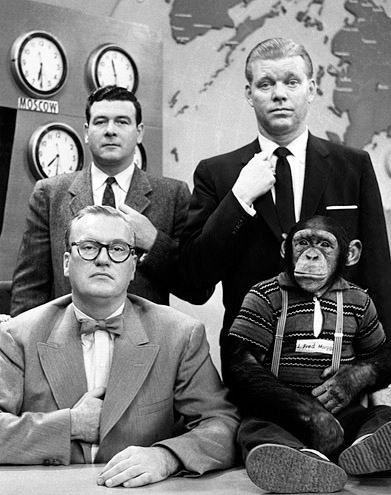
Today, also known as The Today Show, was the creation of innovative NBC executive Pat Weaver (he would go onto create The Tonight Show as well). Like nearly all television executives of his time, Mr. Weaver had begun in radio, where such early morning shows as The Breakfast Club (NBC Blue/ABC 1933-1968) and Breakfast in Hollywood (NBC/ABC/Mutual 1942-1948) met with success. He then thought that an early morning show could work on television as well. Pat Weaver's initial concept was called Rise and Shine, which would have been a variety show with songs and comedy routines. He reconsidered his concept on the basis that television should seek to differentiate itself from radio. Pat Weaver then developed the idea of a show that would be a "newspaper of the air," including everything that one would find in a morning newspaper. There would be news, weather reports, sports reports, interviews, and even a bit of humour. Rise and Shine then became Today.
As if an early morning show on television was not a revolutionary idea enough, Pat Weaver went one step further with the development of Today. Much like radio, at that point in television programmes were produced and sponsored by advertisers and their agency. Like Your Show of Shows before it(another legendary show created by Pat Weaver), NBC would sell time for commercials on Today to multiple advertisers. Not only would this be a more profitable approach for the network, but it would also give the network total control over Today.
While today we take breakfast television for granted, in 1951 Pat Weaver actually met with a good deal of resistance to his idea for Today. There were many within NBC who were convinced no on would watch television at such an early hour. Worse yet, the affiliates showed some opposition to Mr. Weaver's proposal of an early morning, network programme. Beyond the scepticism they shared with NBC executives that anyone would even watch television so early, there was also concern on the affiliates part that they would have to programme shows in the hours following Today (at this point in television history many stations did not begin broadcasting until 11:00 AM at the earliest). Of course, this would cost the local affiliates money. Not surprisingly, when Today debuted, only 24 NBC stations had agreed to show it.
Fortunately, time would prove the NBC executives and affiliates wrong and prove Pat Weaver right. Today would prove to be a success, largely due to two figures. The first was its original host, Dave Garroway. Mr. Garroway had started with NBC as a page in 1938. Mr. Garroway started work at Pittsburgh radio station KDKA in 1939. Two years later he left for the larger market of Chicago. During World War II Mr Garroway went to work for WMAQ in Chicago. He soon became one of the most popular DJs not only in Chicago, but in the entire nation. In 1948 and 1949 he was voted the best disc jockey in Billboard's Annual Disc Jockey Poll. Eventually Dave Garroway's popularity would win him a place on NBC Television. In 1949 Garroway at Large debuted. On television Mr. Garroway had an easy going, casual style in which viewers were often given a look backstage of the show. Unlike many at NBC, Dave Garroway actually believed in Pat Weaver's idea of an early morning show. As the host of Today Dave Garroway would prove extremely popular, to the point that for a time Today would be called The Dave Garroway Today Show (not only the single time it would have a title other than Today, but the only time it bore the name of its host).
The other figure that would make Today a success would have considerably less experience in television than Mr. Garroway and was also a good deal hairier. As popular as Dave Garroway was, it would be a chimpanzee named J. Fred Muggs who would save Today from cancellation. While Today had a respectfully sized audience, by the beginning of 1953 it was still hardly a financial success. At that time the show cost $60,000 a week, an amount hardly covered by the show's advertising. Rumours that NBC might cancel the early morning show were reflected in headlines such one in Billboard: "TODAY MAY BECOME YESTERDAY TOMORROW." In January 1953 there was a very real possibility that the world's first early morning news show might end shortly after its first year.
It was in early 1953 that former NBC pages and then pet store owners Buddy Mennella and LeRoy Waldron were due to appear on another programme with their chimpanzee J. Fred Muggs. Today writer Len Safire took J. Fred and his trainers to visit Today producer Mort Werner. Mort Werner then approved the idea of making the chimp a regular on the programme. J. Fred Muggs made his debut on Today on 3 February 1953. J. Fred Muggs drove ratings for Today through the roof as children tuned into the programme to see the chimpanzee and as a result turned their parents into regular viewers of the show. J. Fred Muggs also proved to be a merchandising bonanza for NBC. There were J. Fred Muggs colouring books, dolls, a Little Golden Book, puzzles, and many other items. While J. Fred Muggs propelled Today to new heights of popularity, as is often the case, there were problems behind the scenes. In particular, J. Fred Muggs and Dave Garroway did not get along particularly well. In fact, Mr. Garroway was often bitten by the chimp. Worse yet, after three and a half years J. Fred had grown in size, making him stronger and harder for his trainers to rein him in. NBC then ended its contract with J. Fred Muggs. He was replaced by another chimp, Kokomo, in 1957. Kokomo would not prove as popular as J. Fred, and left the show in 1958.
Today would have a lasting impact on television. Its most obvious impact was in proving that audiences would tune into early morning television. Not only would local stations programme their own shows in the early morning, but eventually Today would be imitated both i the United States and across the world. In fact, CBS would try to imitate Today as early as 1954. The Morning Show was hosted by Walter Cronkite, Jack Paar, John Henry Faulk, and Dick Van Dyke in its two years on the air. CBS has tried to imitate it since then, although ABC would meet with some success with its more entertainment oriented Good Morning America.
Besides inspiring similar morning shows across the Pond, Today would have a lasting impact on British broadcasting, although not in the way Pat Weaver or original producer Mort Werner may have wanted it. In 1954 Today covered the Coronation of Queen Elizabeth II, coming early at 5:00 AM EST to do so. With communications satellites several years in the future, NBC depended upon a then state of the art Mufax machine to transmit pictures over short wave radio frequencies from the BBC in London. The pictures could arrive as swiftly as nine minutes (quite fast for the time). At one point there came a lull in the transmissions. To fill time Dave Garroway interviewed J. Fred Muggs about coronations and monarchs among chimpanzees. As might be expected, NBC would also interrupt coverage of the Coronation with commercials, among them ones in which J. Fred pitched for a brand of tea. The British press was not amused and launched broadsides against NBC. Worse yet, at the time Parliament was debating the creation of commercial television in the United Kingdom. Opponents of commercial television pointed to NBC's coverage of the Coronation as evidence as to why commercial television should not exist in the UK. In the end, while commercial television would arrive in the United Kingdom, because of NBC and the other American networks' coverage of the Coronation, commercial advertisements on television in the UK would be much more heavily regulated. Not surprisingly, a rule existed that banned commercials during any coverage of the Royals.
While Today was revolutionary in being the first early morning programme, it would also prove to be a pioneer with regards to women in the field of television journalism. While most people probably think of Barbara Walters as a pioneer with regards to female journalists on television, she was not the first female reporter on Today. She was preceded by both Estelle Parsons and Mary Kelly. If the name "Estelle Parsons" sounds familiar, it is because she would later be an Oscar winning actress. It was in 1951 that she took a job with NBC as a production assistant on Today--this before even Dave Garroway was hired. As a production assistant Miss Parsons' duties were varied. She called the United States Weather Bureau for weather reports. She retrieved wire copy and gave it to then newsreader Jim Fleming. Eventually Estelle Parsons' role would go from behind the camera to in front of it. She interviewed figures from Eleanor Roosevelt to Marilyn Monroe. In 1952 she even went to the Democratic convention to cover presidential candidate Estes Kefauver. This made Miss Parsons the first woman to cover national politics on television. Even though Miss Parsons had a good deal of success on Today, her heart was in acting and she eventually left the show to pursue that field.
Like Estelle Parsons, Mary Kelly was with Today in its earliest days. Miss Kelly worked her way from simply getting coffee for the show's panellists to writing and eventually conducting interviews in front of the camera. Eventually Miss Kelly became the entertainment feature editor at Today. She interviewed screen legend Buster Keaton, reported on the Tony Awards, and reported on the filming of the movie Saint Joan in London. And well before the "Where in the World Is Matt Lauer"" segment currently on Today, Mary Kelly flew around the globe. In 1957 she was promoted to Associate Producer.
Eventually the Today production team would want women to be more visible on the show, but they would forego such professional, confident women as Estelle Parsons and Mary Kelly for young women in a more traditional role. The year 1955 saw the beginning of the era of what were formally referred to as "Women's Editors," but were informally referred to as "Today Girls." The Today Girl handled issues related to fashion, family, women, and light hearted fare. With but a few exceptions (Beryl Pfizer and Barbara Walters), the Today Girls were not serious journalists, but often entertainers. Former Miss America Lee Meriwether was the first Today Girl. Other notable Today Girls were Betsy Palmer, Helen O'Connell, Florence Henderson, and former Miss Rheingold Robbin Bain. The last Today Girl would be the one to break the mould: Barbara Walters.
Miss Walters was the last person hired by David Garroway before he left. Hired as a writer, she started out writing women's segments before writing harder news segments. Like Estelle Parsons and Mary Kelly before her, she would eventually appear in front of the camera. By the mid-Sixties she was a regular panellist on Today. By 1966 Miss Walters was a de facto co-host of the show, even if she did not officially have the title. She interviewed figures from Dean Rusk to Grace Kelly to Richard Nixon to Truman Capote. Despite this, Barbara Walters would not be recognised as a co-host until 1974. While it would take Miss Walters literally years to achieve the title of co-host, since that time many women have had the title of co-host (or co-anchor as it is now called) on Today.
Not only would Today have the first female co-anchor of any early morning news show, it also had the first African American co-anchor. Bryant Gumbel had started his career with NBC as a sportscaster for NBC Sports. In the fall of 1980 Bryant Gumbel began to appear on Today regularly with the feature "Sportsman of the Week." When Tom Brokaw left as co-anchor of The Today Show, then producer Steve Friedman campaigned for Bryant Gumbel was his replacement. Mr. Gumbel was a controversial choice with both NBC News and NBC Sports, and not because he was African American. NBC News was opposed to the idea of a sportscaster getting the position of co-anchor on Today. NBC Sports was none too happy with losing Bryant Gumbel as their primary sportscaster and their biggest star. Mr. Friedman persisted and Bryant Gumbel debuted as the co-host of Today on 4 January 1982.
For the most part Today has remained unchanged over the years. Due to Dave Garroway's precarious health, NBC changed the shooting schedule so that most of the show was shot in the afternoon on videotape. The only part of Today that was live at that point were the news reports read by Frank Blair. After Dave Garroway left the show in 1961, Today went back to being live and has been aired live ever since. Dave Garroway's departure would also bring another change to Today. Prior to 1961 Today had been under the control of NBC's entertainment division. With Dave Garroway's departure, Today was taken over by NBC News. NBC News attempted to make Today a much more serious news programme, appointing John Chancellor as Dave Garroway's replacement. Unfortunately, NBC News' changes to the show did not work out. John Chancellor was uncomfortable in the role of Today Show host and missed being out in the field as a reporter. Viewers seemed to prefer the lighter approach of Dave Garroway's Today Show. After only a short time Mr. Chancellor left Today (he would go onto anchor The NBC Evening News) and he was replaced by Hugh Downs. Mr. Downs was much more in the mould of Dave Garroway, with an easy going approach he had honed as the announcer on NBC's The Home Show and Tonight Starring Jack Paar. Since then Today has remained the balance of hard news and lighter material that it had been in the beginning--Pat Weaver's "newspaper of the air."
While Today has not changed in its format over the years, it would go from airing five days a week to airing every day of the week. For most of its history Today only aired Monday through Friday. On September 20, 1987 NBC debuted a Sunday edition of Today. Originally 90 minutes in length, the Sunday edition of Sunday was shortened to one hour in 1992 when Meet the Press expanded to an hour. The Saturday edition of Today debuted on August 1, 1992. It has always been two hours in length.
Another major change is that over the years Today has expanded in length. For most of its history Today was two hours long, but beginning in the Nineties it was start to expand. In the fall of 1999 NBC created a spin off of Today called Later Today. It was hosted by Jodi Applegate, former Today Girl Florence Henderson, and Asha Blake. Later Today suffered from low ratings, so that in August 2000 it was replaced by the third hour Today. On September 10, 2007 a fourth hour of Today was added. Originally the fourth hour was hosted by former newsreader and current co-anchor Ann Curry, current newsreader Natalie Morales, and Hoda Kotb. On April 7, 2008 Ann Curry and Natalie Morales were replaced by Kathie Lee Gifford. The fourth hour of Today would also change its format at that point, dropping the news segments and concentrating more on interviews and feature segments. While the first three hours of Today remained more of a news magazine, the fourth hour of Today became more of talk show.
While we tend to take breakfast television for granted now, Today was a revolutionary programme in its time. It invented a whole new genre of television, that of the television morning news magazine. It has been imitated many times over, not simply by CBS and ABC, but by many cable channels as well. Today also featured the first female political news reporter, the first female co-host, and the first African American co-host (Bryant Gumbel). Although it has sometimes been labelled "infotainment (a suitable label for some of its competitors)," I personally think it still most accurately described as Pat Weaver envisioned it--"a newspaper of the air." I think this is the reason that Today has remained the number one morning news programme in the United States. Unlike some of its competition it has rarely swung too far either towards hard news or towards pure entertainment. I rather suspect that this will keep it on top for another sixty years.
(Here, courtesy of NBC News, is a rather amazing video celebrating the 60th anniversary of Today)
Subscribe to:
Posts (Atom)
