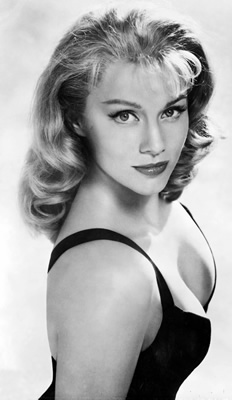
Saturday, August 6, 2011

Everybody Loves Lucy: Lucille Ball's 100th Birthday

Many, many years ago my brother traced the genealogy of my mother's family, the Towles. Among the discoveries he made was that the Towles were descended from English royalty. Our line could be traced back through the Plantagenets, through William the Bastard, all the way back to King Penda of Mercia. King Edward I was one of our direct ancestors. He also discovered that some of the Founding Fathers of the United States were related to us, including George Washington and James Madison. While my brother did most of the work, it was I who discovered we were related to yet another famous person. Lucille Ball was our 10th cousin one time removed.

My brother was a bit amused, but hardly surprised, that I was as delighted at being a distant cousin to Lucille Ball as I was to be descended from King Edward I of England and related to George Washington. As I explained it to him then, being descended from royalty is hardly rare (in fact, if you are English, it is downright common), but being related to a legend in television and comedy is most unusual. Quite simply, everybody loves Lucy and we were actually her cousins!

It was 100 years ago today that my cousin, Lucille Desiree Ball, was born in Jamestown, New York. Her career in show business began when her stepfather encouraged then twelve year old Lucy to audition for a show the Shriners were holding. Lucy enjoyed the attention she got on stage and so she decided to go into show business. Little did anyone know at the time that Lucy would become one of the most legendary and celebrated entertainers of all time.

Indeed, Lucille Ball would be a legend if the only thing she had ever done was I Love Lucy. As it is she had an extraordinarily long career and did many other things. Although it is rarely acknowledged by anyone but film buffs today, Lucy was a movie star before she appeared on her legendary TV show. In fact, she made her movie début all the way back in 1933 in an uncredited role in the Wallace Beery movie The Bowery. It was in 1933 that she was selected as one of the earliest Goldwyn Girls, the company of female dancers used by Samuel Goldwyn in his films. Lucy first appeared as a Goldwyn Girl in 1933's Roman Scandals. By 1937 Lucy's movie career was on the upswing. She played a major role in the 1937 film Stage Door. She would go onto a major role in The Marx Brothers' film Room Service (1938).

Lucy would become well known as a motion picture star. In fact, in the Forties she was famous enough to be featured in adverts for Royal Crown Cola, Max Factor, Hoover Vacuum Cleaners, and Chesterfield cigarettes (which she continued to smoke even after the début of I Love Lucy, on which rival Philip Morris was a sponsor). That having been said, while she was a household name in the Forties, she would never become one of the major movie stars of the decade. The major motion pictures in which she was the lead were few and far between.  The Big Street (1942) and Du Barry Was a Lady (1943) were two of the very few major feature films in which she appeared prior to her success in I Love Lucy. For the most part Lucy's career in movies prior to her television career was spent in B-movies, so much so that she was sometimes called "Queen of the B movies."

Like many stars of B-movies in the Forties, Lucille Ball would also work in radio. In 1938 she became a regular on The Wonder Show, a weekly show sponsored by Wonder Bread and starring Jack Haley (who would appear as the Tin Man in The Wizard of Oz the following year). The show's announcer was Gale Gordon, with whom Lucy would become friends and with whom she would work from time to time for the next fifty years. Over the years Lucy would guest star on several radio shows, including Screen Guild Theatre, Bachelor Mother, The Bing Crosby Show, and several others. It was in 1948 that CBS approached Lucy about starring in a radio series based on the novel Mr. and Mrs. Cugat. Lucy accepted and was cast opposite Richard Denning in the new radio show, My Favourite Husband. Lucy played Liz Cugat, an oddball housewife who was always getting into trouble with her wild schemes. Richard Denning played George Cugat, her husband who worked at a bank where Gale Gordon played the president (he would play a bank president again on The Lucy Show). The show was written by Madelyn Pugh and Bob Carroll Jr.  It was produced and directed by Jess Oppenheimer. Miss Pugh and Messrs. Carroll and Oppenheimer would all work on I Love Lucy. In fact, My Favourite Husband can be considered a forerunner of what may be the most famous television sitcom of all time.

Indeed, it would be My Favourite Husband which would lead directly to I Love Lucy and Lucy's subsequent success in television. My Favourite Husband proved to be a huge hit for CBS, not to mention the most successful project in which Lucy had performed up to that time.  Quite naturally, the network wanted to bring the hit show to television. As to Lucy, she had one demand with regards to bringing the show to television: she wanted her husband Desi Arnaz as her co-star. CBS rejected this idea on the basis that they did not think the average person would believe an American redhead would be married to a Cuban, even though it was well known that Lucy and Desi were married in real life. Undeterred, Lucy set out to prove CBS wrong. In the spring of 1950 she and Desi formed Desilu Produtions. They then went on the vaudeville circuit in which Lucy played a madcap wife always trying to get into Desi's act. Lucy and Desi's vaudeville tour proved so successful that NBC expressed interest in the two starring in a show on that network. Fearful of losing Lucy to another network, CBS finally gave the go ahead for what would become I Love Lucy.

Of course, it is well known today that I Love Lucy became an enormous success, the most successful sitcom of the Fifties and one of the biggest hits in television history. In fact, the episode on which Lucy and Ricky Ricardo's son Little Ricky was born (it aired on 19 January 1953) drew more viewers than did Dwight D. Eisenhower's presidential inauguration the next day. The success of I Love Lucy would not end with its initial run. Except perhaps for Gilligan's Island, I Love Lucy has been repeated more than any other sitcom in the history of television. It is still one of the few older television programmes that airs on multiple cable channels.

Here it must be pointed out that I Love Lucy was not merely one of the biggest hits in television of all time, but it was also positively revolutionary. I Love Lucy was the first American television show (and for a long time the only American television show) to feature a multi-ethnic marriage. After all, Ricky (played by Desi Arnaz) was Cuban in descent while Lucy (played by Lucille Ball) was Scottish in descent. It was also one of the first shows to ever portray a pregnancy, this at a time when the word pregnant could not even be said on the air. Contrary to popular belief, I Love Lucy was not the first sitcom to utilise a multi-camera set up. Other shows (including another CBS sitcom, Amos 'n' Andy) had already used a multi-camera set up. That having been said, I Love Lucy was the first to use 35 mm film--previous shows with multi-camera set ups having only used 16 mm film.

Of course, I Love Lucy would not be the last success Lucy would have on television. Following the end of the show Lucy and Desi would film thirteen 60 minute  specials (now known as The Lucy-Desi Hour) featuring the characters from I Love Lucy. Lucy would go onto further success with The Lucy Show (which first went on the air in 1962) and Here's Lucy (which went on the air in 1968). Both shows featured Lucy's close friend, Gale Gordon, as her long suffering boss. Following the end of Here's Lucy, Lucy would produce and star in specials for a CBS. In 1980 Lucy severed her relationship with CBS after nearly thirty years with them and went to rival NBC. Unfortunately her stint with NBC would only produce one special and guest appearances on Bob Hope specials. In 1985 she appeared in the television movie Stone Pillow, playing a dramatic role for a change. In 1986 Lucille Ball returned to series television with a new sitcom, Life with Lucy, airing on ABC. Like The Lucy Show and Here's Lucy, this series also co-starred Gale Gordon. Unfortunately Life with Lucy would prove to be Lucy's first and only failure on television. Although thirteen episodes had been filmed, only eight aired before ABC cancelled the series. It would be her last work.

When considering Lucy's career in both television and film, one cannot overlook her role as one of the founders and owners of Desliu Productions. In fact, Lucy was the first woman to ever own a studio in the history of both film and television. The company was originally founded to produce Lucy and Desi's vaudeville act and I Love Lucy, but it soon went beyond that. By 1952 it also produced the classic sitcom Our Miss Brooks and in 1954 the classic sitcom December Bride. Desilu would go onto produce the hit series The Untouchables. Desilu also rented space to other production companies, so that classic shows ranging from The Andy Griffith Show to Batman were at least partially shot there. In 1962 Lucille Ball bought out Desi Arnaz's shares in the company and became full owner. Both with and without Desi, Lucy proved to be a shrewd studio owner with an eye for what could be successful. In addition to the above cited shows, it must be pointed out that such classic series as Star Trek Mission: Impossible, and Mannix were all produced by Desilu. Desilu also produced motion pictures, including Forever Darling (1956) and Yours, Mine, and Ours (1968). In February 1967 Lucy made a deal with Gulf+Western to buy Desilu. Around December of the year Gulf+Western merged Desilu with Paramount Pictures (which they had also bought), and Desilu was renamed Paramount Television.

Lucy's success on television would have the affect of revitalising her film career. In 1953 Lucy and Desi starred in The Long, Long Trailer. This would be followed by the film Forever Darling in 1956, in which the two of them also starred. Over the years Lucy would appear in such films as The Facts of Life (1960), The Good Years (1962), Critics Choice (1963), the highly successful Yours, Mine, and Ours, and Mame (1974).

It was on 26 April 1989 that Lucille Bal died at the age of 77. The cause was a dissecting aortic aneurysm. She had made her last public appearance only around a month before her death at the 61st Academy Awards ceremony as a presenter alongside her former co-star and friend Bob Hope.

Although Lucy had spent her early career in film primarily as a star of B-movies, she became one of the most important entertainers of the 20th Century. In fact, one would be hard pressed to find a woman who played a greater role in the history of television than Lucille Ball. She not only starred in the first sitcom to become a major hit, but also the first sitcom to feature a multi-ethnic household. She was the first woman to own and run a television and film studio. Her studio, Desilu, not only produced I Love Lucy and The Lucy Show, but other classic shows such as Our Miss Brooks, The Untouchables, Star Trek, and Mission: Impossible. The last two shows would become major franchises for Paramount Pictures. As an actress, comedienne, producer, and studio owner, Lucy had an impact that very few people have had in the history of American entertainment. She may never have become a major movie star along the lines of Rita Hayworth or Marilyn Monroe, but in many respects her impact may have been much more far reaching.

Lucy was known for being dictatorial on the sets on which she worked. She could be very harsh with her co-stars. Quite simply, she expected everyone to do their best. That having been said, she was more often kind and thoughtful of others. Director Herb Kenwith once had to return home from Hollywood to New York due to an emergency. Lucy asked him if he had the money do so. When he said that he did not, the actress and producer wrote him a cheque for $10,000. Naturally Mr. Chenwith gave the cheque back to Lucy, feeling he could not possibly accept so generous an amount. In Inside Star Trek Herb Solow and Robert Justman told how debris on a set was holding up the shooting of an episode. Lucille Ball herself, the head of Desilu, went to the set, picked up a broom, and began sweeping so that the crew could shoot scenes on schedule. Jack Warner probably never did that!

For myself, like many others, I have always loved Lucy. Even if I did not know of her achievements as a producer and studio owner, I would still admire her as one of the greatest comedic actresses of all time. There has never been a time in my life when I did not know who Lucille Ball was. Indeed, like most Americans I have always treated her as if I knew her, simply calling her by the diminutive of her  first name, "Lucy." Many women have been called "America's Sweetheart" over the years, but for Lucy I think it holds true. It is for that reason that I am still so happy to be related to her, no matter how distant. After all, many people are related to kings and queens and American founding fathers. Not near as many are related to the one, the only, Lucille Ball.

-Terence Towles Canote


Friday, August 5, 2011

Actor Tom Aldredge R.I.P.

Character actor Tom Aldredge, who appeared on Ryan's Hope and The Sopranos, passed on 22 July 2011 at the age of 83. The cause was lymphoma.

Tom Aldredge was born on 28 February 1928 in Dayton, Ohio. He had intended to become an attorney and even attended the University of Dayton. It was in 1947 that he saw a performance on Broadway of A Streetcar Named Desire and he changed his career plans to take up acting. He trained in acting at the Goodman School of Drama in Chicago. He made his debut on Broadway in The Nervous Set in 1959. Over the years he would return to Broadway several times, appearing in such productions as Everything in the Garden, How the Other Half Loves, a revival of The Iceman Cometh, Rex, On Golden Pond, a revival of Inherit the Wind, a revival of 1776, and Twelve Angry Men.

Tom Aldredge made his television debut in the special Seasons of Youth in 1961. He made his movie debut in The Mouse on the Moon in 1963. In the Sixties he would appear in such films as The Troublemaker (1964), Who Killed Teddy Bear (1965), The Boston Strangler (1968), and The Rain People (1969). In the Seventies he appeared in such movies as The Happiness Cage (1972), Sticks and Bones (1973), and Cool Red (1976). He was a regular on the soap opera Ryan's Hope from 1979 to 1982.

From the Eighties into the Naughts Mr. Aldredge appeared in such films as Seize the Day (1986), *batteries not included (1987), See You in the Morning (1989), Brenda Starr (1989), What About Bob? (1991), Other People's Money (1991), Rounders (1998), A Stranger in the Kingdom (1999), Cold Mountain (2003), All the King's Men (2006), and A Magic Helmet (2010). He was a regular on the TV programmes The Sopranos and Damages. He also appeared on the TV shows The Hallmark Hall of Fame, Third Watch, Law and Order: Criminal Intent, and Boardwalk Empire.

Thursday, August 4, 2011

Bubba Smith Pass On

Actor and former NFL defensive end Bubba Smith passed yesterday, 3 August 2011, at the age of 66. The cause is not yet known.

Bubba Smith was born Charles Smith in Beaumont, Texas on 28 February 1945. He was called "Bubba" since childhood. His father coached the Charlton-Pollard High School team in Beaumont on which Mr. Smith played. He attended Michigan State University where he played as a defensive end. He then spent nine seasons in the NFL, playing for the Baltimore Colts, the Oakland Raiders, and the Houston Oilers.

Following his career in the NFL, Mr. Smith took up acting. He made his debut on television in an episode of Wonder Woman in 1978. From the late Seventies into the Eighties he appeared on such shows as Good Times, The Misadventures of Sheriff Lobo, Charlie's Angels, The White Shadow, Taxi, Hart to Hart, and Mike Hammer. He was a regular on the shows Open All NightBlue Thunder, and Half Nelson. He made his film debut in A Pleasure Doing Business in 1979. From the Seventies into the Eighties he appeared in such films as Escape from DS-3 (1981), Stroker Ace (1984), and Black Moon Rising (1986). In 1984 he appeared in his most famous role as Moses Hightower, the gigantic but gentle florist turned cop in Police Academy. He appeared as Moses in five of the movie's sequels.

From the Nineties into the Naughts he appeared on such shows as Married With Children, MacGyver, Sabrina the Teenage Witch, and Police Academy: The Series.  He appeared in such films as My Samurai (1992), The Naked Truth (1993), Fist of Honour (1994), The Coach (2004), and Blood River (2010).

Bubba Smith may not have been a great actor, but he was certainly an appealing one. Most of his characters were not unlike Bubba Smith was said to be in real life--a gentle giant who truly cared about people. Indeed, it is mark of Mr. Smith's likeability that people remember him as Moses Hightower, when so much of the Police Academy franchise was utterly forgettable. Mr. Smith played a character very much like himself in real life and people loved him for it. It has been said more than once since the 6' 7" former defensive end has died that he was a true gentleman. Given the rarity of such men in sport or entertainment, then, Bubba Smith is truly a celebrity to be mourned.

Friday, July 29, 2011

Actor G. D. Spralin Passes On

Character actor G. D. Spralin passed on 24 July 2011 at the age of 90.

He was born Gervase Duan Spradlin on 31 April 1920 in Paul's Valley, Oklahoma. He graduated from the University of Oklahoma with a degree in education. Afterwards he taught history. During World War II he served in the Army Air Force as an air traffic controller in China. Following the war he earned a degree in law from the University of Oklahoma. He became the head of the legal department in Caracas, Venezuela for the Phillips Petroleum Company, then later joined forces with a geologist to drill their own wells. Making a good deal of money, he retired in 1960.

Mr. Spralin developed an interest in acting while watching his daughter perform in local plays. He soon began to act in plays himself and eventually moved to Los Angeles to pursue acting. He made his television debut in an episode of The Iron Horse in 1966. During the Sixties he appeared in such shows as Gomer Pyle U.S.M.C., Pistols 'n' Petticoats, Run For Your Life, I Spy, The Big Valley, Mannix, Bonanza, and The Virginian. He made his movie debut in Will Penny in 1968. He also appeared in Tora, Tora, Tora (1970) and Monte Walsh (1970).

In the Seventies he appeared on such shows as Alias Smith and Jones, Kung Fu, Hec Ramsey, Search, Adam 12, and Columbo. He appeared in the movies The Hunting Party (1971), The Only Way Home (1972), The Godfather Part II (1974), Apocalypse Now (1979), North Dallas Forty (1979), and The Formula (1980). From the Eighties into the Nineties he appeared in such movies as Wrong is Right (1982), The Lords of Discipline (1983), Tank (1984), The War of the Roses (1989), , Ed Wood (1994), Canadian Bacon (1995), and Dick (1999). He appeared on such shows as Hallmark Hall of Fame and Dark Skies.

Thursday, July 28, 2011

America Co-Founder Dan Peek Passes On

Dan Peek, who co-founded the rock group America with Gerry Beckley and Dewey Bunnell, passed on 24 July 2011 at the age of 60. The cause has yet to be determined.

Dan Peek was born 1 November 1950 in Panama City, Florida. Mr. Peek's father was a United States Air Force officer, so that he spent his childhood in such places as Japan and Pakistan. It was when Mr. Peek was a teenager that his father was stationed in England. There he met fellow Americans Gerry Beckley and Dewey Bunnell at London Central High School. Their fathers were also in the military. The three sang together until Mr. Peek returned to the United States to attend Old Dominion University in Virginia. He returned to England a year later and the three began performing together again. To insure that everyone realised they were an American band, they simply called themselves "America."

In March 1971 America was signed to the UK Warner Brothers label. Their first album, released in 1971, did only moderately well.  The single "Horse With No Name" would prove to be very successful, however, so that the album was re-released with the the single added to it, and went platinum. The trio would release six over the next several years:  Homecoming, Hat Trick, Holiday, Hearts, Hideaway, and Harbour. Their albums sold very well, with all but Hat Trick  and Harbour hitting the top twenty. In addition to "Horse with No Name" their hit songs would include "I Need You," "Ventura Highway," ""Tin Man," and "Sister Golden Hair." While Dan Peek wrote some of America's singles, including "Don't Cross The River,", "Lonely People (which went to #5 on the Billboard Hot 100)," "Woman Tonight,", and "Today's the Day," and "Today's the Day."

In 1977, not long after the release of Harbour, Dan Peek left America, having become a "born again" Christian. He would go onto become a pioneer in the genre of Christian Contemporary music. He released his fist solo album, All Things Are Possible, in 1979. Over the next many years he would release fifteen albums.

As to America, despite rumours to the contrary, there was never a true reunion of the original band, although the split was amicable. Messrs. Beckley and Bunnell provided backing vocals on the song  "Love Was Just Another Word" on Mr. Peek's first album, While Mr. Beckley provided backing vocals on the title track on the album Doer of the Word. That having been said, the original America never did reunite.

I must admit that I was always a fan of America, and I always enjoyed Dan Peek's contributions to the band. He was a very good musician and also a fairly good songwriter. In my opinion, "Lonely People" was one of America's best songs. I must confess I know very little of his Christian Contemporary career. In fact, I rather doubt I have heard of any of his Christian Contemporary songs. That having been said, he was very successful as a solo artist in the genre, and I suspect his songs were quite good given his work with America. It is sad that he passed at a rather young age, having contributed to one of the best known soft rock bands of the Seventies and having been a pioneer in Christian Contemporary music.

Tuesday, July 26, 2011

Actress Linda Christian Passes On

Actress Linda Christian, who appeared in such films as Tarzan and the Mermaids (1948) and memorably in the TV series Climax adaptation of Casino Royale, passed on 22 July at the age of 87. She was also well known as Tyrone Power''s second wife.

Linda Christian was born Blanca Rosa Henrietta Stella Welter Vorhauer, the daughter of a Dutch oil executive and his Mexican wife, in Tampico, Mexico on 13 November 1923. Her parents travelled a good deal abroad, so that she learned several languages while still young. She had wanted to become a physician, but as a teenager met Errol Flynn, who persuaded her to take up acting. 

Miss Christian made her film début as "Linda Welter" in El peñón de las Ánimas (1943).  Her first American film would also be Danny Kaye's film début, Up in Arms (1943).  She appeared in Club Havana (1945) before being signed to MGM. For the next several years Miss Christian would be cast in roles for which her looks were of great benefit. She appeared in such films as Holiday in Mexico (1946), Green Dolphin Street (1947), Tarzan and the Mermaids (1948), Show Boat (1951), Battle Zone (1952), The Happy Time (1952), and Slaves of Babylon (1953). It was in 1949 that she married Tyrone Power. The marriage lasted six years.

 It was in 1954 that Linda Christian made her television début, and it would be an impressive one. She appeared in an adaptation of Casino Royale, the first Bond novel, on the TV series Climax. Miss Christian was in very good company, playing opposite Barry Nelson as James Bond and Peter Lorre as the villain Le Chiffre. Miss Christian played Valerie Mathis, who was more or less the Vesper Lynd of the novel simply by another name. Miss Christian then had the most singular honour of being the world's very first Bond Girl.

Miss Christian's career would slow somewhat following her divorce from Tyrone Power. She appeared in  such films as Athena (1954), Thunderstorm (1956), Meet Peter Voss (1959), The Devil's Hand (1962), Passport for a Corpse (1962),  The V.I.P.s (1963), 10:32 in the Morning (1966), How to Seduce a Playboy (1966), The World's Gold (1967), and Delitti (1987).  On television she appeared on The Alfred Hitchcock Hour and The Dick Powell Theatre.


Even today Linda Christian is best known for two things. The first was her incredible appearance. With a beautiful face and a curvaceous body, she was nicknamed "The Anatomic Bomb." The second, of course, was her marriage to Tyrone Power. In some ways Miss Christian could be described, much as the Gabor Sisters, as being "famous for being famous." That having been said, in the proper role Miss Christian could be a good actress. She actually did quite well as Valerie Mathis in the Climax adaptation of Casino Royale. She was also convincing as the snobbish Beth Hanson in Athena and in her role on The Alfred Hitchcock Hour episode "An Out  for Oscar." While I doubt Miss Christian could have ever been a great actress, she was certainly good at her craft. As to her beauty, there can be no doubt about that.

Saturday, July 23, 2011

Amy Winehouse R.I.P.

Singer Amy Winehouse passed yesterday at the age of 27. The cause is not yet known.

Amy Winehouse was born in Southgate, London. She took an interest in singing while still a child. She attended the Susi Earnshaw Theatre School and then the Sylvia Young Theatre School in Westminster, the BRIT School for Performing Arts and Technology in Croydon, the Southgate School in Enfield,  and the Ashmole School in Southgate.

Miss Winehouse began writing music after receiving her first guitar at age 13. She would eventually be signed by Island/Universal. Her first album, Frank, was released in 2003. The album received good reviews from critics and peaked at #13 on the albums chart in the United Kingdom and at 26 on the Billboard Top R&B/Hip Hop Albums in the United States. Four singles were released from the album.

Amy Winehouse would have much more success with her second album, Back to Black, released in 2006. The album received widespread critical acclaim. It was also a smash hit. It topped at #2 on the Billboard Top 200 albums chart in the United States and #1 on the UK albums chart. Six singles were released from the album. She would also appear as a featured artist on Mark Ronson's song "Valerie (released 2007)" and Tony Bennett's rendition of "Body and Soul" released in 2011.

I cannot say I was a huge Amy Winehouse fan. I liked some of her songs and others I did not. That having been said, I cannot deny that she was a fantastic vocalist. Indeed, she was one of the few vocalists today who could match the R&B artists of the Fifties and Sixties. I also cannot deny the impact her career, short though it may have been, on music today. No less than Lady Gaga has credited Amy Winehouse as paving the way for more unconventional female artists herself. Welsh soul artist Adele has credited Miss Winehouse with opening up the United States for similar artists such as herself and fellow Welsh soul singer Duffy.  Along with English pop singer Lily Allen, Miss Winehouse has been considered part of a new wave of female music artists, which would include Lady Gaga and Adele. While her career was short, then, Amy Winehouse would appear to have a lasting impact on modern music.