
From childhood I have always enjoyed mystery novels and movies. Among the best mystery novels and novellas were those written by Rex Stout featuring the deductive genius Nero Wolfe. The novels and novellas are written in a breezy, friendly, and easy to read tone (told from the point of view of Wolfe's aide Archie Goodwin). They also feature some of the most complex and original mysteries ever to see print.
Nero Wolfe was created by Stout in the Thirties and first appeared in the novel Fer-de-Lance in 1934. Wolfe was unlike any detective ever seen in print. Perhaps the most noticeable thing about him was his sheer size. Wolfe stood 5 foot 11 inches tall and weighed 278 pounds (that's nearly 20 stone, for those of you in the Commonwealth). And while many fictional detectives were known for their eccentricies, Wolfe is arguably more eccentric than most. Although hardly agorophobic, Wolfe rarely left his brownstone and had a general rule (sometimes broken, but not often) of not doing business outside it. He kept a rigid schedule from which he almost never departed (what's more, Wolfe would become very upset if forced to depart from it). He was an absolute lover of luxury. Wolfe was a gourmand who employed his own personal cook (Fritz Brenner, who prepared all of his meals) and sometimes even cooked himself. He drank only the best beer (Remmers) and copious amounts of it. Atop his brownstone Wolfe kept 10,000 orchids, cared for by Theodore Horstmann. Wolfe also despised exercise of any sort (a walk around the block would be considered strenuous by him). Of course, above all else, Wolfe was a deductive genius and knew he was such (in Fer-de-Lance Wolfe tells his aide Archie Goodwin, "I am merely a genius, not a god."). Given his enormous ego, Wolfe could be tempermental and given to fits of pique over the smallest things (such as his strict schedule being violated, someone questioning his ability as a detective, and so on). Of course, it must be pointed out that Wolfe was not always overweight and fearful of exercise. When young he was apparently a man of action.
Given Wolfe's dislike of leaving his brownstone and his many eccentricies, it is a wonder he ever became a detective. After all, common sense dictates that a detective would have to visit crime scenes, interview witnesses, and look for clues. In Wolfe's case, all of this is accomplished by his employee Archie Goodwin. Goodwin is often described as Wolfe's legman, although he is a bit more than that. Goodwin is also Wolfe's personal assistant, bookkeeper, and driver. Goodwin is a licensed private investigator and has enough talent as such that he could run his own agency (in fact, he does just that in the novel In the Best Families). Indeed, in many respects Goodwin is a much more traditional private eye than Wolfe is. Like many hard boiled detectives, Goodwin was a snazzy dresser with an eye for the ladies and a keen disrespect for authority. He was intimately familiar with the streets of New York City, and was skilled with both is fists and a gun (he kept a .32 in his suit). He was also gifted wtih an eidetic memory, so that he could recall nearly everything he had seen or heard, and could type faster than most stenographers. In some respects, Archie Goodwin could be considered the protagonist of the Nero Wolfe series moreso than Wolfe himself. The novels and novellas are narrated from his point of view and he appears in nearly every scene.
In creating Nero Wolfe, Rex Stout had a stroke of genius in that he blended three different subgenres of the detective novel. As someone who dislikes leaving his brownstone, Wolfe is almost literally an armchair detective. This links him to other such armchair detectives as Dr. Priestley and Hercule Poirot. At the same time, however, the Wolfe books have strong links to the genre of the hard boiled detective (such as Sam Spade and Philip Marlowe). Like many of the hard boiled detectives, Wolfe (and to a lesser degree Goodwin as well) is a cynic who generally takes cases only for exorbitant fees. And while Wolfe almost never engages in physical confrontations (one gets the feeling he would think such beneath him), Goodwin sometimes gets into more than enough fights for both of them. Finally, it must be pointed out that Wolfe also fits the archetype of the deductive genius, of which Sherlock Holmes is the best known example. Like Holmes, Wolfe could solve a case with what might seem to others a few diverse clues.
Naturally, the series featured several continuing characters besides Wolfe and his household. In fact, Wolfe sometimes employed other operatives besides Archie. Most often this was Saul Panzer, often considered the best private detective in New York. Wolfe would ocassionally make use of Orrie Cather, a bright man who though he could replace Goodwin as Wolfe's assistant. And while Wolfe was often impatient with women, he did employ female detectives Dol Bonner and Sally Colt. Bonner actually appeared in a short story of her own, as well as a Tecumseh Fox (another Stout private detective) novel.
Naturally given Wolfe's profession, he occasionally crossed paths with the police. Most often this was in the form of Inspector Cramer, the head of Homicide in Manhattan. Cramer is a relatively intelligent, hard working, and honest cop who is often annoyed by Wolfe's eccentricities. Despite this fact, Cramer and Wolfe respect each other and, though both would probably be loath to admit it, probably even like each other. Cramer is assisted by Sgt. Purley Stebbins. Stebbins can be gruff, but he was also honest, brave, and hard working. While he and Archie occasionally get into it (Stebbins does not care for private eyes), it ultimately seems that they like each other. This is not the case with another police officer appearing in the series, Lieutenant George Rowcliffe. It is not that Rowcliffe is dishonest, but he is not particularly bright and his methods often leave a lot to be desired (he has no problem badgering witnesses). Wolfe and Rowcliffe had been at odds ever since Rowcliffe executed a search warrant on Wolfe's brownstone.
In addition to the police, Wolfe also dealt with other professionals. His lawyer was Nathaniel Parker. Parker is actually one of Wolfe's few friends, the two having known each other for years. Another of Wolfe's friends is Dr. Vollmer, who lives down the street from the brownstone. Vollmer is often called upon to examine the dead bodies that have a habit of turning up in Wolfe's cases.
Nero Wolfe was a success almost from the beginning. Stout wrote nearly one Nero Wolfe novel a year until his death. He also wrote several novellas featuring Wolfe and Goodwin. The first two novels (Fer-De-lance and The League of Frightened Men) were made into movies (Meet Nero Wolfe from 1936 and The League of Frightened Men from 1937). Sadly, Stout was disappointed in how the movies turned out and forbade any more film or television adaptations of the Nero Wolfe stories. There were several radio shows based on the series (one in 1943, one from 1945-1946, one from 1950 to 1951, and finally one that aired on the CBC in 1982). Despite Stout's wishes, Nero Wolfe would finally make it to television following his death. In 1977 Paramount made a failed pilot starring Thayer David as Wolfe and Tom Mason as Goodwin. In 1981 there was a short lived series that aired on NBC. While William Conrad (best known as Cannon of the series of the same name) was perfectly cast as Wolfe, I always thought Lee Horsley was hardly suited to play Archie Goodwin (he is a bit too stout--I always thought of Goodwin as being lankier). Worse yet, they decided to update the series to the Eighties. By far the best adaptation of Nero Wolfe in any medium was one that aired on A&E from 2001 to 2002. The series was set in a time period that appeared to be the Forties or Fifties. What is more, Maury Chaykin and Timothy Hutton were perfect as Wolfe and Goodwin respectively. It is a shame that A&E decided the series was too expensive to produce (apparently Dog the Bounty Hunter is cheaper....) and cancelled it.
Of course, given the success of Nero Wolfe it is not surprising that there has been some speculation given the character. Some of this has involved Wolfe's activities as a young man, but perhaps there is no more controversial subject than that of Wolfe's lineage. In a 1956 issue of The Baker Street Journal John D. Clark put forth the theory that Wolfe was the illegitimate son of Sherlock Holmes and Irene Adler (as Holmes called her, THE woman, featured in the Homes story A Scandal in Bohemia). In his fictional biography of Wolfe, Nero Wolfe of West Thirty-fifth Street: The Life and Times of America's Largest Private Detective, William S. Baring-Gould seconded this theory. And while Rex Stout wrote the introduction to this biography, he never confirmed nor denied the theory that Wolfe was indeed Holmes' son. That having been said, there are a few clues that could point in that direction. Wolfe resembles Sherlock Holmes's older brother Mycroft to a large degree. Both are deductive geniuses (in fact, Mycroft's talent at deduction was supposed to be greater than Sherlock's). Both are overweight. And both tend to avoid exercise. In fact, some have suggested that Mycroft would be a more likely candidate as Wolfe's father than Sherlock. Another possible clue is what may or may not be a coincidence in the vowels occuring in the same order in the names ShErlOck HOlmEs and NErO WOlfE. It must be also be pointed out that Wolfe's birthplace is Montenegro. It is concievable that a woman of the world such as Adler could have gone there after a tryst with Holmes. Of course, the most blantant clue is the portrait which hangs in Nero Wolfe's office. Although I can't recall that Stout ever came out and said that it was indeed a picture of Sherlock Holmes, he gave enough clues that nearly everyone has read very much of the series knows that it is indeed the famous detective. It is possible that Wolfe had the portrait in his office simply as a source of inspiration. But, then again, it is also possible that Wolfe kept the picture in his office for some far more important reason--namely, the man in the portrait was his father. Even though the evidence is nearly non-existent, I have always liked the idea that Nero Wolfe was the son of Holmes. It would seem to me fitting that the two greatest detectives in the English langauge should somehow be related.
As to the idea that it was Mycroft Holmes and not Sherlock Holmes who was Nero Wolfe's father, I have never liked that idea for two basic reasons. For one thing, I am one of those people who actually believes Sherlock was in love with Irene Adler (call me a romantic, but only a man smitten would speak of a woman the way Holmes does her....). It seems entirely realistic to me that at some point the two could have had a romantic relationship and even had a son together. For another, I honestly don't think Mycroft would exert himself enough to even ask a woman to dinner, much less anything else.... After all, we are talking about the one fictional character (well, maybe besides Maynard G. Krebs) who hates exercise and work more than Nero Wolfe himself!
Rex Stout died in 1975, but his most famous creation has outlived him. Robert Goldsborough wrote seven further adventues of Nero Wolfe and Archie Goodwin. John Lescroart wrote two books about a son of Sherlock Holmes and Irene Alder named Auguste Lupa, who is strongly hinted to be none other than Nero Wolfe as a young man. A fan club dedicated to Nero Wolfe, the Wolfe Pack, has been around since 1977. They meet every year in New York City. Like possible father, Sherlock Holmes, I rather suspect Nero Wolfe's popularity will continue unabated. No doubt the rotund detective will still be popular in 2076, a full century after Stout's death.
Saturday, August 19, 2006

Wednesday, August 16, 2006
Bruno Kirby Passes On
Character actor Bruno Kirby died August 14 at the age of 57. He was best known for playing the archetypal New Yorker in various movies and TV shows. He died from complications resulting from leukaemia.
Bruno Kirby was born Bruno Giovanni Quidaciolu, Jr. on April 28, 1949 in New York City. His father, Bruce Kriby, is also an actor (best known as Sergeant Kramer on Columbo). Bruno Kirby made his film debut in The Young Graduates in 1971. Throughout the Seventies he played small parts in such films as The Harrad Experiment, Baby Blue Marine, and Between the Lines. He made guest apperances on such series as Room 222, Columbo, and Kojak.
Kirby came into his own in the Eighties. In 1981 he played Albert Brooks' fellow film editor in Modern Romance. In 1984 he appeared as fast talking chauffer Tommy Pischedda in This is Spinal Tap (in my opinion, his best role). He would go onto appear in such movies as When Harry Met Sally (one of his best known roles, as Jess), City Slickers (where he played Ed Furillo, another one of his best known roles), and Donnie Brasco. He was a regular on It's Gary Shandling's Show. He also made guest appearances on Frasier, Mad About You, and Entourage.
I always liked Bruno Kirby. As a character actor he had a definite gift for comedy. He was perfectly cast in both When Harry Met Sally and City Slickers, perhaps the best foil that Billy Crystal ever had. It is certainly sad to know that he is gone, and gone all too soon.
Bruno Kirby was born Bruno Giovanni Quidaciolu, Jr. on April 28, 1949 in New York City. His father, Bruce Kriby, is also an actor (best known as Sergeant Kramer on Columbo). Bruno Kirby made his film debut in The Young Graduates in 1971. Throughout the Seventies he played small parts in such films as The Harrad Experiment, Baby Blue Marine, and Between the Lines. He made guest apperances on such series as Room 222, Columbo, and Kojak.
Kirby came into his own in the Eighties. In 1981 he played Albert Brooks' fellow film editor in Modern Romance. In 1984 he appeared as fast talking chauffer Tommy Pischedda in This is Spinal Tap (in my opinion, his best role). He would go onto appear in such movies as When Harry Met Sally (one of his best known roles, as Jess), City Slickers (where he played Ed Furillo, another one of his best known roles), and Donnie Brasco. He was a regular on It's Gary Shandling's Show. He also made guest appearances on Frasier, Mad About You, and Entourage.
I always liked Bruno Kirby. As a character actor he had a definite gift for comedy. He was perfectly cast in both When Harry Met Sally and City Slickers, perhaps the best foil that Billy Crystal ever had. It is certainly sad to know that he is gone, and gone all too soon.
Tuesday, August 15, 2006
A Bygone Era
Today I feel a bit down. Much of this is due to the fact that it is allergy season. Much of it is due to the fact that I am none too happy with the state of my life. I realise that more often than not when I mention the way I feel in this blog I am unhappy. Believe it or not, there was a time when I was happy, but that seems to have been long ago.
Anyhow, today my mind turns to an episode of The Andy Griffith Showw called "Man in a Hurry." In this episode a businessman from out of town, Malcolm Tucker, becomes stranded in Mayberry on a Sunday when his car stalls. He becomes increasingly frustrated as he tried to get his car fixed. It seems that the local mechanic, Wally, takes Sunday off and simply won't fix the car until Monday. Today this episode might seem a bit quaint to many, but there was a time when many places in America simply shut down on Sunday. Indeed, there was a time when businesses even in big cities would close on that day.
Of course, much of the reason for this was the fact that at one time the separation of church and state in the United States was not quite as clearly drawn as it is now. As a result many areas of the United States passed what is known as blue laws. These were laws that were meant to enforce observation of the Christian Sabbath. Because of these blue laws many businesses were strictly forbidden from operating on Sunday (exceptions were often made for grocery stores and drug stores). Even today many states still forbid the selling of alcohol on Sunday. Here I must point out that even when blue laws did not forbid a business from opening on Sunday, many such businesses would voluntarily close on this day. An example of this is from the aforementioned Andy Griffith Show episode. It is clear from the episode that Mayberry does not forbid the repair of cars on Sunday, yet Wally does not open his shop on that day. Quite simply, between blue laws and business simply closing on Sunday voluntarily, there was a time in the United States when very few businesses would be open on Sunday.
I am not Christian, but I must admit that there is an appeal in setting aside a day when very few businesses are open. Something I have observed that has changed from when I was a youngster is that American life moves at a much faster pace than it once did. There was a time when, like Mayberry on The Andy Griffith Show, life was downright laconic in American small towns. That time has long since passed. While the pace is much slower in small town America than it is in, say, New York City, it is still much faster than it once was. Setting aside a day when the majority of population could relax and rest and take a break from things could well be a good idea. Whether that day is Sunday really wouldn't make any difference to me. To me it's not the particular day off that would matter, it is simply having a day off when the usually fast pace of American life could, if not come to a halt, at least slow down.
Of course, I must admit that if this came to pass, I might well eat my words. I must admit that while I like the idea of people having a day off, I never much cared for blue laws. I like the convenience of being able to buy things on Sunday, without having to wait for Monday before I can do so. I rather suspect most Americans probably share in this view. Perhaps rather than having a day off Americans should just slown down. If Americans have greater health problems than other countries it could well be because so many of us insist on living at a pace to which the human body is not suited. Productivity and efficiency are admirable traits, but there comes a time when stopping and smelling the roses is important as well.
Anyhow, today my mind turns to an episode of The Andy Griffith Showw called "Man in a Hurry." In this episode a businessman from out of town, Malcolm Tucker, becomes stranded in Mayberry on a Sunday when his car stalls. He becomes increasingly frustrated as he tried to get his car fixed. It seems that the local mechanic, Wally, takes Sunday off and simply won't fix the car until Monday. Today this episode might seem a bit quaint to many, but there was a time when many places in America simply shut down on Sunday. Indeed, there was a time when businesses even in big cities would close on that day.
Of course, much of the reason for this was the fact that at one time the separation of church and state in the United States was not quite as clearly drawn as it is now. As a result many areas of the United States passed what is known as blue laws. These were laws that were meant to enforce observation of the Christian Sabbath. Because of these blue laws many businesses were strictly forbidden from operating on Sunday (exceptions were often made for grocery stores and drug stores). Even today many states still forbid the selling of alcohol on Sunday. Here I must point out that even when blue laws did not forbid a business from opening on Sunday, many such businesses would voluntarily close on this day. An example of this is from the aforementioned Andy Griffith Show episode. It is clear from the episode that Mayberry does not forbid the repair of cars on Sunday, yet Wally does not open his shop on that day. Quite simply, between blue laws and business simply closing on Sunday voluntarily, there was a time in the United States when very few businesses would be open on Sunday.
I am not Christian, but I must admit that there is an appeal in setting aside a day when very few businesses are open. Something I have observed that has changed from when I was a youngster is that American life moves at a much faster pace than it once did. There was a time when, like Mayberry on The Andy Griffith Show, life was downright laconic in American small towns. That time has long since passed. While the pace is much slower in small town America than it is in, say, New York City, it is still much faster than it once was. Setting aside a day when the majority of population could relax and rest and take a break from things could well be a good idea. Whether that day is Sunday really wouldn't make any difference to me. To me it's not the particular day off that would matter, it is simply having a day off when the usually fast pace of American life could, if not come to a halt, at least slow down.
Of course, I must admit that if this came to pass, I might well eat my words. I must admit that while I like the idea of people having a day off, I never much cared for blue laws. I like the convenience of being able to buy things on Sunday, without having to wait for Monday before I can do so. I rather suspect most Americans probably share in this view. Perhaps rather than having a day off Americans should just slown down. If Americans have greater health problems than other countries it could well be because so many of us insist on living at a pace to which the human body is not suited. Productivity and efficiency are admirable traits, but there comes a time when stopping and smelling the roses is important as well.
Monday, August 14, 2006
Bob Thaves R.I.P.
Cartoonist Bob Thaves, creator of the comic strip Frank and Ernest, died of respiratory failure at age 81 on April 1, 2006.
Thaves attended the University of Minnesota where he received both a Bachelors degree and a Masters degree in psychology. He was still in college when he started selling cartoons to various magazines.
It was in 1972 that Frank and Ernest was first published. The single panel strip featured the observations (often filled with puns) of two old men named, of course, Frank and Ernest. Frank and Ernest were not always featured as human beings. In fact, they could appear as nearly anything--animals, vegetables, home appliances, and so on. The comic strip was revolutionary in other ways as well. It was the fist newspaper comic strip to feature comic book style, block lettering, the first to utilise digital colouring, and the first to feature its creator's email address. It was among the first comic strips to have its own web site. In 1997 Thaves's son Tom began collaborating with him on the strip. He has now taken it over completely.
Thaves also drew a similar, single panel strip, King Baloo, in the Eighties.
Over the years Thaves won many awards. He won the National Cartoonist Society Newspaper Panel Cartoon Award in 1983, 1984, and 1986. He won the H. L. Mencken Award for Best Cartoon in 1985. And in 1990 he was named Best Punster.
Growing up I enjoyed Frank and Ernest. The gags did not always work. Sometimes the puns were truly atrocious. But it had an honesty and genuine quality to it lacking in many comic strips of the late Twentieth Century. It certainly looked like no other comic strip before or since it. It is sad to know that Thaves is gone.
Thaves attended the University of Minnesota where he received both a Bachelors degree and a Masters degree in psychology. He was still in college when he started selling cartoons to various magazines.
It was in 1972 that Frank and Ernest was first published. The single panel strip featured the observations (often filled with puns) of two old men named, of course, Frank and Ernest. Frank and Ernest were not always featured as human beings. In fact, they could appear as nearly anything--animals, vegetables, home appliances, and so on. The comic strip was revolutionary in other ways as well. It was the fist newspaper comic strip to feature comic book style, block lettering, the first to utilise digital colouring, and the first to feature its creator's email address. It was among the first comic strips to have its own web site. In 1997 Thaves's son Tom began collaborating with him on the strip. He has now taken it over completely.
Thaves also drew a similar, single panel strip, King Baloo, in the Eighties.
Over the years Thaves won many awards. He won the National Cartoonist Society Newspaper Panel Cartoon Award in 1983, 1984, and 1986. He won the H. L. Mencken Award for Best Cartoon in 1985. And in 1990 he was named Best Punster.
Growing up I enjoyed Frank and Ernest. The gags did not always work. Sometimes the puns were truly atrocious. But it had an honesty and genuine quality to it lacking in many comic strips of the late Twentieth Century. It certainly looked like no other comic strip before or since it. It is sad to know that Thaves is gone.
Saturday, August 12, 2006
The Late Great Mike Douglas
Talk show host and television pesonality Mike Douglas died yesterday. It was his 81st birthday. For 21 years Douglas was the host of The Mike Douglas Show, one of the most popular talk shows in the history of television.
Mike Douglas was born Michael Delaney Dowd, Jr. on August 11, 1925 in Chicago. During the latter part of World War II he served in the Navy. Afterwards he was a "staff singer" for Chicago station WMAQ-TV. He went onto become a singer for Kay Kyser's big band. It was Kyser who gave him his stage name, "Mike Douglas." After Kyser retired in 1951, Douglas continued singing in night clubs and on the road.
It was in 1961 that Cleveland TV station WKYC hired Douglas as an afternoon talk show host. The programme was a winner in the ratings and in 1963 it went into national syndication. In 1965 the show would move with the station to Philadelphia. The format of The Mike Douglas Show was simple. Douglas would interview various guests, usually interspersed with songs sung by Douglas himself (he often claimed his show was not a talk show, but a music show with interviews in between the numbers). A unique feature of The Mike Douglas Show is that he would sometimes feature weeklong guest co-hosts. Among the co-hosts for the show were Fred Astaire, Jim Nabors, and, perhaps the most famous co-hosts of them all, John Lennon and Yoko Ono.
On his show Douglas interviewed everyone from entertainers to politicians. His guests included Gene Kelly, Burt Reynolds, Muhammed Ali, Martin Luther King Jr., and Richard Nixon. The Mike Douglas Show could also boast several firsts. The show featured early appearances by Barbara Streisand. It featured the first interviews with rock group KISS. It also featured the first television appearance of Tiger Woods, showing off his golf swing at age 2.
At its height The Mike Douglas Show reached around 6 million viewers a day. It won five Emmy Awards. The show moved to Los Angeles in 1978. It left the air in 1981.
Mike Douglas also did the singing for Prince Charming in the Disney animated classic Cinderella. In 1953 he was one of the singers on The Music Show. He also made various appearances on television shows throughout his career.
For me Mike Douglas is a bit of a fond childhood memory. The Mike Douglas Show aired the entirety of my childhood (I was 18 when it finally left the air). Much of the appeal of the show was not knowing precisely what to expect in the way of guests. Rock groups such as The Rolling Stones and Jefferson Airplane might be on one moment, while an important figure such as Richard Nixon could be on the next. Douglas sang at least one song on nearly every show and the show also featured comedy skits from time to time. In many respects Mike Douglas was right in saying that people were mistaken in thinking his show was a talk show. In truth, it was probably best described as an afternoon variety show. Of course, the show itself would not have been a success without Douglas. A talented singer, Douglas was the perfect talk show host--affable, gracious, and always wanting to make his guests look as good as possible. Very talk shows have matched Douglas's skill as a host. And for that reason very few have matched his success either. There certainly won't be another like him.
Mike Douglas was born Michael Delaney Dowd, Jr. on August 11, 1925 in Chicago. During the latter part of World War II he served in the Navy. Afterwards he was a "staff singer" for Chicago station WMAQ-TV. He went onto become a singer for Kay Kyser's big band. It was Kyser who gave him his stage name, "Mike Douglas." After Kyser retired in 1951, Douglas continued singing in night clubs and on the road.
It was in 1961 that Cleveland TV station WKYC hired Douglas as an afternoon talk show host. The programme was a winner in the ratings and in 1963 it went into national syndication. In 1965 the show would move with the station to Philadelphia. The format of The Mike Douglas Show was simple. Douglas would interview various guests, usually interspersed with songs sung by Douglas himself (he often claimed his show was not a talk show, but a music show with interviews in between the numbers). A unique feature of The Mike Douglas Show is that he would sometimes feature weeklong guest co-hosts. Among the co-hosts for the show were Fred Astaire, Jim Nabors, and, perhaps the most famous co-hosts of them all, John Lennon and Yoko Ono.
On his show Douglas interviewed everyone from entertainers to politicians. His guests included Gene Kelly, Burt Reynolds, Muhammed Ali, Martin Luther King Jr., and Richard Nixon. The Mike Douglas Show could also boast several firsts. The show featured early appearances by Barbara Streisand. It featured the first interviews with rock group KISS. It also featured the first television appearance of Tiger Woods, showing off his golf swing at age 2.
At its height The Mike Douglas Show reached around 6 million viewers a day. It won five Emmy Awards. The show moved to Los Angeles in 1978. It left the air in 1981.
Mike Douglas also did the singing for Prince Charming in the Disney animated classic Cinderella. In 1953 he was one of the singers on The Music Show. He also made various appearances on television shows throughout his career.
For me Mike Douglas is a bit of a fond childhood memory. The Mike Douglas Show aired the entirety of my childhood (I was 18 when it finally left the air). Much of the appeal of the show was not knowing precisely what to expect in the way of guests. Rock groups such as The Rolling Stones and Jefferson Airplane might be on one moment, while an important figure such as Richard Nixon could be on the next. Douglas sang at least one song on nearly every show and the show also featured comedy skits from time to time. In many respects Mike Douglas was right in saying that people were mistaken in thinking his show was a talk show. In truth, it was probably best described as an afternoon variety show. Of course, the show itself would not have been a success without Douglas. A talented singer, Douglas was the perfect talk show host--affable, gracious, and always wanting to make his guests look as good as possible. Very talk shows have matched Douglas's skill as a host. And for that reason very few have matched his success either. There certainly won't be another like him.
Friday, August 11, 2006
Nowhere Man
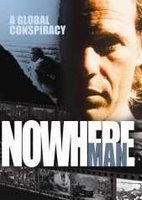
With UPN and the WB soon to be extinct (the two are merging to form the new network CW), I thought it might be a good idea to write about a series from the early days of UPN. Many of you might remember that when UPN first began, its focus was on hour long action series with the goal of attracting a young male audience. In its first few months such series as Star Trek: Voyager, Legend, and Marker aired on the young network. Most of those series were forgettable, with two exceptions. One was Star Trek: Voyager. The other was a series called Nowhere Man. Although only running one season, it would go onto become a bit of a cult series. The complete series was released on DVD December 26, 2005, giving me a chance to see it again nearly ten years after it originally aired.
For those of you who never saw Nowhere Man (which I am taking for granted is most of you), Nowhere Man starred Bruce Greenwood as Thomas Veil. Veil was a documentary photographer who abruptly finds his entire life "erased." His friends and family (even his wife) don't recognise him. The keys to his home and his studio will no longer open any doors in those places. His ATM and credit cards no longer work. In fact, any record of his existence is gone. Veil does not know precisely why this happened, but he suspects that it might have to do with a photograph he took in South America. It seems some secret organisation, a conspiracy with people in high places, want the negatives to that photograph. And they will do anything to get it from him. As a result, Veil must flee for his life, travelling from place to place in an effort to uncover the truth about the conspiracy and why his life was erased. Effectively, it was a cross between The Fugitive and The Prisoner.
Nowhere Man was created by Lawerence Hertzog, a TV writer with credits including Stingray and Hart to Hart. He would later work on the USA Network's La Femme Nikita. The series came about after UPN executive Michael Sullivan appraoched Hertzog about creating a series for the new network. With literally on a few months before the nework debuted, Hertzog was under pressure to deliver a quality series to the network on time. Hertzog apparently worked well under pressure, as Nowhere Man was easily the best show on UPN besides Star Trek: Voyager. Indeed, the series was well received by critics, even getting a sterling review from no less than The New York Times.
In its short run (only 25 episodes were ever made) Nowhere Man produced some of the most remarkable episodes in Nineties series television. In "Something About Her" the Organisation (as the conspiracy was called in many episodes of the show) created virtual memories of a romance that never happened in Veil's mind in an attempt to get information out of him. In "The Spider Webb" Veil finds out that his life after it had been erased is serving as the basis for a cheap, public access TV series. "You Really Got a Hold of Me" featured another man (played by Dean Stockwell) whose life had been erased and had been on the run for 25 years. "Forever Young" featured a nursing home which was conducting experiments in the restoration of youth to the elderly. "Stay Tuned (one of two episodes that could be seen as homages to The Prisoner)" centred on a small town where nearly every single resident is entralled with a local politician and his TV show. "Through a Lens Darkly" saw Veil return to Missouri and an old house where he is tormented by memories of his childhood sweetheart.
While much of the quality of Nowhere Man was due to its writing, the series was also helped by the qualtiy of its guest stars. Many of them were well established actors. In the pilot Michael Tucker (of L. A. Law) played a psychiatrist. In "You Really Got a Hold on Me" Dean Stockwell played the man who had been on the run from the Organisation for 25 years. In "Father" Dean Jones played Veil's father. Dwight Schultz, of A-Team and Star Trek: the Next Generation fame, guest starred in the episode "Hidden Agenda." The final episode, "Gemini Man," featured Hal Linden (of Barney Miller fame) as a United States senator. The series also featured actors who would later become stars. Carrie Moss (later to become famous for The Matrix trilogy) guest starred in "Something About Her." Maria Bello was featured in the episode "An Enemy Within." Nowhere Man also benefited from some of the most talented directors in the business. Film director Tobe Hooper directed the pilot and the second episode, while veteran TV directors James Whitmore Jr., Stephen Stafford, and Ian Toynton all directed episodes.
None of this is to say that Nowhere Man was a perfect TV show. While it produced some truly great episodes and the majority of its run was good at best, it did produce some truly awful episodes as well. "A Rough Whimper of Insanity" attempted to capitalise on both the Internet and Virtual Realtiy (both fads at the time) and failed in doing either. "It's Not Such a Wonderful Life" featured a Chrismtas reunion with Veil's wife with the expected results. "Heart of Darkness" is a fairly pedestrian episode dealing with a paramilitary organisation. Fortunately, such episodes were generally few and far between.
As mentioned previously, Nowhere Man received fairly good reviews. It also did well in the ratings given that it was on a brand new and very small network (at least when compared to such major players as NBC and CBS). Sadly, good ratings would not be enough for the show to survive. During is first season on the air UPN saw changes which would result in a decision to focus on urban comedies instead of action series as it originally intended. There were many in the upper eschelons at UPN who simply did not like Nowhere Man to begin with. With the series out of favour with many network heads and not exactly reflecting the new direction UPN chose to take (it was hardly an urban comedy), Nowhere Man was cancelled at the end of its first and only season. The bitter irony is that Nowhere Man and many of the other action series which aired on the network in its first year received higher ratings than the urban comedies it would later air. In fact, I have to wonder if much of the failure of UPN (the ultimate result of which was its merger with the WB) was due to its decision to change directions in its first season.
Fortunately, Nowhere Man would not be forgotten and has remained a cult series ever since it first aired. This would, of course, result in the relatively recent release of its entire run on DVD. The DVD set is remarkable for a TV show, especially one that run only one season. The set features several extras. Many of the episodes have audio commentaries, and sometimes video commentaries as well. There are several featurettes on various aspects of the making of the series. There is even a short featurette on purported CIA mind control techniques on the last disc of the set entitled "Fact or Fiction (I personally found this a bit far fetched, if interesting--conspiracy theorists may feel free to disagree with me)." Among the best part of the extras are the scripts for every single episode of Nowhere Man, which one can download to his or her computer.
Although it had its share of bad episodes, Nowhere Man was a remarkable series for its time. In fact, in some ways it was a bit of ahead of its time. First, since Nowhere Man first aired there have been several successful, cerebral action series. The USA Network had La Femme Nikita (which Lawrence Hertzog himself would work on). ABC has had Alias and Lost. F/X has The Shield. Nowhere Man would fit in perfectly with all these series. In fact, I rather suspect that had it aired just a few years later, it may have found a home on one of the various cable channels. Second, when Nowhere Man first aired, identity theft was relatively rare. In the ten years since the show originally aired, identity theft has increased dramatically, making the series even more pertinent than it once was. Its questons regarding the nature of identity and the tension between the individual and the group remain as relevant as ever. While it is regrettable that Nowhere Man only lasted one season, it remains one of the most fascinating series of the Nineties and probably will not soon be forgotten.
Tuesday, August 8, 2006
Arthur Lee R.I.P.
Arthur Lee, best known as frontman and guitarist for Sixties rock group Love, died August 3 at the age of 61 from acute myeloid leukaemia.
Arthur Lee was born in Memphis on March 7, 1945. While he was still young, Lee's family moved to Los Angeles. It was in the early Sixties that he formed his first band, an instrumental group called Arthur Lee and the LAGs. They released one single, "The Ninth Wave," on Capitol Records in 1963. It would be Arthur Lee who would hire guitarist Jimi Hendrix for his first recording session. Producing "My Diary (a song which Lee also wrote)" for Rosa Lee Brooks, he hired the young Hendrix to play guitar on the record. Lee also wrote songs for Ronnie And The Pomona Casuals ("The Slow Jerk") "I've Been Tryin'" for Little Ray.
Drawn to the folk rock sound of The Byrds and the British Invasion bands (such as The Beatles), Lee formed a band called The Grass Roots with drummer Don Conka, guitarist Johnny Echols, and bassist Johnny Fleckenstein. Bryan MacLean, who had been a road manager for The Byrds, would be asked to join as vocalist and another songwriter. It was not long before the band as to change their name (there was already another Los Angeles band called The Grassroots). Considering such names as "Summer's Children" and "Dr. Strangelove," they eventually settled on the name "Love." Their self titled first album was released in 1966 and featured an early version of the song "Hey, Joe." At this point Love sounded liked The Byrds crossed with a garage band. Later in the year they would release their only top forty hit, "7 and 7 Is," which went to number 33 on the Billboard pop charts.
Love would only release two more albums with anything close to its original lineup. Da Capo appeared in January 1967. Besides featuring the single "7 and 7 Is," it also featured such songs as "She Comes in Colours" and "Stephanie Knows Who." The album spanned musical styles from garage rock ("7 and 7 Is" and "Stephanie Knows Who") to more melodic ("She Comes in Colours"). Their third and final album, Forever Changes, was released in November 1967. The album was a mix of Love's expected garage rock, sweeter sounds produced with violins, and outright psychedelia. Although the album did well in the UK, it bombed in the U.S. What is more, by this time the group was falling apart. Eventually, everyone left the band except Lee. Lee would form new bands called "Love" well into the late Seventies.
In addition to his work with Love, Lee released three solo albums (Vindicator in 1972, Black Beauty in 1973, and Arthur Lee in 1981. He eventually dropped out of sight entirely before reemerging with Arthur Lee & Love and the album of the same name in 1992. Sadly in 1996 he was convicted of owning an illegal firearm under California statutes and sentenced to 12 years. He would serve only five, being released in 2001. In 2002 he would start touring with a reconstituted Arthur Lee and Love.
Arthur Lee was an influence on such asrtists as Pink Floyd (in fact, he has been compared to Syd Barrett), Led Zeppelin, and Echo and the Bunnymen. Lee and his band Love lacked any one sound, as their albums often cut across such genres as garage rock, psychedelia, and blues. Although very few people today probably recognise the names "Arthur Lee" or "Love," they have had a lasting influence on rock music.
Arthur Lee was born in Memphis on March 7, 1945. While he was still young, Lee's family moved to Los Angeles. It was in the early Sixties that he formed his first band, an instrumental group called Arthur Lee and the LAGs. They released one single, "The Ninth Wave," on Capitol Records in 1963. It would be Arthur Lee who would hire guitarist Jimi Hendrix for his first recording session. Producing "My Diary (a song which Lee also wrote)" for Rosa Lee Brooks, he hired the young Hendrix to play guitar on the record. Lee also wrote songs for Ronnie And The Pomona Casuals ("The Slow Jerk") "I've Been Tryin'" for Little Ray.
Drawn to the folk rock sound of The Byrds and the British Invasion bands (such as The Beatles), Lee formed a band called The Grass Roots with drummer Don Conka, guitarist Johnny Echols, and bassist Johnny Fleckenstein. Bryan MacLean, who had been a road manager for The Byrds, would be asked to join as vocalist and another songwriter. It was not long before the band as to change their name (there was already another Los Angeles band called The Grassroots). Considering such names as "Summer's Children" and "Dr. Strangelove," they eventually settled on the name "Love." Their self titled first album was released in 1966 and featured an early version of the song "Hey, Joe." At this point Love sounded liked The Byrds crossed with a garage band. Later in the year they would release their only top forty hit, "7 and 7 Is," which went to number 33 on the Billboard pop charts.
Love would only release two more albums with anything close to its original lineup. Da Capo appeared in January 1967. Besides featuring the single "7 and 7 Is," it also featured such songs as "She Comes in Colours" and "Stephanie Knows Who." The album spanned musical styles from garage rock ("7 and 7 Is" and "Stephanie Knows Who") to more melodic ("She Comes in Colours"). Their third and final album, Forever Changes, was released in November 1967. The album was a mix of Love's expected garage rock, sweeter sounds produced with violins, and outright psychedelia. Although the album did well in the UK, it bombed in the U.S. What is more, by this time the group was falling apart. Eventually, everyone left the band except Lee. Lee would form new bands called "Love" well into the late Seventies.
In addition to his work with Love, Lee released three solo albums (Vindicator in 1972, Black Beauty in 1973, and Arthur Lee in 1981. He eventually dropped out of sight entirely before reemerging with Arthur Lee & Love and the album of the same name in 1992. Sadly in 1996 he was convicted of owning an illegal firearm under California statutes and sentenced to 12 years. He would serve only five, being released in 2001. In 2002 he would start touring with a reconstituted Arthur Lee and Love.
Arthur Lee was an influence on such asrtists as Pink Floyd (in fact, he has been compared to Syd Barrett), Led Zeppelin, and Echo and the Bunnymen. Lee and his band Love lacked any one sound, as their albums often cut across such genres as garage rock, psychedelia, and blues. Although very few people today probably recognise the names "Arthur Lee" or "Love," they have had a lasting influence on rock music.
Subscribe to:
Posts (Atom)
