
There was a time when movie directors had to start out in the movie industry and work their way up. Alfred Hitchcock started out as a title designer. John Ford started out as an assistant to his brother Francis. In the old days, if one wanted to direct films, he or she had to either work his way up to it or have a relative already in the business. Or both.
All of this changed with the advent of regular network television broadcasts in the late Forties. No longer would anyone wanting to be a film director have to start in the film industry. Now he or she could find his way into film direction by way of directing television. Indeed, several big name directors have had their start in television.
Among these was Sidney Lumet. Lumet started out as an actor, but he eventually found himself at CBS directing episodes of such series as Studio One and Danger. He broke into film in 1957 with the adaptation of a teleplay by Reginald Rose. Twelve Angry Men had first aired in 1954 as an episode of Studio One. Lumet would continue his work on television for a few more years, until he abandoned it all together after directing the movie Long Day's Journey into Night. He would go onto make such films as The Pawnbroker, Fail-Safe, and Serpico.
Sam Peckinpah also started in television. In fact, he started as a lowly stagehand on The Liberace Show in 1952. By 1955 he was a writer for Gunsmoke. Two years later he would create the classic Western series The Rifleman. He would both write and direct episodes of the show. He would also create the short lived series The Westerner, episodes of which he also wrote and directed. Fittingly, given his work on Western TV series, Peckinpah's break into film came with a Western--the classic Ride the High Country in 1962. Within a few years Peckinpah would be firmly established as a film director, directing the classic Wild Bunch.
Perhaps the biggest name in film direction to emerge from televison was Steven Spielberg. After serving as an assistant editor on Wagon Train and making various short films, Spielberg entered the field of direction with one of the segments for the pilot to Rod Serling's Night Gallery. He went onto direct episodes of Marcus Welby M.D., The Name of the Game, and Columbo. It was directing the telefilm Duel, however, which really got him noticed. First aired in 1971, it was one of the most successful television movies of all time. Spielberg broke into the movies in the biggest way possible. He directed one of the biggest movies of all time--Jaws. The film was the hit of 1975 and the highest grossing film of all time until it was surpassed by Star Wars Episode IV: A New Hope. Since that time he has been one of the most successful directors in the history of film.
Since the Sixties it has not been terribly unusual for television directors to eventually make the move to film. Paul Haggis, Mike Newell, Michael Mann, and many other movie directors got their start working on television. Even Tim Burton, better known for his early animated shorts, did some work in TV. In 1982 Burton directed a special for the Disney Channel entitled Hansel and Gretel. Based on the fairy tale of the same name, it was done in the animated style of The Nightmare Before Christmas. In 1984 he directed an episode of Shelly Duvall's Fairie Tale Theatre entitled "Aladdin and His Wonderful Lamp." Of course, during this time Burton was also working on Disney's various animated feature films (The Fox and the Hound, for example).
There was a time long ago (the Fifties) when television was regarded by the film industry as a bitter rival. Today it is simply one of any number of media. Given the number of film stars and directors (and in some cases both in the same person--Clint Eastwood started in television) who have emerged from television, the film industry couldn't resent it for long.
Saturday, February 18, 2006

Friday, February 17, 2006
Pedro Gonzalez Gonzalez R.I.P.
Mexican American character actor Pedro Gonzalez Gonzalez died Feburary 6 of natural causes at the age of 80.
Gonzalez was born Ramiro Gonzalez-Gonzalez in Aguilares, Texas on May 24, 1925. He came from a family of entertainers. His father was a native Texan who played the trumpet. His mother was a dancer from Mexico. He started his career in entertainment at the tender age of 7, when his parents took him along to help entertain the inhabitants of small Southwestern towns and migrant workers. He proved to be a born comedian. Gonzalez served as a driver in World War II.
His big break came when he appeared as a contestant on the game show You Bet Your Life with Groucho Marx. There he proved to be one of the few contestants who could actually match wits with the legendary comedian. John Wayne happened to see Gonzalez's appearance on the show and immediately signed him to a contract. He made his first screen apperance in Wings of the Hawk in 1953 before appearing in the John Wayne move The High and Mighty. He would also appear in many other movies with the Duke, including Rio Bravo, McClintock, and Chisum. He would go on to appear in such films as The Love Bug and Support Your Local Gunfighter. He also provided the voice for Speedy Gonzales in various cartoons produced by DePatie-Freleng for Warner Brothers in the mid-Sixties.
In addition to You Bet Your Life, Gonzalez appeared on many TV series. He guest starred on several Westerns, including Gunsmoke, Laredo, and Wanted: Dead or Alive. He also appeared on many sitcoms, among them The Monkees, I Dream of Jeannie, and Mayberry R.F.D.. He also appeared in such diverse TV shows as Perry Mason, I Spy, Tarzan, and Adam-12. His last apppearance on screen was on the short lived series Land's End in 1996.
There are those that have argued that many of the characters Gonzalez played were extreme ethnic stereotypes (his character in Rio Bravo is a good example). In Gonzalez's defence, however, it must be pointed out that there were not that many roles offered to Mexican Americans in the Fifties and Sixties. In fact, it can be aruged that, regardless of how stereotypical Gonzalez's roles may have been, he did open doors for other Mexican American actors. Without Gonzalez paving the way, there might not have been careers for such actors as James Edward Olmos or Eva Longoria. Indeed, in an Associated Press article on Gonzalez's death, James Edward Olmos said that Gonzalez "inspired every Latino actor." For an actor such as Pedro Gonzalez Gonzalez, there can perhaps be no greater tribute.
Gonzalez was born Ramiro Gonzalez-Gonzalez in Aguilares, Texas on May 24, 1925. He came from a family of entertainers. His father was a native Texan who played the trumpet. His mother was a dancer from Mexico. He started his career in entertainment at the tender age of 7, when his parents took him along to help entertain the inhabitants of small Southwestern towns and migrant workers. He proved to be a born comedian. Gonzalez served as a driver in World War II.
His big break came when he appeared as a contestant on the game show You Bet Your Life with Groucho Marx. There he proved to be one of the few contestants who could actually match wits with the legendary comedian. John Wayne happened to see Gonzalez's appearance on the show and immediately signed him to a contract. He made his first screen apperance in Wings of the Hawk in 1953 before appearing in the John Wayne move The High and Mighty. He would also appear in many other movies with the Duke, including Rio Bravo, McClintock, and Chisum. He would go on to appear in such films as The Love Bug and Support Your Local Gunfighter. He also provided the voice for Speedy Gonzales in various cartoons produced by DePatie-Freleng for Warner Brothers in the mid-Sixties.
In addition to You Bet Your Life, Gonzalez appeared on many TV series. He guest starred on several Westerns, including Gunsmoke, Laredo, and Wanted: Dead or Alive. He also appeared on many sitcoms, among them The Monkees, I Dream of Jeannie, and Mayberry R.F.D.. He also appeared in such diverse TV shows as Perry Mason, I Spy, Tarzan, and Adam-12. His last apppearance on screen was on the short lived series Land's End in 1996.
There are those that have argued that many of the characters Gonzalez played were extreme ethnic stereotypes (his character in Rio Bravo is a good example). In Gonzalez's defence, however, it must be pointed out that there were not that many roles offered to Mexican Americans in the Fifties and Sixties. In fact, it can be aruged that, regardless of how stereotypical Gonzalez's roles may have been, he did open doors for other Mexican American actors. Without Gonzalez paving the way, there might not have been careers for such actors as James Edward Olmos or Eva Longoria. Indeed, in an Associated Press article on Gonzalez's death, James Edward Olmos said that Gonzalez "inspired every Latino actor." For an actor such as Pedro Gonzalez Gonzalez, there can perhaps be no greater tribute.
Thursday, February 16, 2006
Vikings on Film
Those who know me know that I quite naturally have a love of Germanic mythology and the history of the Germanic peoples (for those who are wondering who the Germanic peoples are, they are those peoples who speak any of the Germanic family of languages--the English, Germans, Dutch, Danish, and so on). It is then natural that I would love films based on Germanic mythology and events or situations from the history of the Germanic peoples. Unfortunately, there have been very, very few movies that have dealt with Germanic myth or history.
I rather suspect that much of the reason there have been so few films based on Germanic mythology is simply that in the mid-Twentieth Century Nazism misused many of the symbols and even many of the myths of the Germanic peoples. The image of anything Germanic was then tarnished for many, perhaps to the point that both Hollywood and European film makers shied away from anything dealing with the Germanic peoples. Indeed, it seems that only Iceland has done much in the way of movies based upon Norse myths and various sagas. Other than various films out of Iceland, it seems as if the majority of films dealing with Germanic peoples of any sort fall into the genre of "Viking movies," a genre not known for its quality.
Perhaps the greatest film based on Germanic myth came early in the history of movies, during the Silent Era. And as might be expected, it did not emerge from Hollywood either. 1924 saw the release of Die Niebelungen, a film directed by Fritz Lang . Here in the United States it was released in two parts, Siegfried and Kriemhild's Revenge. Contrary to popular belief, Die Niebelungen was not based on Wagner's famous operas nor was it based on The Volsunga Saga. Instead, the film's script was based on Die Niebelungenlied and would draw largely on Friedrich Hebbel's play Die Nibelungen (also based on the German poem). The sets and costumes of Die Niebelungen are not particularly authentic (it is more or less what the average person might picture when thinking "Middle Ages") and it is fairly expressionistic. But Die Niebelungen is also fairly faithful to the The Niebelungenlied. As might be expected, its strengths lie in its script, its direction, and its black and white photography. It is quite simply a masterpiece of silent film. Anyone who has not seen Die Niebelungen should by all means do so. Unfortunately, after Die Niebelungen, Lang would never again make a movie based on Germanic mythos, perhaps because Nazism (probably the most vile, evil, and reprehensible ideology of the twentieth century) had tarnished its image.
That is not to say that Die Niebelungen is the only great film based on a Germanic myth. Danish filmmaker Gabriel Axel went to the myth of Amled (Shakespeare's Hamlet) from Saxo Grammaticus's Gesta Danorum (roughly "A History of the Danes" in modern English) as the source of inspiration for Amled, prinsen af Jylland, better known here in the United States as Royal Deceit. Royal Deceit was made on the cheap and it clearly shows. Yet the movie is not only faithful to the tale as told in Saxo's Gesta Danorum, but the costumes and sets are fairly authentic. The movie also has an intelligent script and some fine performances, particularly Gabriel Byrne as Feng. Anyone expecting Shakespeare's Hamlet will be pleasantly surprised. While Royal Deceit has much in common with Shakespeare's play, it is also a very different story with many surprises for those familiar with the Bard's work.
Royal Deceit was not the first time Axel looked to Gesta Danorum for the inspiration for a movie. He also did so for Den Røde kappe, based on the Hagbard and Signe tale from the 7th book of Gesta Danorum. I've never gotten to see this film, but I understand it is quite good and also quite loyal to the source material!
I'm sure that there probably are other fine movies based on Germanic material, but right now I cannot think of any off the top of my head. I have never had the opportunity to see any of the movies made in Iceland, although I have heard that some of them are quite good. As I stated above, it seems to me that most movies based on Germanic material or Germanic culture are "Viking films." There are two somewhat good Viking films out there (most of you might well know which two I am talking about), but the rest are sorely lacking in quality. One of my fond childhood movies as a child was a film called The Long Ships. The movie was about a struggle between Vikings and Moors. I enjoyed it as a child. I can't say that I have enoyed it as an adult. The film is truly horrible. It is poorly written, poorly directed, and incredibly inaccurate when it comes to its portrayal of the Vikings and the Moors. Indeed, I would say it is downright racist in its portrayal of both!
One film that is not one of my cherished childhood memories is The Norsemen, starring Lee Majors. The movie is about the Vinland expeditions. This could make interesting fodder for a film, but The Norsemen is inaccurate, badly written, badly acted, and badly directed. Even as a kid I disliked this film enormously. I can't picture even the most forgiving fan of Viking movies liking this picture.
Of course, the most famous "Viking movie" of all time is The Vikings. It is also one of two that is actually somewhat good. The Vikings is hardly an accurate reflection of Viking life. To a large degree the costumes, weapons, and architecture of the Vikings is somewhat accurate. Unfortunately, it does stray with regards to Viking culture (adulterous women would not have had axes thrown at them...). And while the costumes that the English wear are somewhat accurate, it must be pointed out that they did not live in Norman castles at this time (their housing wouldn't have looked too different from that of the Vikings)! The Vikings is very loosely based on Ragnars saga lodhbrokar, a fact that somewhat irritates me. Knowing the saga, I can't help but think they could have done a better job of the movie.
That is not to say that I dislike The Vikings. The Vikings is one of the great popcorn movies of the Fifties. It is fun in the way that other costume epics of the era are fun, regardless of the fact that they may well butcher history or the source material upon which they are based. The Vikings features some excellent photography, insidious villains, a beautiful damsel in distress (Janet Leigh at her finest), some fine looking costumes, and some fine looking sets. While I might wish that The Vikings had been a bit more authentic with regards to history and culture, it is still a very fun movie.
The same may be said of what could be the second most famous Viking movie of all time, The 13th Warrior. Based on Michael Crichton's Eaters of the Dead, The 13th Warrior is loosely inspired by Beowulf, combined with the Arab chronicler Ibn Fadlan's account of life among the Rus (Vikings who settled in what would become Russia). In many respects The 13th Warrior offers a more accurate portrayal of Viking culture than The Vikings, although it is also inauthentic in many ways as well. It is doubtful that the Rus were nearly as superstitious as they are portrayed in the film (in none of the sagas or history do they worry about "demons in the mist..."). Similarly, the Rus would have certainly been familiar with written language (after all, they did have the runes). That having been said, The 13th Warrior's greatest weakness is the inauthenticity of many of the weapons, armour, and clothes in the movie. Indeed, this seems to be the most common complaint about the movie!
Like The Vikings, I do like The 13th Warrior a good deal, regardless of how it might depart from the historical record. Despite the occasional inaccuracy, The 13th Warrior does present a somewhat accurate portrayal of the Rus. And while the costumes and armaments may not be accurate, the architecture is fairly authentic. Ultimately, however, The 13th Warrior is simply a great action movie. For any fan of sword play and medieval combat, there is gong to be plenty of excitement in this movie.
While there have only been a few good films based on Germanic culture in the past, I suspect this could change in times to come. At this moment it seems that we have seen the return of the epic film. There can be little doubt that The Lord of the Rings started this cycle. The Alamo, Troy, and The Chronicles of Narnia: the Lion, the Witch, and the Wardrobe have continued it. I suspect that among the epics that might come out in the coming years there may be some which draw upon Germanic myth and history. Indeed, rather recently there have been two low budget films that have drawn upon Germnanic myth--a Canadian Icelandic production of Beowulf (Beowulf and Grendel) and a new version of The Niebelungenlied (titled Ring of the Nibelungs. It may then be possible that we could see films based on events from Germanic history and tales from Germanic literature. As to whether these films will be accurate or actually good, that is a different matter entirely...
I rather suspect that much of the reason there have been so few films based on Germanic mythology is simply that in the mid-Twentieth Century Nazism misused many of the symbols and even many of the myths of the Germanic peoples. The image of anything Germanic was then tarnished for many, perhaps to the point that both Hollywood and European film makers shied away from anything dealing with the Germanic peoples. Indeed, it seems that only Iceland has done much in the way of movies based upon Norse myths and various sagas. Other than various films out of Iceland, it seems as if the majority of films dealing with Germanic peoples of any sort fall into the genre of "Viking movies," a genre not known for its quality.
Perhaps the greatest film based on Germanic myth came early in the history of movies, during the Silent Era. And as might be expected, it did not emerge from Hollywood either. 1924 saw the release of Die Niebelungen, a film directed by Fritz Lang . Here in the United States it was released in two parts, Siegfried and Kriemhild's Revenge. Contrary to popular belief, Die Niebelungen was not based on Wagner's famous operas nor was it based on The Volsunga Saga. Instead, the film's script was based on Die Niebelungenlied and would draw largely on Friedrich Hebbel's play Die Nibelungen (also based on the German poem). The sets and costumes of Die Niebelungen are not particularly authentic (it is more or less what the average person might picture when thinking "Middle Ages") and it is fairly expressionistic. But Die Niebelungen is also fairly faithful to the The Niebelungenlied. As might be expected, its strengths lie in its script, its direction, and its black and white photography. It is quite simply a masterpiece of silent film. Anyone who has not seen Die Niebelungen should by all means do so. Unfortunately, after Die Niebelungen, Lang would never again make a movie based on Germanic mythos, perhaps because Nazism (probably the most vile, evil, and reprehensible ideology of the twentieth century) had tarnished its image.
That is not to say that Die Niebelungen is the only great film based on a Germanic myth. Danish filmmaker Gabriel Axel went to the myth of Amled (Shakespeare's Hamlet) from Saxo Grammaticus's Gesta Danorum (roughly "A History of the Danes" in modern English) as the source of inspiration for Amled, prinsen af Jylland, better known here in the United States as Royal Deceit. Royal Deceit was made on the cheap and it clearly shows. Yet the movie is not only faithful to the tale as told in Saxo's Gesta Danorum, but the costumes and sets are fairly authentic. The movie also has an intelligent script and some fine performances, particularly Gabriel Byrne as Feng. Anyone expecting Shakespeare's Hamlet will be pleasantly surprised. While Royal Deceit has much in common with Shakespeare's play, it is also a very different story with many surprises for those familiar with the Bard's work.
Royal Deceit was not the first time Axel looked to Gesta Danorum for the inspiration for a movie. He also did so for Den Røde kappe, based on the Hagbard and Signe tale from the 7th book of Gesta Danorum. I've never gotten to see this film, but I understand it is quite good and also quite loyal to the source material!
I'm sure that there probably are other fine movies based on Germanic material, but right now I cannot think of any off the top of my head. I have never had the opportunity to see any of the movies made in Iceland, although I have heard that some of them are quite good. As I stated above, it seems to me that most movies based on Germanic material or Germanic culture are "Viking films." There are two somewhat good Viking films out there (most of you might well know which two I am talking about), but the rest are sorely lacking in quality. One of my fond childhood movies as a child was a film called The Long Ships. The movie was about a struggle between Vikings and Moors. I enjoyed it as a child. I can't say that I have enoyed it as an adult. The film is truly horrible. It is poorly written, poorly directed, and incredibly inaccurate when it comes to its portrayal of the Vikings and the Moors. Indeed, I would say it is downright racist in its portrayal of both!
One film that is not one of my cherished childhood memories is The Norsemen, starring Lee Majors. The movie is about the Vinland expeditions. This could make interesting fodder for a film, but The Norsemen is inaccurate, badly written, badly acted, and badly directed. Even as a kid I disliked this film enormously. I can't picture even the most forgiving fan of Viking movies liking this picture.
Of course, the most famous "Viking movie" of all time is The Vikings. It is also one of two that is actually somewhat good. The Vikings is hardly an accurate reflection of Viking life. To a large degree the costumes, weapons, and architecture of the Vikings is somewhat accurate. Unfortunately, it does stray with regards to Viking culture (adulterous women would not have had axes thrown at them...). And while the costumes that the English wear are somewhat accurate, it must be pointed out that they did not live in Norman castles at this time (their housing wouldn't have looked too different from that of the Vikings)! The Vikings is very loosely based on Ragnars saga lodhbrokar, a fact that somewhat irritates me. Knowing the saga, I can't help but think they could have done a better job of the movie.
That is not to say that I dislike The Vikings. The Vikings is one of the great popcorn movies of the Fifties. It is fun in the way that other costume epics of the era are fun, regardless of the fact that they may well butcher history or the source material upon which they are based. The Vikings features some excellent photography, insidious villains, a beautiful damsel in distress (Janet Leigh at her finest), some fine looking costumes, and some fine looking sets. While I might wish that The Vikings had been a bit more authentic with regards to history and culture, it is still a very fun movie.
The same may be said of what could be the second most famous Viking movie of all time, The 13th Warrior. Based on Michael Crichton's Eaters of the Dead, The 13th Warrior is loosely inspired by Beowulf, combined with the Arab chronicler Ibn Fadlan's account of life among the Rus (Vikings who settled in what would become Russia). In many respects The 13th Warrior offers a more accurate portrayal of Viking culture than The Vikings, although it is also inauthentic in many ways as well. It is doubtful that the Rus were nearly as superstitious as they are portrayed in the film (in none of the sagas or history do they worry about "demons in the mist..."). Similarly, the Rus would have certainly been familiar with written language (after all, they did have the runes). That having been said, The 13th Warrior's greatest weakness is the inauthenticity of many of the weapons, armour, and clothes in the movie. Indeed, this seems to be the most common complaint about the movie!
Like The Vikings, I do like The 13th Warrior a good deal, regardless of how it might depart from the historical record. Despite the occasional inaccuracy, The 13th Warrior does present a somewhat accurate portrayal of the Rus. And while the costumes and armaments may not be accurate, the architecture is fairly authentic. Ultimately, however, The 13th Warrior is simply a great action movie. For any fan of sword play and medieval combat, there is gong to be plenty of excitement in this movie.
While there have only been a few good films based on Germanic culture in the past, I suspect this could change in times to come. At this moment it seems that we have seen the return of the epic film. There can be little doubt that The Lord of the Rings started this cycle. The Alamo, Troy, and The Chronicles of Narnia: the Lion, the Witch, and the Wardrobe have continued it. I suspect that among the epics that might come out in the coming years there may be some which draw upon Germanic myth and history. Indeed, rather recently there have been two low budget films that have drawn upon Germnanic myth--a Canadian Icelandic production of Beowulf (Beowulf and Grendel) and a new version of The Niebelungenlied (titled Ring of the Nibelungs. It may then be possible that we could see films based on events from Germanic history and tales from Germanic literature. As to whether these films will be accurate or actually good, that is a different matter entirely...
Tuesday, February 14, 2006
A Suitable Song for Valentine's Day
I have been trying to think of a song to post for Valentine's Day and, I must admit, I was at a bit of a loss. I'd considered Ian Hunter's "All the Good Ones Are Taken" or Rod Stewart's version of "Some Guys Have All the Luck," but neither of them seemed quite right. And then it hit me. I have the perfect song for Valentine's Day. Nothing could be more fitting. Sadly, I could not find an audio file of it on the Web (beyond the short, little, sample snippets on Amazon and CDNow and their like). We'll then have to make due with the lyrics. So grab your copy of the J. Geils Band's album Love Stinks (or your DVD of The Wedding Singer, whichever is closer) and sing along....
"Love Stinks"
by Peter Wolf and Seth Justman
You love her
But she loves him
And he loves somebody else
You just can't win
And so it goes
Till the day you die
This thing they call love
It's gonna make you cry
I've had the blues
The reds and the pinks
One thing's for sure
(Love stinks)
Love stinks yeah yeah
(Love stinks)
Love stinks yeah yeah
(Love stinks)
Love stinks yeah yeah
(Love stinks)
Love stinks yeah yeah
Two by two and side by side
Love's gonna find you yes it is
Ya just can't hide
You'll hear it call
Your heart will fall
Then love will fly
It's gone that's all
I don't care what any Casanova thinks
All I can say is
Love stinks
(Love stinks)
Love stinks yeah yeah
(Love stinks)
Love stinks yeah yeah
(Love stinks)
Love stinks yeah yeah
(Love stinks)
Love stinks yeah yeah
I've been through diamonds
I've been through minks
I've been through it all
Love stinks
(Love stinks)
Love stinks yeah yeah
(Love stinks)
Love stinks yeah yeah
(Love stinks)
Love stinks yeah yeah
(Love stinks)
Love stinks yeah yeah
(Love stinks)
"Love Stinks"
by Peter Wolf and Seth Justman
You love her
But she loves him
And he loves somebody else
You just can't win
And so it goes
Till the day you die
This thing they call love
It's gonna make you cry
I've had the blues
The reds and the pinks
One thing's for sure
(Love stinks)
Love stinks yeah yeah
(Love stinks)
Love stinks yeah yeah
(Love stinks)
Love stinks yeah yeah
(Love stinks)
Love stinks yeah yeah
Two by two and side by side
Love's gonna find you yes it is
Ya just can't hide
You'll hear it call
Your heart will fall
Then love will fly
It's gone that's all
I don't care what any Casanova thinks
All I can say is
Love stinks
(Love stinks)
Love stinks yeah yeah
(Love stinks)
Love stinks yeah yeah
(Love stinks)
Love stinks yeah yeah
(Love stinks)
Love stinks yeah yeah
I've been through diamonds
I've been through minks
I've been through it all
Love stinks
(Love stinks)
Love stinks yeah yeah
(Love stinks)
Love stinks yeah yeah
(Love stinks)
Love stinks yeah yeah
(Love stinks)
Love stinks yeah yeah
(Love stinks)
Sunday, February 12, 2006
Franklin Cover Moves On Up
Franklin Cover, best known for playing Tom Willis for ten years on The Jeffersons, passed on last Sunday of pneumonia. He was 77 yeas old.
Cover was born in 1928 in Cleveland, Ohio. Although he would become best known for his work on The Jeffersons, Cover's career began on the stage. He appeared in both Henry IV and Hamlet. He appeared many times on Broadway, in such plays as Sons of Giants (1962), Calculated Risk (1962), Applause (1970), and Born Yesterday (1989). He made his television debut on an episode of The Naked City in 1962. He would make guest appearances on TV shows in the Sixties, on The Jackie Gleason Show and NYPD. He also appeared in feature films, playing a role in the original version of The Stepford Wives.
It would be The Jeffersons that would bring Cover lasting fame. Cover played Tom Willis, George Jefferson's white neighbour whose wife, Helen, was black. Willis was constantly the target of George's jokes, who took every opportunity to point out Willis' whiteness. Eventually, George and Tom would become the best of friends. Tom and Helen Willis were historic as prime time television's first interracial couple.
Following The Jeffersons Cover made several guest appearances on shows such as Who's the Boss, In the Heat of the Night, Coach, and Will and Grace (his last appearance). He also appeared in the movie Wall Street.
The Jeffersons was always one of my favourite sitcoms from the Seventies, and it wouldn't have been the same without Franklin Cover as Tom Willis. Cover was perfect as Willis who could sometimes be a bit dense, ate too much, and an enduring love for peanuts. He was one of the great comic characters of the Seventies and I don't think anyone else could play him quite as well as Cover did.
Cover was born in 1928 in Cleveland, Ohio. Although he would become best known for his work on The Jeffersons, Cover's career began on the stage. He appeared in both Henry IV and Hamlet. He appeared many times on Broadway, in such plays as Sons of Giants (1962), Calculated Risk (1962), Applause (1970), and Born Yesterday (1989). He made his television debut on an episode of The Naked City in 1962. He would make guest appearances on TV shows in the Sixties, on The Jackie Gleason Show and NYPD. He also appeared in feature films, playing a role in the original version of The Stepford Wives.
It would be The Jeffersons that would bring Cover lasting fame. Cover played Tom Willis, George Jefferson's white neighbour whose wife, Helen, was black. Willis was constantly the target of George's jokes, who took every opportunity to point out Willis' whiteness. Eventually, George and Tom would become the best of friends. Tom and Helen Willis were historic as prime time television's first interracial couple.
Following The Jeffersons Cover made several guest appearances on shows such as Who's the Boss, In the Heat of the Night, Coach, and Will and Grace (his last appearance). He also appeared in the movie Wall Street.
The Jeffersons was always one of my favourite sitcoms from the Seventies, and it wouldn't have been the same without Franklin Cover as Tom Willis. Cover was perfect as Willis who could sometimes be a bit dense, ate too much, and an enduring love for peanuts. He was one of the great comic characters of the Seventies and I don't think anyone else could play him quite as well as Cover did.
Saturday, February 11, 2006
Why I Am Always the Hero or the Religious Guy?
Tonight I thought I would post a batch of memes or, as I like to call them, "quiz thingies." With the exception of the "Which Big O Character Are You" Quiz (which was part of an article on The Big O), I have never posted memes on my blog because I feel like they are something of a cop out. To me if someone is going to post an entry to his or her blog, it should be something somewhat substantial. But it's Saturday night and after having written an epic, five part history of heavy metal, I am just about written out for the week. Here then, are a bunch of quiz thingies with some running commentary.
Let's start with a Sin City quiz...
Okay, given the nature of most of the characters in Sin City, it was a safe bet I would be Hartigan, given nearly every other character is a sociopath... In both Frank Miller's comic books and the movie based upon them, he and Marv are about the closest things to truly heroic figures. And I must admit that I would be willing to die for someone I cared about and I think I would even face the greatest obstacles for them (I have gone without sleep or eating, for instance...). Given that, I probably do have a good deal in common with Hartigan--at least more than most Sin City characters (which is probably a good thing).
Now for the Firefly Quiz...
Okay, I can see myself as Shepherd Book (well, outside of unleashing my hair and frightening young girls, anyway....) Besides Jayne, he was always my favourite character. And, while I am not a Christian as Book is, I am deeply religous. But how on Earth did Inara come in as the second closest to me? Being a Companion would violate my morals. I am not the least bit seductive or flirtatious (at least with just anyone). And then there is the fact that I think I probably have more in common with Malcolm than I do Inara...

Okay, another religious figure. Notice a pattern developing? I have said I am deeply religious. And I know I can be mysterious. And I know I am short (not as short as Yoda granted...). But, seriously, did I have to be Yoda? Couldn't I be Mace Windu? He's religous and mysterious. And totally wicked with a light sabre....
Now onto The Big O Quiz...

Which Big O character are you?
Anyone else who wants to take the quiz, here's a link to it Paradigm City Personality Quiz
Of all the quizzes, this one makes the most sense to me. I mean, I do dress in black a lot. And I tend to be independent and a bit of a perfectionist. And, like Hartigan, Roger is willing to sacrifice himself for those he loves. Of course, given the number of religious types I am scoring as (Shepherd Book, Yoda...), I probably only scored as Roger Smith because there aren't any priests on The Big O...
Finally, let's see who I would be in Pulp Fiction...
There's that religion thing again. Okay, Jules isn't a priest or a Jedi, but he does quote the Bible a lot and he has a habit of philosophising quite a bit (at least when killing people...). And, quite frankly, I would rather be a philosophical, professional killer than a simple professional killer...
All in all I think I've learned very little from this exericise. The quizzes have confirmed some things that I have long thought of myself. First, that I am strongly religious. I have always tended towards the spiritual side of life. That I would be Book in Firefly or Jules in Pulp Fiction is then no surprise (I still question Yoda though...). Second, I can be mysterious. Book, Yoda, Roger Smith, even Jules, are enigmas to those around them. I had a roommate who once described me as a deep well whose depths you never really see. Third, I am a blatant romantic. It should be no surprise, then, that I could be Hartigan or Roger Smith, two men who would die or face even worse fates for the ones they love. Four, I have always wanted to be the heroic type, although I am not sure I really am. Like both Hartigan and Smith I do have a strict code of honour that I try to abide by. I cannot always say that I succeed. Of course, if I am the hero, then I have to wonder why I don't get the girl...
Let's start with a Sin City quiz...
You scored as Hartigan. 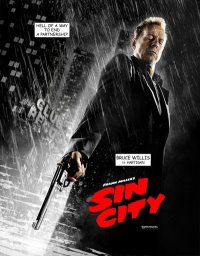 You are Hartigan. You expect a lot from yourself. You want to do what is right, but if you don't succeed you can be very hard on youself. When things seem grim, litte things keep you going such as letters or gestures from others. A strong believer in justice, you always keep your values. Continue to make the most of your life, but make sure to ease up on yourself a little.
Which Sin City character are you (new version)? created with QuizFarm.com |
Okay, given the nature of most of the characters in Sin City, it was a safe bet I would be Hartigan, given nearly every other character is a sociopath... In both Frank Miller's comic books and the movie based upon them, he and Marv are about the closest things to truly heroic figures. And I must admit that I would be willing to die for someone I cared about and I think I would even face the greatest obstacles for them (I have gone without sleep or eating, for instance...). Given that, I probably do have a good deal in common with Hartigan--at least more than most Sin City characters (which is probably a good thing).
Now for the Firefly Quiz...
 | You scored as Shepherd Book. Meria Book: Shepherd with a mysterious past. Alliance Forces lick your boots when you show them your Ident Card. You have the power to unleash your hair and frighten young girls. And for a man of the cloth, you are awful damned good in a fight.
FiREFLY QUIZ created with QuizFarm.com |
Okay, I can see myself as Shepherd Book (well, outside of unleashing my hair and frightening young girls, anyway....) Besides Jayne, he was always my favourite character. And, while I am not a Christian as Book is, I am deeply religous. But how on Earth did Inara come in as the second closest to me? Being a Companion would violate my morals. I am not the least bit seductive or flirtatious (at least with just anyone). And then there is the fact that I think I probably have more in common with Malcolm than I do Inara...
Okay, another religious figure. Notice a pattern developing? I have said I am deeply religious. And I know I can be mysterious. And I know I am short (not as short as Yoda granted...). But, seriously, did I have to be Yoda? Couldn't I be Mace Windu? He's religous and mysterious. And totally wicked with a light sabre....
Now onto The Big O Quiz...
Which Big O character are you?
Anyone else who wants to take the quiz, here's a link to it Paradigm City Personality Quiz
Of all the quizzes, this one makes the most sense to me. I mean, I do dress in black a lot. And I tend to be independent and a bit of a perfectionist. And, like Hartigan, Roger is willing to sacrifice himself for those he loves. Of course, given the number of religious types I am scoring as (Shepherd Book, Yoda...), I probably only scored as Roger Smith because there aren't any priests on The Big O...
Finally, let's see who I would be in Pulp Fiction...
 You don't tolerate s***. The .45 you carry in you pocket is scary, but your words are the real threat, especially when you decide to get Biblical. Try to take it easy, but maintain that edge of yours, which tends to keep people wary in your presence. Take the What Pulp Fiction Character Are You? quiz. |
There's that religion thing again. Okay, Jules isn't a priest or a Jedi, but he does quote the Bible a lot and he has a habit of philosophising quite a bit (at least when killing people...). And, quite frankly, I would rather be a philosophical, professional killer than a simple professional killer...
All in all I think I've learned very little from this exericise. The quizzes have confirmed some things that I have long thought of myself. First, that I am strongly religious. I have always tended towards the spiritual side of life. That I would be Book in Firefly or Jules in Pulp Fiction is then no surprise (I still question Yoda though...). Second, I can be mysterious. Book, Yoda, Roger Smith, even Jules, are enigmas to those around them. I had a roommate who once described me as a deep well whose depths you never really see. Third, I am a blatant romantic. It should be no surprise, then, that I could be Hartigan or Roger Smith, two men who would die or face even worse fates for the ones they love. Four, I have always wanted to be the heroic type, although I am not sure I really am. Like both Hartigan and Smith I do have a strict code of honour that I try to abide by. I cannot always say that I succeed. Of course, if I am the hero, then I have to wonder why I don't get the girl...
Friday, February 10, 2006
A History of Heavy Metal Part Five: Fell on Black Days
From the beginnings of the British New Wave of Heavy Metal in the late Seventies, heavy metal's rise in popularity into the Eighties was very gradual. By no means did it happen overnight. On the other hand, its decline in popularity in the early Nineties seemed to me to be swift and final. Creem once more shifted its focus, this time from heavy metal bands to the grunge bands then becoming popular. In 1994 MTV cancelled The Headbanger's Ball. Many heavy metal bands lost their contracts. Older, established heavy metal bands broke up.
I suppose of the causes of heavy metal's decline in popularity is debatable. There are some who have theorised that metal's fall in popularity may have largely been due to the emergence of grunge, in the form of such bands as Nirvana and Pearl Jam. While I suspect that the rise of grunge may well have been a contributing factor in heavy metal's decline, by no means do I think it was the only cause. An equally important cause, perhaps more imporant, was the fact that as the Eighties became the Nineties many of the older, established heavy metal bands either broke up or changed personnel. In 1991 vocalist Rob Halford left Judas Priest and the band never quite recovered. Throughout the Eighties, Black Sabbath had changed personnel to the point that the only original member left was Tony Iommi. With no new heavy metal bands that could quite fill the void left by legendary groups, it is perhaps no wonder the genre went into decline.
Of course, I suspect the primary reason that heavy metal delcined in popularity was that a simple case of overexposure. From the release of Def Leppard's Pyromania in 1983 into the early Nineties, heavy metal had enjoyed unprecedented popularity. Indeed, there was point where it seemed as if any guy with a guitar, long hair, makeup, and leather pants could get a record deal. After literally dozens of heavy metal bands had emerged over the decade, people were perhaps simply ready for a change. In other words, the public was simply tired of heavy metal.
This is not to say that heavy metal died out completely. Metallica and Megadeth continued to be popular in the new decade. New heavy metal bands did rise and even become popular. One heavy metal band that grew yet more popular in the Nineties was one that is now, in my humble opinion, often misidentified as grunge. Soundgarden was formed in 1984 by lead singer Chris Cornell and bassist Hiro Yamamoto. They released their first album for a major label, Louder than Love, in 1989. Their sound was obviously influenced by both Black Sabbath and Led Zeppelin, with a touch of MC5 thrown in for good measure. They sounded more like classic heavy metal than many then current heavy metal bands. In fact, they sounded more like Black Sabbath and Led Zeppelin than they did Nirvana and Alice in Chains. I always thought that the identification of Soundgarden as grunge was simply a marketing ploy. They're from Seattle. Heavy metal is declining in popularity. Let's call them grunge! Curiously, they were identified as heavy metal upon their debut... Regardless, they remained popular until their break up in 1996.
Another heavy metal band that maintained its popularity in the Nineties was Pantera. Pantera had actually been around since 1981, but did not see any real success until their album Cowboys from Hell. They were the leading proponents of a form of heavy metal called groove metal. Groove metal is perhaps best considered thrash metal in which drums and vocals are emphasised over guitar riffs (what riffs there are tend to be slow or mid-tempo). While Pantera remained popular through the mid-Nineties, they appear to have been one of those bands one either loved or hated (I hated them myself). The band was criticised for allegedly taking their groove metal sound from New Orleans based Exhorder. Dave Mustaine also accused Pantera of ripping off Megadeth. The band broke up in 2001. Sadly, their former lead vocalist, Darrell Abbot, would be murdered by a crazed fan in 2004.
Many debate whether Guns 'N' Roses is a hard rock band or a heavy metal band. I always saw them as a heavy metal band in the Aerosmith mode (although quite a bit meaner). From their debut album Appetite for Destruction, Guns 'N' Roses were a success. Unfortunately, internal tension towards the mid-Nineties would result in changes in the personnel of the band. This in turn would put an end to GNR's success. Currently Velvet Revolver(formed by former GNR members) sounds more like GNR than Guns 'N' Roses does.
While a few bands survived and even thrived into the Nineties, new bands also arose and even became popular. This was the case of Monster Magnet. Monster Magnet was formed in 1989 by vocalist Dave Wyndorf, guitarist John McBain, drummer Tom Diello, and bassist Tim Cronin. Their first album Spine of God, was relesed in 1991. Monster Magnet was quite literally a throwback to the early days of heavy metal. Their sound combined elements of early Black Sabbath with elements of Hawkwind. The subject matter of their songs sometimes tended towards the fantastic. In the song "Melt" they make reference to the late Jack Kirby (one of their idols), while Marvel Comics character Modok is mentioned in the song "Baby Gotterdammerung." Like Blue Oyster Cult, Monster Magnet is a heavy metal band for geeks.
While Monster Magnet was enamoured of classic Marvel Comics, White Zombie was enamoured of classic horror movies. Indeed, their name comes from the classic horror movie of the same name. Formed in 1985 by Rob Zombie, the band's major label debut was La Sexorcisto: Devil Music, Vol. 1, released in 1992. The band was characterised by a heavy bass sound and imagery that could have been drawn from any number of movies from Universal in the Thirties. The band remained popular until their breakup in 1998, after which Rob Zombie launched a successful solo career (keeping his midnight movie image in tact). They were among the best metal bands of the Nineties.
Of course, White Zombie were not the only heavy metal artists in the Nineties to draw upon horror movie imagery. In 1989 Brian Warner formed the band The Spooky Kids and transformed himself into Marilyn Manson. Marilyn Manson and the Spooky Kids drew upon influences from heavy metal and glam rock (the influence of Alice Cooper and The New York Dolls being the most obvious). The group was based upon the idea of the dichotomy of good and evil. Their stage shows were reminiscent of both Alice Cooper and W.A.S.P. And like Alice Cooper and W.A.S.P., Marilyn Manson generated his own share of controversy.
With the exception of these bands and a few others, heavy metal was out of the public eye for the most part for much of the Nineties. It would take a heavy metal legend to revive the form. In 1996 Ozzy Osbourne the first Ozzfest, a touring collection of heavy metal acts, both classic and new. A highlight of the festival has been the occasional reunions of the original members of Black Sabbath. Ozzfest once more brought heavy metal back to the public eye and, as a result, new heavy metal bands arose and old heavy metal bands saw their careers revived.
Indeed, the Nineties would see the rise of yet another heavy metal subgenre--nu metal. Nu metal combined heavy metal with elements of grunge, electronica, and progressive rock. Actually, nu metal wasn't all that new. It can be argued that it originated with the band Tool, who formed in 1990. The band's sound is an odd mix of King Crimson, Rush, and Jane's Addiction. The band maintained their popularity for the entirety of the Nineties and has even remained somewhat popular to this day. Other nu metal bands include Korn and Deftones. I have to question whether other nu metal bands can be called metal at all. Limp Bizkit (possibly the worst name for a band in the history of music), Papa Roach, Godsmack, and P.O.D. smack (no pun intended) too much of rap to me to be considered metal.
Heavy metal has yet to reattain the popularity it had in the Eighties, but it is at least more visible now. In fact, just as Monster Magnet returned to classic metal in the Nineties, so too does Avenged Sevenfold in the Naughts. The band's obvious inspiration are such classic groups as Iron Maiden and GNR.
I don't know if heavy metal will ever again be as popular as it once was, but, for better or worse, I know I will always listen to it. When I was less than a decade old I was exposed to the music of Alice Cooper, Black Sabbath, and Led Zeppelin. Among the first albums I bought were those by Judas Priest and AC/DC. In the Eighties I listened to Iron Maiden and Queensryche. By the Nineties I was listening to White Zombie and Monster Magnet. I still own all of my W.A.S.P. albums.
Quite naturally, I do have a few opinions about heavy metal. One is that it seems to me that what constitutes heavy metal is largely subjective. In the early Seventies, Grand Funk Railroad was considered heavy metal. There are very few headbangers today who consider them metal. In the early Eighties there were some who counted Van Halen as a heavy metal band. I doubt that there are too many who still do today. In the Nineties Soundgarden was considered grunge, even though they sounded more like Black Sabbath than Nirvana. One man's heavy metal is another man's hard rock. Or in the case of some of the so called nu metal bands, rap (or something that rhymes with rap...).
I also have to admit that it is sometimes hard to take heavy metal seriously. Sad as it may seem, This is Spinal Tap is funny because so many of the cliches it sends up are true. Many of the metal bands of the Eighties could barely play their instruments (Venom, anyone?). Many of the metal bands of the Eighties wrote songs that make "Sex Farm" by Spinal Tap look like "A Day in the Life" by The Beatles (remember "Cherry Pie" by Warrant...). Sexism was rampant in Eighties metal...Spinal Tap's proposed album cover for Smell the Glove was nothing unusual for an Eighties metal band. And don't get me started about Eighties metal fashion. Black leather is cool, but there is a point where one can wear too much leather (I shudder to think what I looked like back then...).
While I must admit that I know all too well the foibles and follies of heavy metal throughout the history, it is still a form of music I love dearly. Short of the British Invasion bands and power pop (The Beatles and Cheap Trick are my favourite bands of all time), it is my favourite subgenre of rock music. And I must admit, I would like nothing more than for Monster Magnet to replace Fifty Cent in the IPods of today's youth. One can always hope...
I suppose of the causes of heavy metal's decline in popularity is debatable. There are some who have theorised that metal's fall in popularity may have largely been due to the emergence of grunge, in the form of such bands as Nirvana and Pearl Jam. While I suspect that the rise of grunge may well have been a contributing factor in heavy metal's decline, by no means do I think it was the only cause. An equally important cause, perhaps more imporant, was the fact that as the Eighties became the Nineties many of the older, established heavy metal bands either broke up or changed personnel. In 1991 vocalist Rob Halford left Judas Priest and the band never quite recovered. Throughout the Eighties, Black Sabbath had changed personnel to the point that the only original member left was Tony Iommi. With no new heavy metal bands that could quite fill the void left by legendary groups, it is perhaps no wonder the genre went into decline.
Of course, I suspect the primary reason that heavy metal delcined in popularity was that a simple case of overexposure. From the release of Def Leppard's Pyromania in 1983 into the early Nineties, heavy metal had enjoyed unprecedented popularity. Indeed, there was point where it seemed as if any guy with a guitar, long hair, makeup, and leather pants could get a record deal. After literally dozens of heavy metal bands had emerged over the decade, people were perhaps simply ready for a change. In other words, the public was simply tired of heavy metal.
This is not to say that heavy metal died out completely. Metallica and Megadeth continued to be popular in the new decade. New heavy metal bands did rise and even become popular. One heavy metal band that grew yet more popular in the Nineties was one that is now, in my humble opinion, often misidentified as grunge. Soundgarden was formed in 1984 by lead singer Chris Cornell and bassist Hiro Yamamoto. They released their first album for a major label, Louder than Love, in 1989. Their sound was obviously influenced by both Black Sabbath and Led Zeppelin, with a touch of MC5 thrown in for good measure. They sounded more like classic heavy metal than many then current heavy metal bands. In fact, they sounded more like Black Sabbath and Led Zeppelin than they did Nirvana and Alice in Chains. I always thought that the identification of Soundgarden as grunge was simply a marketing ploy. They're from Seattle. Heavy metal is declining in popularity. Let's call them grunge! Curiously, they were identified as heavy metal upon their debut... Regardless, they remained popular until their break up in 1996.
Another heavy metal band that maintained its popularity in the Nineties was Pantera. Pantera had actually been around since 1981, but did not see any real success until their album Cowboys from Hell. They were the leading proponents of a form of heavy metal called groove metal. Groove metal is perhaps best considered thrash metal in which drums and vocals are emphasised over guitar riffs (what riffs there are tend to be slow or mid-tempo). While Pantera remained popular through the mid-Nineties, they appear to have been one of those bands one either loved or hated (I hated them myself). The band was criticised for allegedly taking their groove metal sound from New Orleans based Exhorder. Dave Mustaine also accused Pantera of ripping off Megadeth. The band broke up in 2001. Sadly, their former lead vocalist, Darrell Abbot, would be murdered by a crazed fan in 2004.
Many debate whether Guns 'N' Roses is a hard rock band or a heavy metal band. I always saw them as a heavy metal band in the Aerosmith mode (although quite a bit meaner). From their debut album Appetite for Destruction, Guns 'N' Roses were a success. Unfortunately, internal tension towards the mid-Nineties would result in changes in the personnel of the band. This in turn would put an end to GNR's success. Currently Velvet Revolver(formed by former GNR members) sounds more like GNR than Guns 'N' Roses does.
While a few bands survived and even thrived into the Nineties, new bands also arose and even became popular. This was the case of Monster Magnet. Monster Magnet was formed in 1989 by vocalist Dave Wyndorf, guitarist John McBain, drummer Tom Diello, and bassist Tim Cronin. Their first album Spine of God, was relesed in 1991. Monster Magnet was quite literally a throwback to the early days of heavy metal. Their sound combined elements of early Black Sabbath with elements of Hawkwind. The subject matter of their songs sometimes tended towards the fantastic. In the song "Melt" they make reference to the late Jack Kirby (one of their idols), while Marvel Comics character Modok is mentioned in the song "Baby Gotterdammerung." Like Blue Oyster Cult, Monster Magnet is a heavy metal band for geeks.
While Monster Magnet was enamoured of classic Marvel Comics, White Zombie was enamoured of classic horror movies. Indeed, their name comes from the classic horror movie of the same name. Formed in 1985 by Rob Zombie, the band's major label debut was La Sexorcisto: Devil Music, Vol. 1, released in 1992. The band was characterised by a heavy bass sound and imagery that could have been drawn from any number of movies from Universal in the Thirties. The band remained popular until their breakup in 1998, after which Rob Zombie launched a successful solo career (keeping his midnight movie image in tact). They were among the best metal bands of the Nineties.
Of course, White Zombie were not the only heavy metal artists in the Nineties to draw upon horror movie imagery. In 1989 Brian Warner formed the band The Spooky Kids and transformed himself into Marilyn Manson. Marilyn Manson and the Spooky Kids drew upon influences from heavy metal and glam rock (the influence of Alice Cooper and The New York Dolls being the most obvious). The group was based upon the idea of the dichotomy of good and evil. Their stage shows were reminiscent of both Alice Cooper and W.A.S.P. And like Alice Cooper and W.A.S.P., Marilyn Manson generated his own share of controversy.
With the exception of these bands and a few others, heavy metal was out of the public eye for the most part for much of the Nineties. It would take a heavy metal legend to revive the form. In 1996 Ozzy Osbourne the first Ozzfest, a touring collection of heavy metal acts, both classic and new. A highlight of the festival has been the occasional reunions of the original members of Black Sabbath. Ozzfest once more brought heavy metal back to the public eye and, as a result, new heavy metal bands arose and old heavy metal bands saw their careers revived.
Indeed, the Nineties would see the rise of yet another heavy metal subgenre--nu metal. Nu metal combined heavy metal with elements of grunge, electronica, and progressive rock. Actually, nu metal wasn't all that new. It can be argued that it originated with the band Tool, who formed in 1990. The band's sound is an odd mix of King Crimson, Rush, and Jane's Addiction. The band maintained their popularity for the entirety of the Nineties and has even remained somewhat popular to this day. Other nu metal bands include Korn and Deftones. I have to question whether other nu metal bands can be called metal at all. Limp Bizkit (possibly the worst name for a band in the history of music), Papa Roach, Godsmack, and P.O.D. smack (no pun intended) too much of rap to me to be considered metal.
Heavy metal has yet to reattain the popularity it had in the Eighties, but it is at least more visible now. In fact, just as Monster Magnet returned to classic metal in the Nineties, so too does Avenged Sevenfold in the Naughts. The band's obvious inspiration are such classic groups as Iron Maiden and GNR.
I don't know if heavy metal will ever again be as popular as it once was, but, for better or worse, I know I will always listen to it. When I was less than a decade old I was exposed to the music of Alice Cooper, Black Sabbath, and Led Zeppelin. Among the first albums I bought were those by Judas Priest and AC/DC. In the Eighties I listened to Iron Maiden and Queensryche. By the Nineties I was listening to White Zombie and Monster Magnet. I still own all of my W.A.S.P. albums.
Quite naturally, I do have a few opinions about heavy metal. One is that it seems to me that what constitutes heavy metal is largely subjective. In the early Seventies, Grand Funk Railroad was considered heavy metal. There are very few headbangers today who consider them metal. In the early Eighties there were some who counted Van Halen as a heavy metal band. I doubt that there are too many who still do today. In the Nineties Soundgarden was considered grunge, even though they sounded more like Black Sabbath than Nirvana. One man's heavy metal is another man's hard rock. Or in the case of some of the so called nu metal bands, rap (or something that rhymes with rap...).
I also have to admit that it is sometimes hard to take heavy metal seriously. Sad as it may seem, This is Spinal Tap is funny because so many of the cliches it sends up are true. Many of the metal bands of the Eighties could barely play their instruments (Venom, anyone?). Many of the metal bands of the Eighties wrote songs that make "Sex Farm" by Spinal Tap look like "A Day in the Life" by The Beatles (remember "Cherry Pie" by Warrant...). Sexism was rampant in Eighties metal...Spinal Tap's proposed album cover for Smell the Glove was nothing unusual for an Eighties metal band. And don't get me started about Eighties metal fashion. Black leather is cool, but there is a point where one can wear too much leather (I shudder to think what I looked like back then...).
While I must admit that I know all too well the foibles and follies of heavy metal throughout the history, it is still a form of music I love dearly. Short of the British Invasion bands and power pop (The Beatles and Cheap Trick are my favourite bands of all time), it is my favourite subgenre of rock music. And I must admit, I would like nothing more than for Monster Magnet to replace Fifty Cent in the IPods of today's youth. One can always hope...
Subscribe to:
Posts (Atom)
